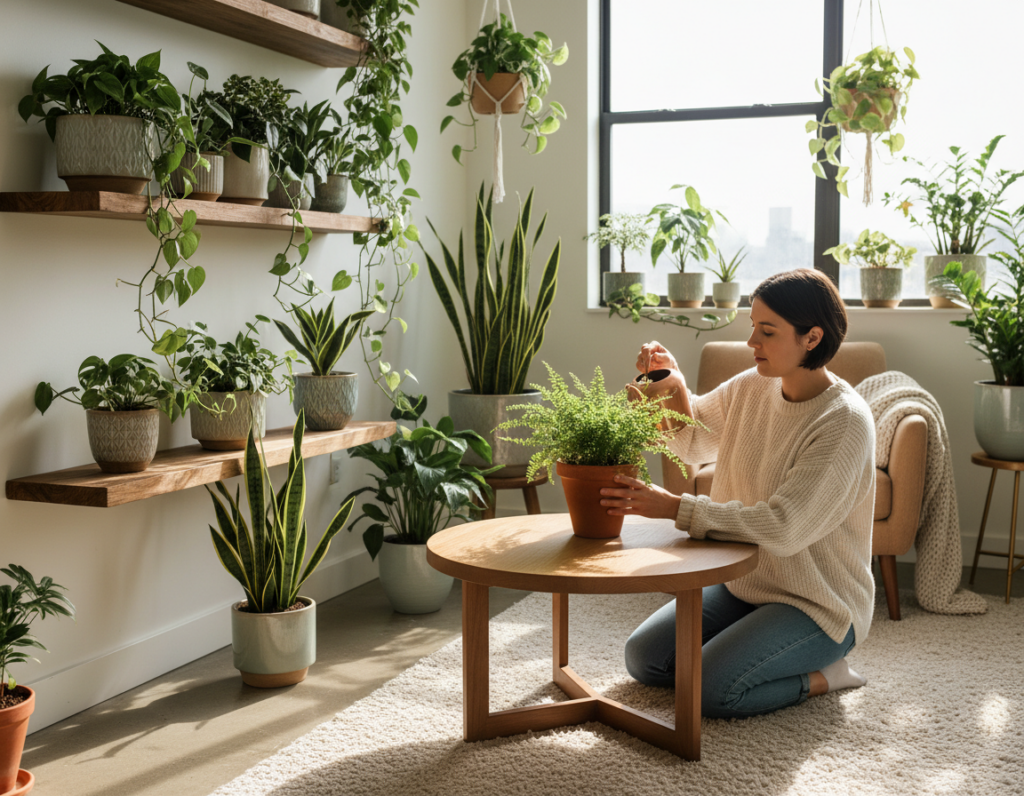
Many new owners water more than their houseplant needs. The Grow-How Team notes that good intent can lead to waterlogged soil and root trouble. They warn that caring too much is a common cause of decline.
Understanding the type plant helps prevent repeat mistakes. A snake plant needs far less care than a delicate parlor palm. They should check the pot for proper drainage holes to avoid pooling.
When soil stays wet for days, it is time to change the routine. Bloomscape offers a detailed care card that shows how much water each specimen needs.
Simple habits — like testing moisture through the drainage hole or using a meter — keep roots healthy. Adjust watering with the season and let soil guide the schedule to keep greenery thriving.
Understanding the Mechanics of Overwatering
Excess moisture in the pot replaces air pockets, leaving roots gasping for oxygen.
When excess water remains in the container, the soil loses the tiny air spaces roots need to breathe. That drop in air reduces oxygen and quickly damages fine root tissue.
The Grow-How Team stresses that overwatering plants often comes from frequent watering, not a single large amount. Letting the medium dry between sessions matters more than pouring less each time.
Compact or heavy soil makes the problem worse because it holds moisture and lacks pores. Excess water also blocks nutrient uptake, so a plant can wilt despite wet soil.
Every plant type has a different threshold for moisture. New plant owners should learn each specimen’s needs and let the root zone rest. Understanding these mechanics helps manage watering through seasonal changes and keeps plants healthier long term.
Common Signs of Overwatering Indoor Plants
Early warning cues in foliage and soil can reveal too much water before collapse. A quick check of leaves, surface growth, and the pot base gives a clear picture of plant health.
Visual Indicators of Leaf Distress
Wilting or yellowing low leaves is the primary clue. When lower and inner leaves turn yellow or feel limp, the root zone may be saturated and suffering from root rot.
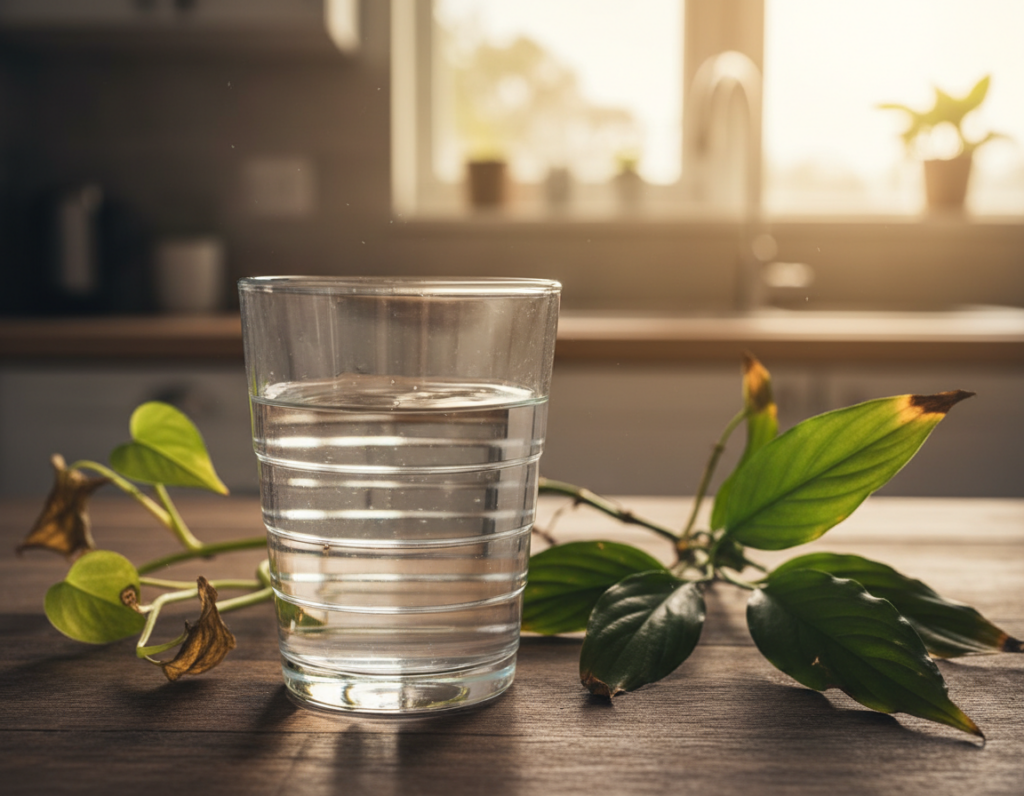
Brown spots with a yellow halo can point to a bacterial issue tied to excess moisture. Leaf drop that mimics drought stress also appears when roots can’t take up water.
The Role of Fungus Gnats
Fungus gnats thrive in wet soil and lay eggs in organic matter. Their presence often means the pot has stayed moist for a long time and needs attention.
Detecting Stem and Root Decay
If the base of the plant feels mushy or the pot becomes unstable, root rot is likely advanced. Surface mold or fungal growth also signals constant moisture and poor aeration.
- Keep an eye for limp, soft leaves rather than brittle dry ones.
- Check soil moisture before assuming underwatering; many owners misread these cues.
- Early detection and proper care can stop rot from spreading to healthy roots.
Environmental Factors That Contribute to Excess Moisture
Air movement, pot material, and media composition all affect how much water a root zone retains.
The Importance of Drainage and Pot Selection
Choosing the right pot matters. Ceramic and plastic tend to hold onto moisture longer than porous terra cotta, so they increase how long soil stays damp.
Good drainage prevents excess water from pooling at the bottom. A pot with drainage holes lets water escape and reduces the risk of root rot. When watering, check that liquid flows freely from the bottom.
- Additives like perlite or orchid bark create air pockets that help roots breathe and let the soil dry faster.
- Place pots where air can move around them; increased airflow speeds moisture loss in humid rooms.
- For people who water too often, a hardy snake plant is a forgiving type plant that tolerates missed sessions.
Proper pot choice and drainage are the most effective ways to stop overwatering plants. For more guidance on environmental problems and container care, see the recommended environmental resources.
Assessing Soil Moisture and Root Health
Reading the moisture level in a pot is the most reliable way to avoid guesswork with watering. A clear routine helps spot trouble early and guides proper care.
Using Moisture Meters and Manual Checks
A moisture meter that reads below a 3 usually means the soil dry and needs water. These meters are inexpensive and remove the guesswork for many houseplants.
For a manual check, insert a wooden chopstick deep into the pot. If it comes out dark, the medium is still wet and delaying water is wise.
Identifying Healthy Versus Rotting Roots
Healthy roots look bright white or pale yellow and feel firm. Waterlogged roots turn black or brown and feel mushy; that change is a clear indication of root rot.
If the base plant feels unstable or the pot is unusually light when dry, the root system may be compromised. Finding mold or fungus on the soil surface also confirms a schedule that is too frequent.
- Always check soil throughout the entire pot, not just the top surface.
- When inspecting roots, use sharp trimmers and wipe blades with alcohol to prevent disease spread.
- Keep an eye on pot weight; a dry mix is noticeably lighter than a wet one.
Strategies for Rescuing Waterlogged Greenery
A quick, methodical rescue can stop decay and give a stressed plant a second chance.
First, remove the specimen from its pot and inspect the roots. Any mushy, black, or brown root tissue must be trimmed away to halt rot.
The Grow-How Team recommends a 50% hydrogen peroxide and 50% water soak to stop the spread of root rot.
Clean the pot with disinfectant soap before reuse. Repot in fresh, clean soil and a container with good drainage.
- If root damage is severe, take healthy cuttings and propagate them in perlite or sphagnum moss.
- Only water plants when the soil is completely dry through the entire depth of the container.
- After repotting, water until moisture flows from the drainage holes at the bottom, then let the root zone dry before the next session.
Patience is essential. The root system needs time to acclimate and regrow. Removing damaged parts prevents mold and lets the plant focus on new leaves and healthy roots.
Conclusion: Maintaining a Healthy Watering Routine
Small, consistent changes to how and when you water make a big difference to root health. , They should always check soil moisture before adding more water and use a moisture meter when unsure.
Simple habits—good drainage, routine checks, and learning each type plant’s needs—help prevent overwatering and keep houseplants resilient. The Grow-How Team is available to advise on plant care and help a specimen recover after stress.
With steady observation and modest adjustments over time, owners will better prevent overwatering plants and support long-term growth. A snake plant or a delicate fern both respond well when soil and schedule match their needs.