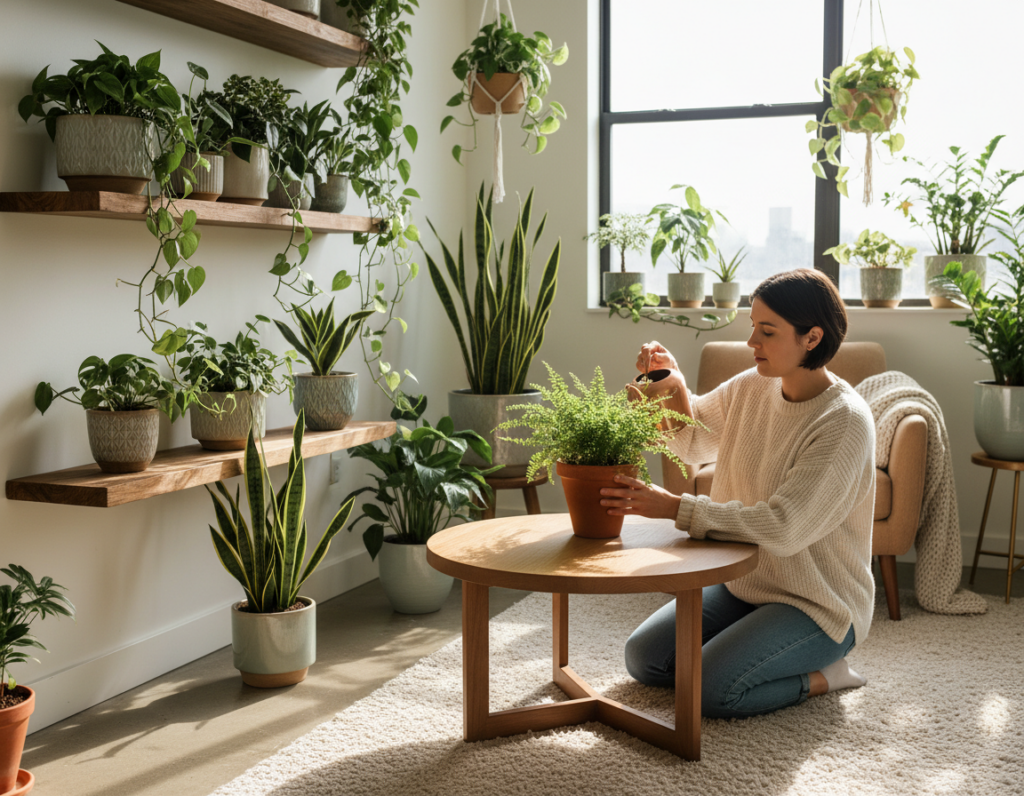
The NASA list of top air-filtering houseplants highlights how much plants help indoor air and focus. It also notes one caveat: success depends on the right water source and care.
Many homeowners assume municipal supply is harmless. In reality, common additives such as chlorine and fluoride can build up in pots and stress sensitive plants over time.
Choosing a different source can cut that chemical stress. Using filtered water or distilled water, or collecting rainwater, often prevents the slow accumulation of contaminants.
The best approach is simple. Evaluate the type of supply, match it to each plant’s needs, and check for signs of stunted growth or leaf damage. With modest effort, a collection stays lush and resilient.
Understanding Why Tap Water Bad for Indoor Plants
Household supply often carries hidden chemicals and minerals that quietly affect potted greenery. Many gardeners assume municipal sources are harmless. Yet about 85% of the USA has hard water, which raises mineral levels in soil and can stress sensitive houseplants over time.
Some additives evaporate with a little patience. Letting water sit for 24 hours lets chlorine off-gas and makes the liquid safer to use. At the same time, minerals remain and may build up with repeated use.
- Convenience makes many people choose tap water, but contaminants may harm delicate species.
- Minerals can be helpful in small doses, yet chemicals often outweigh those benefits.
- Simple dechlorination helps keep a collection healthy and supports long-term growth of good plants.
“Monitoring supply quality is a small step that prevents chemical buildup and keeps houseplants thriving.”
Understanding why tap water bad for indoor plants helps owners choose water safe plants and adopt easy methods to keep their collection healthy over time.
The Chemistry Behind Water Quality and Soil Health
Chemistry in the pot often dictates whether a house collection thrives or merely survives. The mix poured into potting medium sets chemical reactions that shape nutrient availability and root vigor.
The Role of pH Levels
Most species prefer a slightly acidic environment. A pH between 5 and 7 lets roots access key nutrients. If the soil shifts alkaline, iron and manganese become harder to absorb and growth slows.
Impact of Hard Water Minerals
Hard water often carries calcium carbonate that settles in the soil. Over time this buildup changes the mix and can block pores in the root zone.
- The root system reacts quickly to chemical shifts and shows stress first.
- Many plants like some beneficial minerals, but excess calcium creates nutrient imbalances.
- Managing mineral content prevents long-term buildup and protects soil health.
“Understanding water chemistry is the first step to keeping houseplants strong.”
Identifying Sensitive Species at Risk
Some houseplants show stress quickly when the liquid they receive contains dissolved salts and additives. Owners should watch new growth and edges of older leaves for early signs.
Species to watch: Calatheas, many Orchids, and ferns often develop leaf burn or mottling when exposed to high mineral levels in tap water. These symptoms usually start on new shoots.
Plants That Require Specialized Water
Reverse osmosis systems remove 92–99% of minerals, producing very soft liquid that many growers pair with added fertilizer. Distilled water and filtered water offer low-mineral options but can leave out calcium and other nutrients.
- Rainwater filtered water is popular among collectors because it contains fewer salts and fewer municipal additives.
- If a plant is struggling, excess minerals in the soil are often the cause; flushing the potting mix helps diagnose this.
- Mix tolerant and sensitive species wisely: some others tolerate hard water and resist buildup.
“Choosing the right source for each species prevents chemical buildup and keeps collections healthy.”
Common Contaminants Found in Municipal Supplies
Municipal supplies often carry unseen pollutants that can accumulate in pots over time.
Lead and copper may leach from aging pipes into a home’s supply and stress sensitive plants. Nitrates and PFAS come from agricultural runoff and industrial sources, and they persist in soil if used repeatedly.
Chemicals like chlorine are added to kill bacteria, but they can harm delicate roots when exposure continues over months or years. That gradual buildup changes nutrient availability and reduces vigor.
- Old distribution systems increase the risk of metal contamination.
- Runoff introduces synthetic compounds that resist breakdown in potting mixes.
- Many owners install a filtration system to remove key contaminants before use.
“Understanding what is in the supply lets growers take simple steps to protect each plant.”
By knowing common contaminants and testing the supply, collectors can choose treatment methods and avoid long-term damage to soil and growth.
Effective Methods for Dechlorinating Your Water
A few easy techniques remove common contaminants and protect roots from slow chemical buildup. These approaches suit collectors who want healthy growth without complex equipment.
Using Carbon Filtration
Carbon filters remove chlorine and many organic chemicals. A quality filter or countertop system makes filtered water fast and convenient.
The Benefits of Boiling
Boiling removes chlorine quickly. Boil for 15–20 minutes, then let it cool to room temperature before use.
Never water when liquid exceeds 120°F. Hot liquid can damage cell walls and burn the root system.
Utilizing Water Conditioners
Conditioners neutralize heavy metals and some additives. They are handy when people choose to use tap sources and want tap water safe to use on sensitive plants.
- Boil 15–20 minutes, cool to room temperature.
- Use a carbon filter to reduce contaminants.
- Add a conditioner to neutralize metals if needed.
- Filtered water is often the most convenient option.
“Proper preparation of the liquid used in pots is a small step with large rewards for houseplants.”
Natural and Filtered Alternatives for Better Growth
Choosing the right mix of sources helps a collection stay vigorous without complex equipment. Many growers favor rainwater because it is naturally soft and usually free of municipal additives.
Rainwater often suits species that prefer slightly acidic conditions. It stabilizes soil pH and encourages healthy roots.
A simple home blend can boost nutrition. A 1:1 ratio of filtered water and starchy pasta water supplies extra phosphorus and potassium that some specimens benefit from.
- Distilled water is ideal for very sensitive species but should be mixed occasionally so nutrients return to the soil.
- High-quality filters remove excess calcium and chlorine while keeping useful minerals that help good plants thrive.
- Reverse osmosis produces very pure liquid but often needs added fertilizer to replace lost nutrients.
Practical tip: Always bring any source to room temperature before use. Cold supply can shock roots and slow growth.
“Selecting a safe source and thinking in blends gives the best chance for vibrant, resilient houseplants.”
For more guidance on choosing the right supply, see the best water for houseplants.
Signs of Mineral Buildup and Chemical Stress
Subtle changes in leaf color and soil texture reveal when dissolved salts and additives are building up.
White, crusty residue on the surface of the soil is the clearest signal that hard water or dissolved minerals are accumulating.
If new growth shows yellowing or brown tips, the specimen may be reacting to chlorine and other chemicals in municipal supply. Over time, excess minerals like calcium collect and block nutrient uptake.
- A white crust on the potting mix signals high mineral content.
- Yellow leaves, brown tips, and wilting point to chemical stress from contaminants.
- Leaf burn often appears on sensitive species after repeated exposure to treated supply.
- Salt buildup can damage roots and stop a plant from absorbing moisture effectively.
Early detection matters. Regular checks of the soil and leaves let an owner switch to distilled water or filtered sources before damage becomes permanent.
“Inspecting pots after routine watering reveals problems early and saves a collection from long-term harm.”
Final Thoughts on Maintaining Optimal Plant Hydration
Small, regular steps to adjust what you pour into each pot yield large gains over time.
, Choosing a reliable source and staying consistent matters most. Using filtered water, distilled water, rainwater, or a carefully treated municipal supply reduces chemical stress and mineral buildup.
Regular checks for white crust, brown tips, or slowed growth help catch problems early. Simple testing and occasional flushing of the potting mix protect roots and preserve nutrients.
Reverse osmosis and carbon filtration are useful when hard water or chlorine causes recurring issues. With steady care, even sensitive houseplants become resilient and turn into good plants that reward patience.