Many houseplants, such as ferns and philodendrons, come from tropical regions where warm, moist air is normal. They often struggle when home air becomes dry, especially in winter. Proper moisture helps prevent browning leaves and slow growth.
Experts at Ed’s Plant Shop in 2026 note that you can learn how to increase humidity for indoor plants with simple, cost-conscious ways. These tips avoid buying an expensive humidifier and focus on routine changes that raise humidity and protect fragile roots.
This short guide shows practical steps that use water, grouping tactics, and small home adjustments. They help houseplants stay lush without complex gear. Readers will see clear, easy methods that fit apartment life and keep green collections healthy in any room.
Why Humidity Matters for Healthy Houseplants
Many common houseplants trace their roots to lush forests where air stayed damp and warm. That background shapes how they use water, breathe, and grow in a home setting.
Understanding Tropical Origins
Ferns, calatheas, and philodendrons evolved under canopies that gave steady moisture and filtered light. Those native conditions support leaf texture, stomatal function, and steady nutrient uptake.
Impact on Plant Growth and Vitality
When indoor humidity levels fall well below the ideal 40–60% range, growth slows and common issues appear. Brown edges, curled leaves, and stunted shoots are signs the environment is too dry.
Providing a more suitable microclimate helps restore vigor. Small adjustments that replicate higher humidity often prevent stress and support consistent growth across many species.
- Know native conditions of each plant.
- Monitor humidity levels near your collection.
- Fix low-moisture issues early to avoid lasting damage.
Identifying Signs of Low Humidity in Your Home
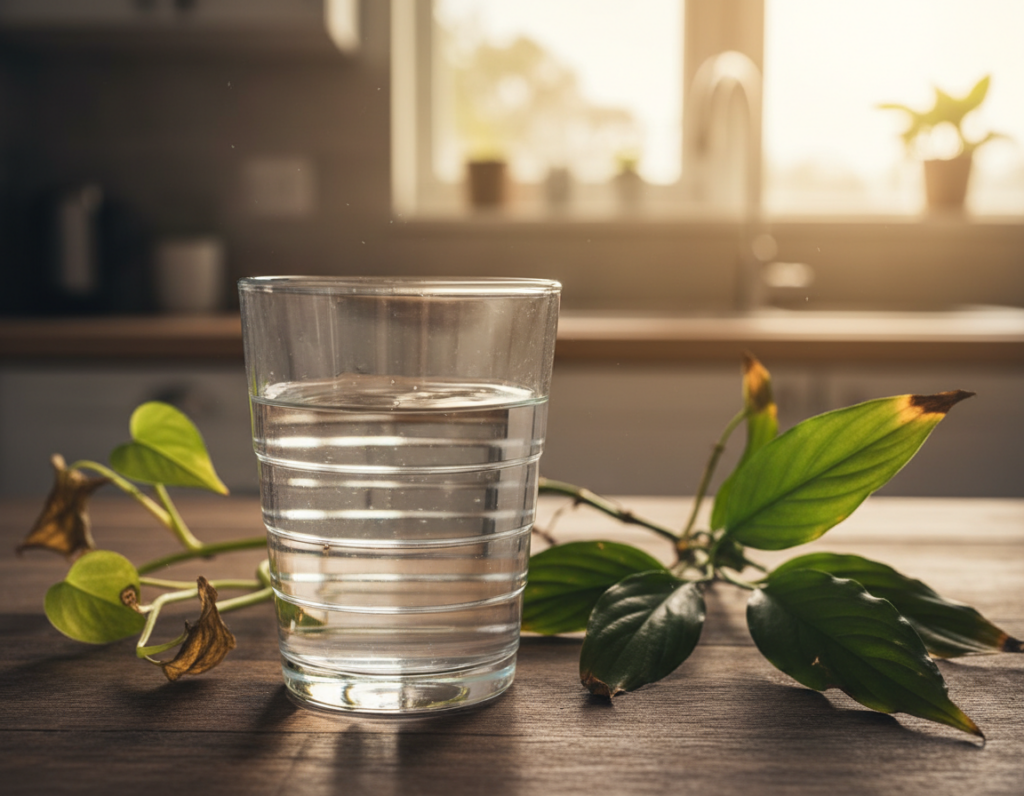
Leaf edges that brown and curl often signal that the surrounding air lacks enough moisture.
The Bloomscape Grow-How® Team notes that brown margins are a common early warning. In winter, furnaces and fireplaces can remove a large amount of moisture from a room. That loss makes foliage dry, crispy, or brittle.
If a plant begins to wilt or droop, this is a clear sign the local level needs attention. Yellowing leaves also point to stress caused by low moisture and can precede slower growth.
Quick visual checklist:
- Brown or crisp leaf edges
- Wilting or drooping stems
- Yellowing that starts at the base of leaves
- Foliage that feels dry when touched
Monitoring these signals helps owners spot issues early and take steps to increase humidity for their collection. Regular checks keep a healthier home microclimate and support steady plant growth.
How to Increase Humidity for Indoor Plants Using Grouping Techniques
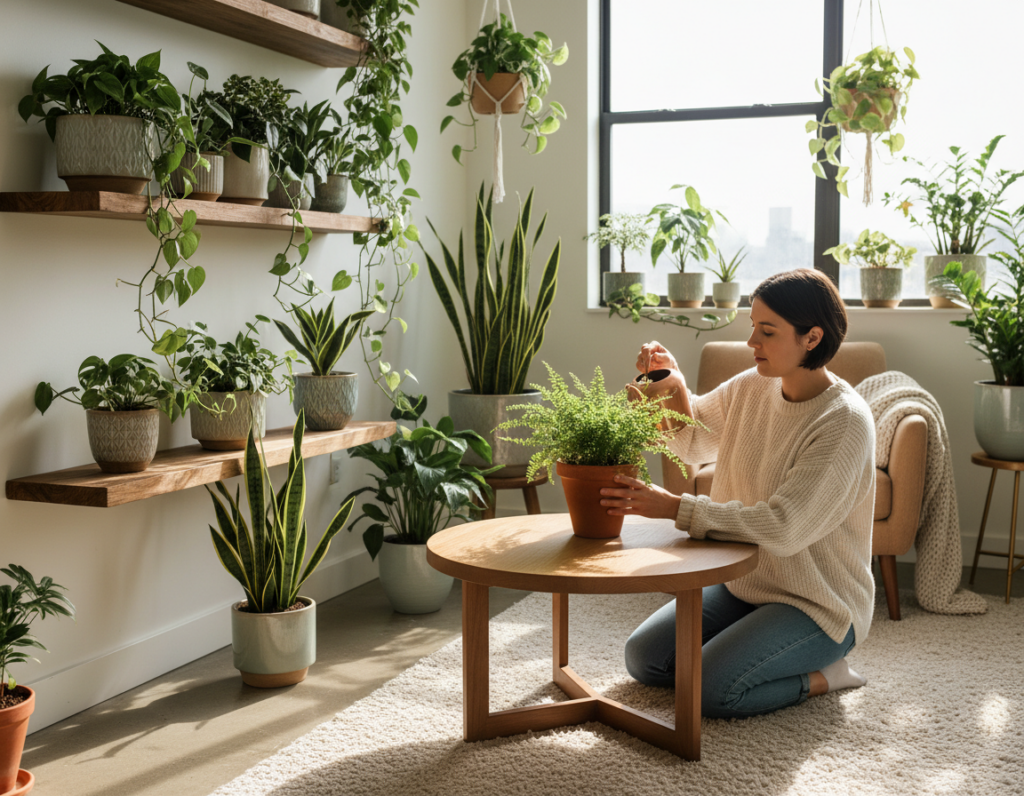
Placing several pots close together creates a shared humid zone that helps delicate foliage stay healthy.
Grouping plants forms a small microclimate where moisture released during transpiration lingers around the collection. This natural method works well for tropical species and is an easy way to boost humidity levels without extra gear.
For best results, arrange pots at varying heights and leave narrow gaps for airflow. Add a shallow dish of water in the center of the cluster to aid evaporation and raise the humidity around the group.
- Cluster species with similar light and water needs.
- Use trays or shelves to keep groups tidy and elevated.
- Monitor the group for pests and overwatering.
“Grouping is one of the most efficient natural strategies for supporting plant health,” Emma at Bloomscape notes.
Creating a Microclimate with Pebble Trays
Pebble trays offer an easy, low-cost method to keep foliage in a cozier, moister pocket of air. This simple setup captures evaporating water and raises the local humidity around plant leaves without electrical equipment.
To build a tray, lay a single layer of pebbles in a waterproof tray. Add water until the stones are just below the surface, then set the pot on top of the pebbles so the base sits above the water.
Proper Setup for Root Health
Ensure the pot never sits in water. Elevating the pot on pebbles prevents root rot and keeps the soil from staying overly wet.
As water evaporates from between the stones, it creates a steady moisture air zone around the foliage. Check the water level daily and refill as needed so the tray provides a consistent level of moisture.
- Classic and effective: a pebble tray is a reliable way to raise the local moisture around plant leaves.
- Use the right amount of water so pebbles are damp, not submerged.
- Keep trays clean and monitor for standing water to avoid pests.
“A pebble tray is one of the most accessible ways to support sensitive species,” Emma at Bloomscape recommends.
Utilizing Natural Moisture in Kitchens and Bathrooms
Rooms where everyday chores release steam are natural allies in efforts to increase humidity for tropical collections. Kitchens and bathrooms routinely give off water vapor during cooking or showering, which lifts local moisture and eases stress on sensitive foliage.
Moving houseplants into these areas is a simple strategy that uses existing conditions in the home. Many ferns and calatheas respond well when placed near sinks or within bathrooms, where the air stays damper and more stable.
Benefits at a glance:
- Steam from baths or boiling pots adds short-term moisture that raises local levels.
- Consistent humidity around a group helps reduce leaf browning and improves growth.
- No extra gadgets are needed—just mindful placement in naturally humid environments.
Always match light needs with moisture. A brighter bathroom window or a spot beside a kitchen window keeps a plant healthy; moisture alone won’t replace light.
The Role of Misting and Its Limitations
A light mist across foliage can refresh leaves and offer a quick moisture boost on warm days.
Misting supplies a short-lived lift in local humidity but rarely changes whole-room levels. It benefits plants by cooling leaf surfaces and easing minor stress. However, the effect fades within hours, so misting works best as a supplement, not a replacement for a humidifier or grouping techniques.
When to Mist for Best Results
Mist in the morning so leaves dry during the day and the risk of mold drops. Use a fine spray bottle to disperse tiny droplets without soaking foliage.
Plants to Avoid Misting
Some species gain no benefit and can suffer from water on fuzzy leaves. Never mist African Violets, Purple Heart, or Philodendron Micans Velvet.
- While misting gives a quick boost, the effect is temporary and does not raise whole-room humidity for long.
- Mist early in the day so leaves dry fully and mildew risk stays low.
- Use a fine mist nozzle and check each species’ needs before spraying.
“Misting can refresh foliage on a hot day, but consistent moisture is best achieved through other methods.”
Strategic Placement of Water Bowls Near Heat Sources
A shallow bowl of water set near a radiator turns ordinary heat into a simple moisture source for nearby green life.
This is an easy way to increase humidity around plants during dry winter months. Place bowls close to heat vents, baseboard heaters, or radiators so warmth speeds evaporation.
Use a wide, shallow dish to maximize surface area. The larger the surface, the more water evaporates and the more moisture air gains in the room.
This method works well in a home where central heating makes the air harsh. It is most effective when combined with grouping, pebble trays, or misting for a stable microclimate.
- Keep bowls topped up and check levels daily.
- Avoid placing bowls where pets or children can knock them over.
- Rotate locations if one room gets too dry or too warm.
With regular refills and sensible placement, the steady release from water evaporates into a gentle buffer that eases stress on tender foliage and improves the overall effect on room air.
Benefits of Using a Dedicated Plant Humidifier
A reliable humidifier converts water into a fine mist that directly supports leaf health and steady growth. This gives steady humidity levels where bundling or trays may fall short.
Ultrasonic Technology for Fine Mist
Ultrasonic units create tiny droplets that settle gently on foliage and in the surrounding air. The fine mist is absorbed faster by a plant’s leaves and reduces large droplets that cause spotting.
Smart App Control Features
Many models include app control so they monitor and hold a target level automatically. The Spider Farmer 5L Smart Cool Mist Humidifier adds convenience by letting users check water and adjust settings from a phone.
Targeted Mist Distribution
An extendable hose directs mist exactly where it’s needed. This is useful for mixed collections where some pots need more moisture than others.
- Efficient: a dedicated humidifier maintains stable room moisture without daily manual effort.
- High-capacity options: the 16L Spider Farmer model delivers up to 1400ML/H for larger spaces.
- Automated care: proper use reduces dryness and supports long-term growth.
“A dedicated unit removes guesswork and helps keep a steady microclimate for sensitive species.”
Long-Term Solutions with Terrariums and Self-Watering Pots
Using a glass enclosure gives plants a small, consistent climate where water cycles naturally. Closed terrariums trap steam and create a self-sustaining environment that keeps moisture steady and the air warm.
Closed terrariums are an excellent long-term way to increase humidity. They suit ferns, mosses, and other species that thrive in higher humidity. This sealed setup recycles evaporated water back into the soil and foliage.
Self-watering pots supply a steady source of water to roots. That steady supply reduces stress and raises the humidity around nearby leaves. Both options cut daily chores, which is ideal during winter when indoor air gets very dry.
Practical tips:
- Place a small pebble tray inside larger terrariums to boost local moisture.
- Choose self-watering systems with a visible reservoir for easy checks.
- Use these solutions to create a stable environment that helps houseplants grow long term.
Avoiding Environmental Factors That Dry Out Your Air
Forced air, open windows, and space heaters can quickly strip water from the air and stress delicate plants.
Keep pots away from direct heat sources and chilly drafts during winter. Direct exposure dries leaves and raises the risk of browning and slowed growth.
Simple placement changes protect fragile specimens. Move a pot off a radiator shelf, close gaps near vents, or use a draft blocker at door bottoms to stabilize the moisture air around a group.
Even when using a humidifier, control these drying influences. A steady humidifier cannot compensate for constant blasts from an HVAC vent or frequent open windows.
- Check humidity levels regularly near collections.
- Use trays or nearby bowls of water for small boosts, and avoid direct heat.
- Group sensitive species in a single room with stable conditions for steady growth.
“Small environment fixes often make the largest difference in plant health.”
Conclusion
Small, steady changes around the home can make a big difference in plant vigor and leaf health. Simple ways—like grouping pots and using a pebble tray—create a moister microclimate without extra gear. These steps are low-cost and easy to use.
For greater control, a reliable humidifier works well alongside trays and careful placement. Regular checks and modest adjustments keep a stable zone that helps growth and reduces leaf stress.
Start with one change today. Whether using pebble trays, grouping, or an appliance, the goal is clear: raise humidity and protect houseplants so they stay lush year-round.