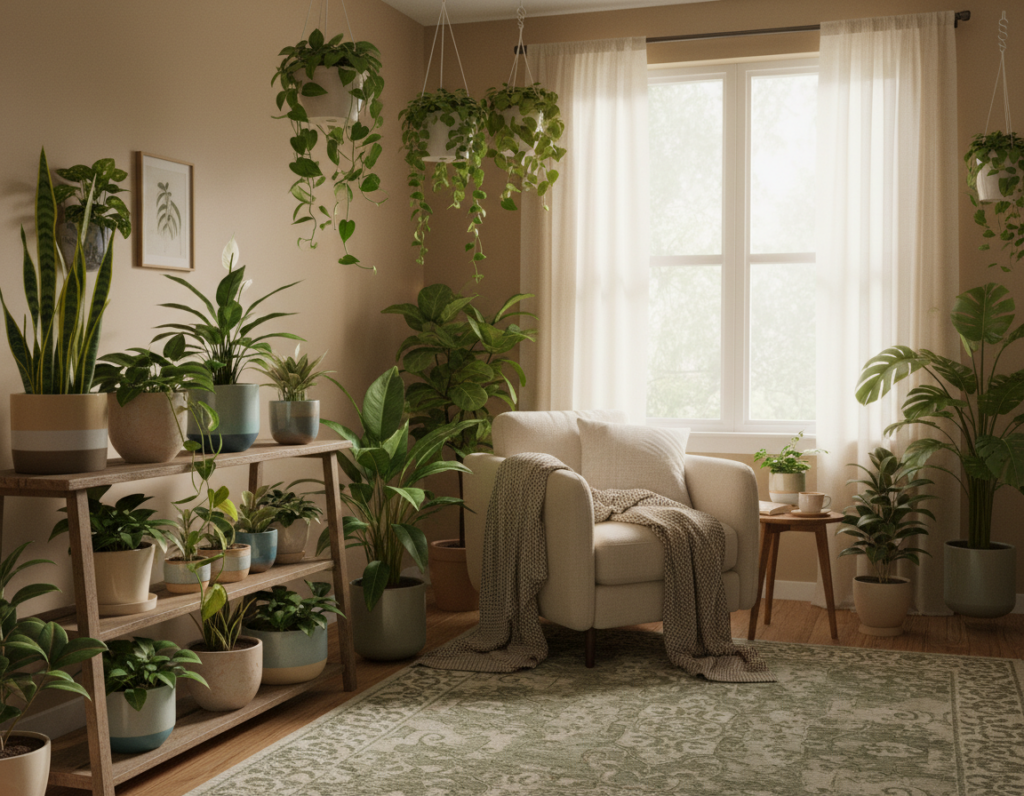
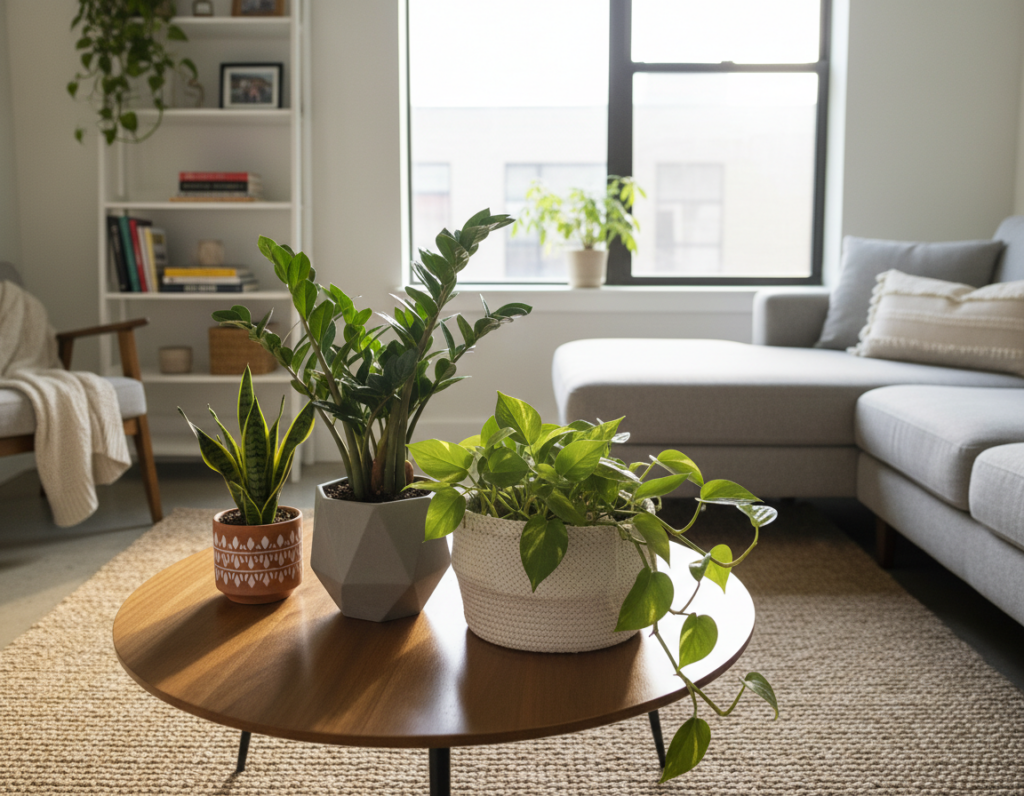
Many common house species thrive where light is limited. Species such as Pothos, Snake Plant, ZZ Plant, Chinese Evergreen, and Peace Lily evolved under canopy shade. They cope by using low light more efficiently than sun-loving species.
Adaptation matters. Thick leaves, slow growth, and efficient chlorophyll use help certain plant types endure dim rooms. These traits let them survive long periods without bright sun.
Choosing resilient varieties makes greening a home realistic, even in north-facing rooms or hallways. Proper placement and modest care support long-term health and air-cleaning benefits.
Key Takeaways
- Some species are naturally adapted to low light and need less direct sun.
- Structural traits like thick leaves and slow growth boost survival.
- Resilient varieties reduce care time while improving air quality.
- Placement matters more than intense light for many common types.
- Choosing the right species makes greening dark spaces achievable.
Understanding Light Conditions in Your Apartment
Not all dim rooms are the same; the type and amount of light shape plant survival more than care routines do. Assessing light conditions helps decide which species will thrive and which will only tolerate a spot.
Defining indirect light. This term describes soft, filtered rays that reach a room after bouncing off walls or passing through a sheer curtain. A shaded window often supplies indirect light suitable for many houseplant types.
The difference between low light and no light. Low light usually means reduced, indirect light rather than total darkness. If a room needs a lamp on all day, a grow light is likely required to keep any specimen healthy.
“A plant that tolerates low light may survive, but only those adapted to such conditions will truly thrive.”
- Low light is not zero light; some energy still reaches the leaf.
- Resilient species can grow in shaded rooms without constant supplementation.
- Rooms that have been too dark for years may need artificial light to support growth.
Why Some Indoor Plants for Apartments With No Sunlight Thrive
Certain foliage types fare better in shadowed rooms because they are built to use scarce light. Many species evolved under forest canopies and now function well in low light conditions.
Examples matter: the ZZ plant, snake plant, Chinese evergreen, and peace lily all show traits that help them thrive low. They keep leaves that hold chlorophyll and grow slowly rather than wasting energy.
Slow growth in a dim room is normal and not a sure sign of poor health. Some houseplant varieties will photosynthesize steadily even on fluorescent fixtures, while others truly need a window or a grow lamp.
“If a room has zero natural light, most greenery will need quality artificial light to survive.”
- Choose species adapted to shade to reduce care time.
- Accept slower growth as an adaptation, not failure.
- Use supplemental light when a room lacks natural light.
Hardy Varieties That Tolerate Dim Environments
Several easy-care varieties tolerate reduced light and still offer lush, green foliage in quiet rooms.
These selections suit low light conditions and demand modest care. They cope by storing water or growing slowly, so growth is steady rather than rapid.
The Resilience of Snake Plants
The snake plant is nearly indestructible. Thick, green leaves hold moisture and let the plant tolerate low light. It fares well in bedrooms or offices and can survive years of minimal attention.
Benefits of the ZZ Plant
The ZZ plant thrives in low light and is drought-tolerant. It needs watering only every few weeks and tolerates soil dry periods. This easy grow species adds a sleek look and helps improve air in a room.
Choosing the Right Pothos
Pothos does best in indirect light but will tolerate dim corners. Its trailing foliage looks great in a hanging basket and requires light, infrequent watering. Check the soil dry level before each water to avoid root rot.
- Tip: Always confirm the soil dry state before watering—overwatering kills more than lack of light.
- Consider other hardy types such as spider plant, Chinese evergreen, or peace lily if extra humidity or occasional water is acceptable.
For a deeper selection guide and care notes, see the low-light houseplant guide.
Essential Care Tips for Low Light Foliage
Consistent, gentle care helps slow-growing foliage stay healthy when light is scarce.
Keep leaves clean. Dust blocks limited light. Wipe broad leaves gently once every two weeks so a plant can absorb more energy.
Check soil before watering. Most low light houseplants prefer to dry slightly between waterings. Use a finger test to confirm the soil dry level and avoid overwatering.
Rotate pots every few weeks. This helps even growth when a single window supplies indirect light. If growth slows or leaves yellow, reassess the light conditions and move the specimen nearer a brighter spot.
- Wipe dust off leaves to improve photosynthesis and air quality.
- Monitor the soil dry status for Peace Lily and similar types.
- Maintain steady humidity and avoid sudden temperature shifts.
| Tip | Why it matters | Quick action |
|---|---|---|
| Leaf cleaning | Improves light absorption | Wipe monthly with damp cloth |
| Soil check | Prevents root rot | Finger test before watering |
| Rotate pot | Promotes even growth | Turn 90° every 2–4 weeks |
“Proper care will keep foliage healthy and vibrant even without much direct sun.”
Common Mistakes When Watering Indoor Plants
A simple finger test can prevent the most common watering errors that kill houseplants. Check the top inch of soil before you reach for the watering can. If it feels damp an inch down, wait; too much moisture causes root rot in low light conditions.
Checking Soil Moisture Levels
Avoid rigid schedules. Watering on a fixed timetable often does more harm than good. Different varieties need different amounts of water even when they tolerate low light.
- Overwatering is far more common than underwatering; use the finger test to assess soil dry levels.
- If the soil is damp an inch below the surface, delay watering to protect roots.
- Chinese Evergreen is an easy grow that tolerates occasional drought; Spider Plant prefers less fluoride in tap water.
- Peace Lily only needs water when the mix is really dry; yellowing leaves often mean too much water.
“Check soil moisture, not the calendar, to keep growth healthy and air quality stable.”
The Role of Humidity and Air Quality
Good air quality and steady humidity create a safety net for foliage kept in dim rooms.
Many tropical species prefer moist, stable air rather than bright sun. Peacock plants do best in humid temperatures and prefer distilled or rain water. Maidenhair ferns need high humidity and consistently moist soil without staying waterlogged.
Prayer plants show clear signs when conditions are right: their leaves fold like hands at night when humidity and watering are correct.
Beyond comfort, several common specimens act as air purifiers. They remove some indoor toxins and improve the room air while they grow.
“High humidity helps delicate leaves stay green and prevents brown, crispy edges.”
- Keep humidity steady; avoid wide swings.
- Use a humidifier or pebble tray if the air is dry.
- Monitor soil moisture; moist but not soggy mixes suit many shade-tolerant types.
| Species | Humidity | Water | Notes |
|---|---|---|---|
| Peacock plant | High (60–80%) | Distilled/rain; keep moist | Prefers warm, humid rooms |
| Maidenhair fern | Very high (70–90%) | Keep soil moist, avoid drying | Sensitive to dry air |
| Prayer plant | High (60–75%) | Moist soil; moderate fertilizing | Leaves fold at night |
Signs Your Plant Needs More Light
Watch how growth changes over weeks—light shortages often reveal themselves slowly. A short check each week helps spot trouble early.
Identifying Stunted Growth
Slow or leggy growth is one of the first clues. If stems stretch toward a window or new shoots stay tiny, the plant is searching for more light.
Some species, like snake plant or peace lily, will slow growth before showing leaf damage. Observe how plants grow over months rather than days.
Why Leaves Turn Pale
Pale, small leaves often mean the foliage is not making enough energy. Pothos and philodendron may develop thin, faded leaves when light is too low.
If the soil dry level and watering are correct but the leaves still fade, improve natural light or add soft supplemental light.
“If plants stretch, fade, or close their leaves at night, they are asking for brighter light.”
- Move a struggling specimen closer to a window for a few weeks and watch for change.
- Check that soil dry rules are met before assuming light is to blame.
- Consider that even types that tolerate low light will show signs after years in poor conditions.
Creative Ways to Display Plants in Dark Corners
Dark corners can become focal points when clever displays mix height, texture, and hardy greenery.
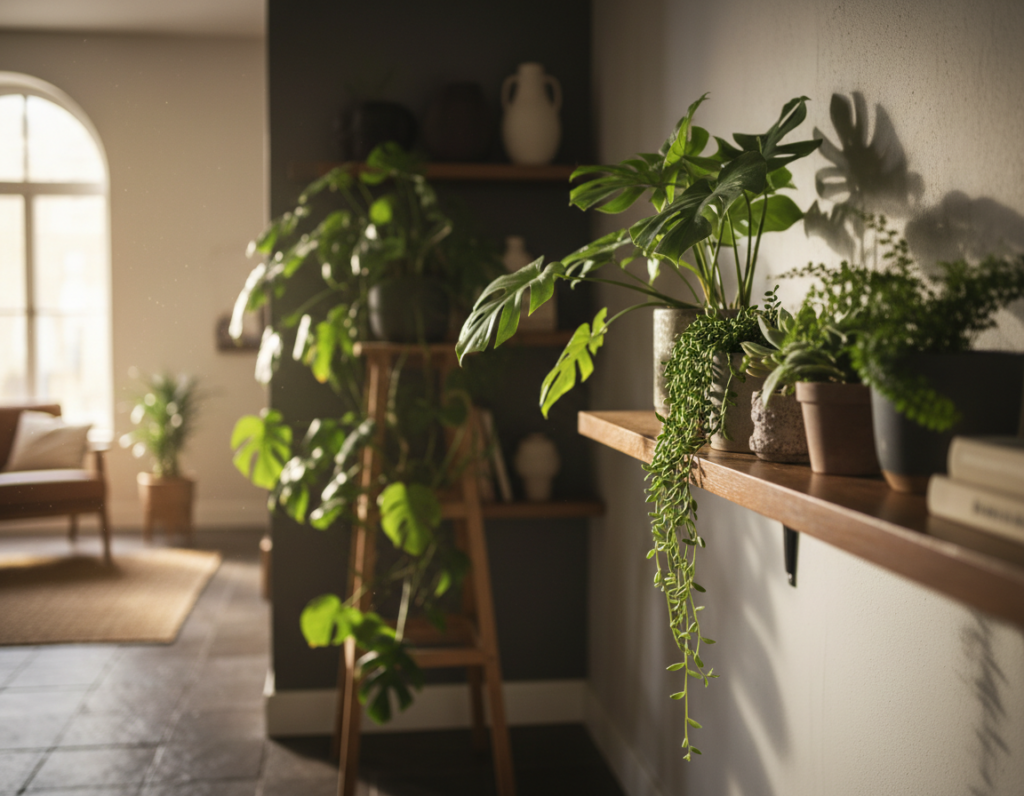
Use hanging baskets and tiers to let foliage trail down and catch any stray indirect light. Pothos works well as a wall accent or on a desk shelf. ZZ adds structure to a basement nook or balances a fireplace built-in.
Air Plants make artful additions in terrariums or mounted on driftwood and thrive in steamy bathrooms. The cast iron plant brightens a dark corner with rich green leaves and needs minimal fuss.
- Place specimens near a window edge or open doorway when possible so they get a little light.
- Use decorative planters to elevate the look and add contrast to shadowed areas.
- Monitor growth, water, and humidity—adjust care if leaves pale or stretch.
“Thoughtful placement and attractive containers turn even dim rooms into intentional, livable space.”
Conclusion
A well-chosen mix of hardy species can turn a dim room into a thriving green corner. Select resilient types like the snake plant, peace lily, or chinese evergreen to reduce fuss and enjoy steady benefits.
Match each plant to the available light and follow basic care: check soil, avoid overwatering, and clean leaves. Even durable varieties need some sunlight or quality artificial light to stay healthy.
With simple choices and steady routines, anyone can create a calm, green home. Try a spider plant or a set of snake plants to start and build a lasting collection that purifies air and adds life to low-light spaces.