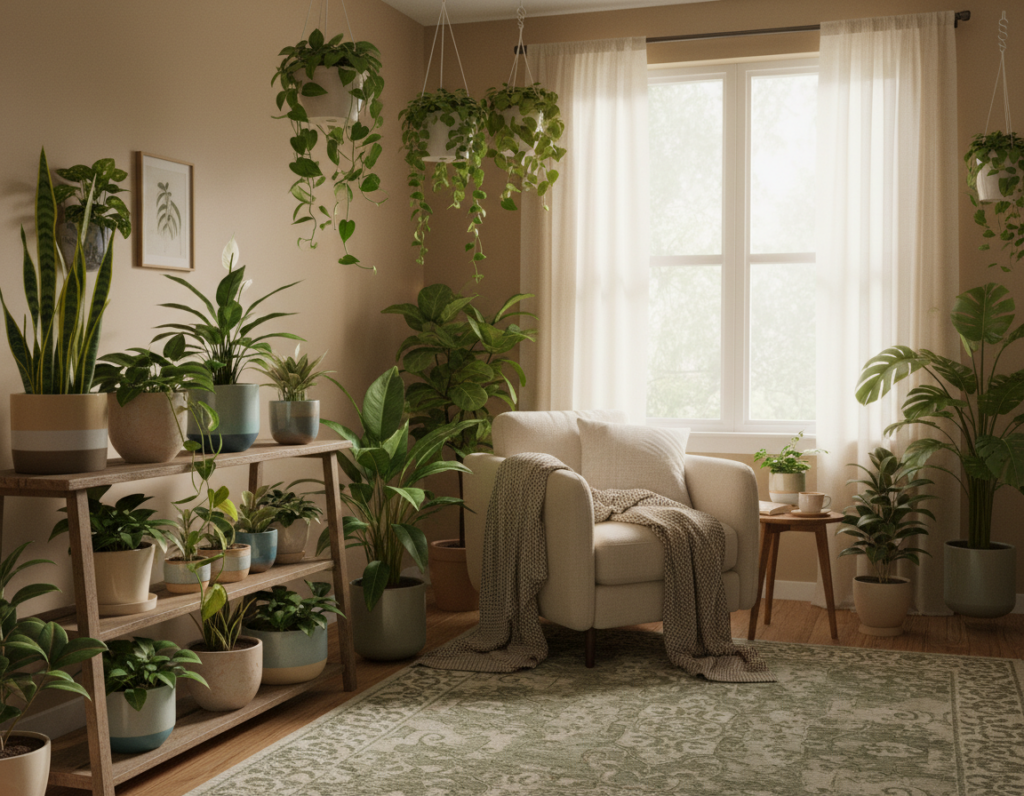
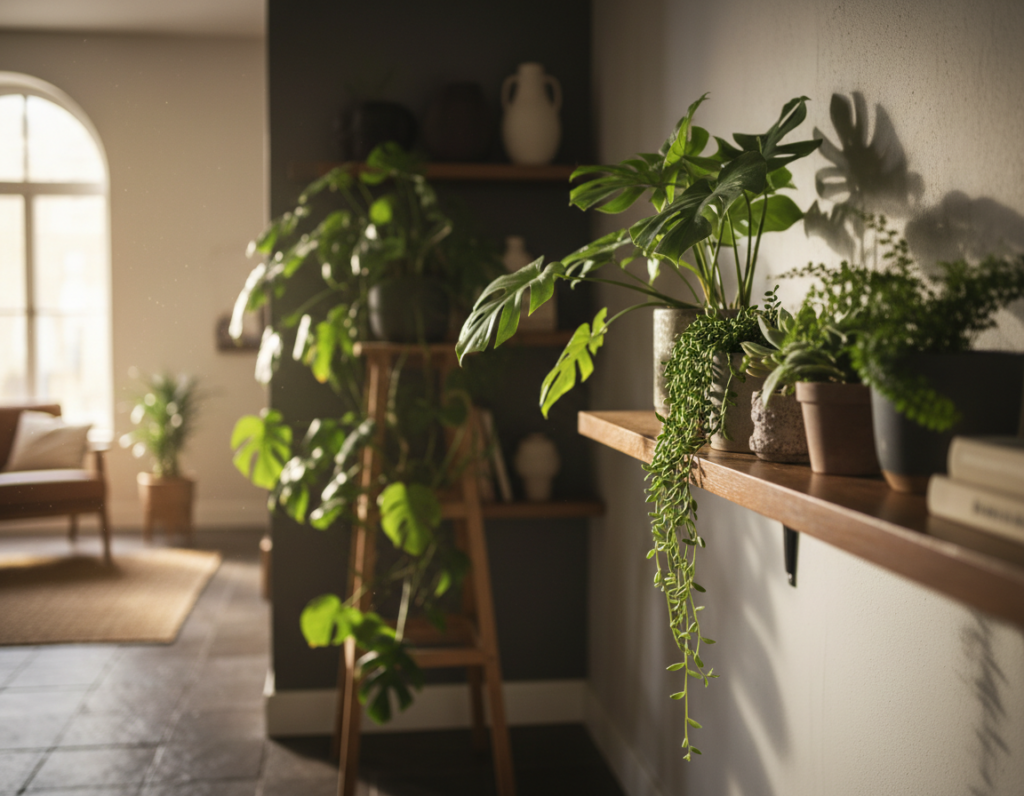
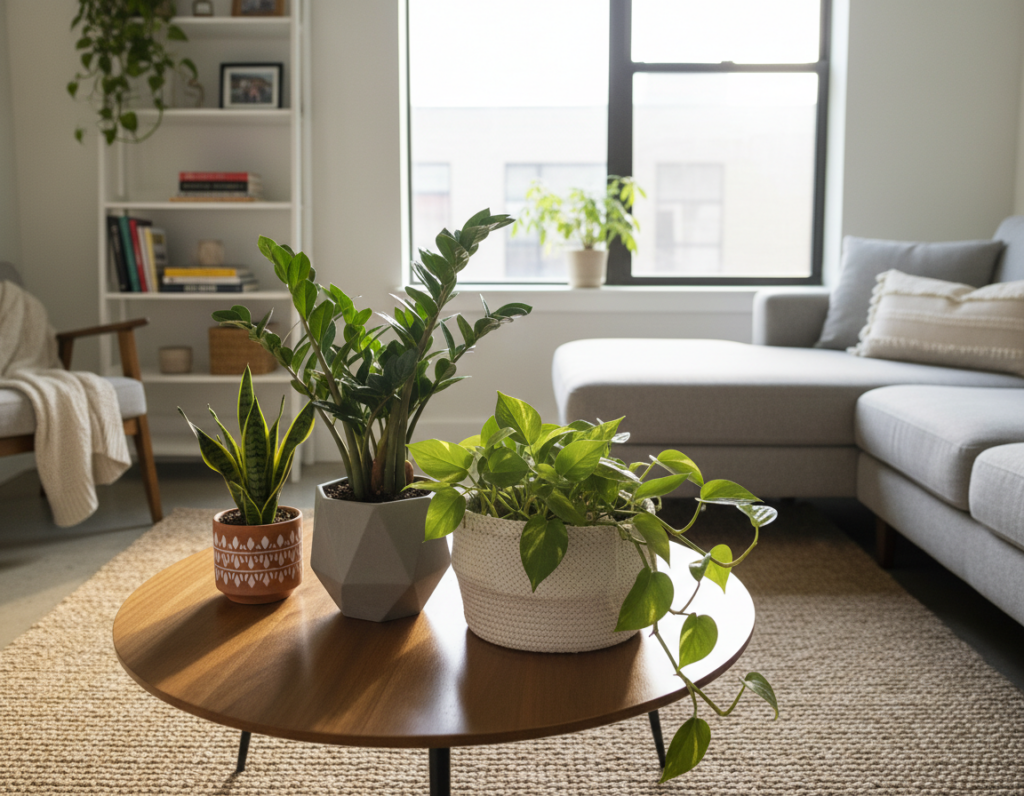
Many busy people want a lush green accent in their home, yet they juggle work, family, and little free time. He or she may place a plant in a shady room and hope it thrives. That hope meets reality when light is limited.
Plants bring warmth to every room, but lack of light changes their growth. Leaves may stretch, color may fade, and growth will slow. Simple care habits help reduce stress for a plant in low-light areas.
Choosing low-maintenance species and balancing watering with dry soil helps. Small adjustments in placement and timing of care make a big difference. This guide explains what to expect and how to keep green life healthy in darker corners of a home or office.
Key Takeaways
- Low light slows growth and alters leaf color.
- Pick low-maintenance types for dim rooms.
- Let soil dry between watering to avoid root issues.
- Short moves toward brighter areas improve vigor.
- Simple routines save time and protect green decor.
Understanding the Reality of Indoor Light Conditions
Indoor light varies wildly across a home, and those shifts shape leaf color, growth, and health.
Natural light limitations matter most when placing a houseplant. North-facing rooms, deep interior spaces, and rooms blocked by trees receive low light. Some corners get just morning glow, while others see little sun all day.
The importance of photosynthesis is simple: leaves need usable light to convert energy. If light falls short, a plant slows growth and the soil stays cooler and damper. That raises the risk of root issues and pale foliage.
Practical notes
- Many houseplants need more bright hours than a dim room offers.
- Low light options work well in shaded spots and often tolerate artificial bulbs.
- Assess each room’s light levels before choosing placement to match plant needs.
| Light Type | Typical Rooms | Plant Response |
|---|---|---|
| Bright indirect | East/West windows | Healthy growth, vivid leaves |
| Low light | North rooms, interior corners | Slower growth, paler color |
| Artificial light | Windowless offices, basements | Good with proper bulbs and timing |
Can Plants Survive Without Direct Sunlight
Reduced light changes how a plant allocates energy, so shape and vigor shift noticeably. He or she may expect slow growth in low light, and that outcome is common.
All green life endures short dark spells naturally. Most species tolerate nights and brief dim periods because they evolved under cycles of light and dark.
Some exceptions are extreme. The genus Orobanche (broomrape) has lost photosynthesis and taps other roots for energy. Mycoheterotrophs feed on fungi and may persist in complete darkness for months or even years.
- Short periods: most indoor plants recover if moved to better light over time.
- Parasitic examples: broomrape and mycoheterotrophs bypass leaves for food.
- Stress signs: etiolation appears fast—grass under a tent turns yellow and spindly.
| Type | How long | Survival mechanism |
|---|---|---|
| Typical houseplant | Days to weeks | Stores energy; slows growth; needs occasional bright hours |
| Parasitic species | Months to years | Feeds on host roots or fungi; little to no photosynthesis |
| Grass under cover | Weeks | Etiolation and chlorophyll loss; weak regrowth without sun |
Bottom line: No green organism lasts forever away from the sun. Even those that avoid leaves rely on a chain of energy that starts with the sun.
The Role of Indirect Light in Home Environments
Light that bounces around a room often fuels steady growth more reliably than a single bright beam. Indirect light means the sun does not hit foliage head-on. A plant placed near a curtained window receives this softer glow.
Bright indirect sunlight gives energy while protecting leaves from scorch. Many indoor plants use that glow to keep color and steady growth. Low filtered light through a sheer curtain also supports foliage and slows water loss in the soil.
As a rule, areas with reflected or shaded sun suit most shade-tolerant varieties. Placing a specimen a few feet from an open window often provides better conditions than a spot that lacks any natural light.
- Indirect light: sun not striking the leaf surface directly.
- Direct example: an outdoor pot under the sun or at an open window.
- Filtered light through curtains keeps leaves vibrant and prevents burn.
| Light Type | Typical Room | Plant Response |
|---|---|---|
| Bright indirect | East or west window a few feet away | Healthy growth, vivid foliage |
| Low filtered | North room, curtained window | Slower growth, stable soil moisture |
| Reflected light | Interior rooms with light walls | Good for shade-tolerant varieties |
Resilient Foliage for Dimly Lit Corners
Certain hardy species offer color and form even where light is limited most days. These varieties suit rooms with low light and require modest care. They help keep the home green while needing fewer bright hours.
Chinese Evergreen
Chinese evergreen shows patterned leaves and tolerates low light conditions well. It prefers moderate watering and benefits when soil is allowed to go slightly soil dry between waterings.
Peace Lily
Peace lily brings bold, dark leaves and occasional white blooms in low light. It alerts owners to thirst with drooping leaves and recovers after a drink. Use indirect light and light feeding for best results.
Cast Iron Plant
Cast iron plant survives neglect and keeps steady foliage in dim corners. It tolerates irregular watering and low maintenance schedules, making it ideal for busy homes.
| Species | Light | Watering | Key benefit |
|---|---|---|---|
| Chinese evergreen | Low to bright indirect | Allow topsoil to dry | Variegated, tolerant |
| Peace lily | Low filtered to indirect | Moderate; droop signals | Blooms; air-cleaning |
| Cast iron plant | Low to moderate | Infrequent; drought-tolerant | Hardy; low care |
For more shade-loving options and tips on keeping houseplant health in low light, see houseplants that thrive with limited light. Small moves toward brighter zones and simple routines protect foliage for weeks and beyond.
Architectural Plants for Minimalist Spaces
Tall, architectural specimens add sculptural interest to clean, spare interiors. Their form supports a minimalist look while offering practical foliage appeal.
Dumb cane is prized for bold leaves and dramatic patterning, though owners should note it is poisonous to pets. The Dracaena massangeana reads like indoor timber, making it ideal as floor decor in open-plan rooms.
The Snake Plant supplies a vertical line that fits narrow corners and modern shelving. Many varieties grow best in bright, indirect light but tolerate medium or low conditions when used for decor.
Maintenance is simple: wipe leaves regularly so they absorb sun and nutrients more efficiently. Use well-draining soil and place specimens where air circulates to keep foliage healthy.
| Species | Best placement | Key benefit |
|---|---|---|
| Dumb cane | Entryways, desks | Bold foliage; pet toxic |
| Dracaena massangeana | Floor, corner | Tree-like form; sculptural |
| Snake Plant | Narrow corners, shelves | Vertical line; low maintenance |
For more low-maintenance choices and layout ideas, consult architectural plants that are low maintenance.
Climbing Vines That Thrive in Shade
Trailing and climbing vines bring vertical interest to dim corners and high shelves. They suit rooms with limited window exposure and add a tropical feel without heavy upkeep.
Choose varieties that tolerate low light and bright indirect light. These vines keep form and color in softer exposures and suit hanging baskets or trellises.
Pothos
Pothos is forgiving and adapts to medium indoor light, though it will live in low light. Too much direct light often fades or yellows the leaves. Regular pruning keeps vines full and prevents legginess.
English Ivy
English Ivy forms thick, strong stems that suit baskets, shelves, and vertical supports. It prefers bright indirect light but tolerates low light; more light usually improves variegation and color.
- Placement: hang or train on supports for best effect.
- Watering: water only when the soil feels dry to the touch.
- Maintenance: trim to control length and encourage bushier growth.
| Vine | Best light | Care tip |
|---|---|---|
| Pothos | Medium to low light | Prune regularly; avoid harsh sun |
| English Ivy | Bright indirect to low | Keep soil slightly dry between waterings |
| Other ivies | Indirect light | Good for shaded shelves |
Tropical Varieties for Low Light Rooms
Many tropical species retain deep color and form even when a room receives only soft, filtered light.
Peace lily is a top choice: its white bract is not a true petal but a modified leaf that wraps the small yellow flower. It signals thirst with drooping leaves and recovers after a drink.
Chinese evergreen is easy to grow and earned a spot on NASA’s air-filtering list. It tolerates low light and steady neglect better than many houseplant options.
The Monstera, named from the Latin for monster, keeps dramatic split leaves in low conditions. The Peacock Plant prefers humidity and moist soil to keep its showy foliage vivid.
Spider plant produces small white flowers and spiderettes that offer free propagation. A snake plant works well too; its sturdy, upright leaves demand little water and suit narrow rooms.
| Variety | Best light | Watering | Key trait |
|---|---|---|---|
| Peace lily | Low filtered to bright indirect | Moderate; droop cue | Bract around flower; peace aesthetic |
| Chinese evergreen | Low light | Allow top inch to dry | Air-filtering; tolerant |
| Monstera | Low to bright indirect | Even moisture | Dramatic split leaves |
| Spider plant | Low to medium light | Water when dry | Produces spiderettes |
Unique Air Plants That Require No Soil
Air plants offer a soil-free option that suits tiny spaces and modern interiors. They absorb moisture and nutrients through their leaves and need no potting mix. That makes them ideal for homeowners who want low-fuss greenery.
Displaying Air Plants
Display choices are flexible. Mount specimens on driftwood, nest them in open terrariums, or hang a cluster in a bathroom for a spa-like touch.
Styling tip: combine a few shapes and textures to keep the arrangement vivid while using minimal floor space.
Misting Requirements
Watering differs from potted varieties. A thorough mist two to three times weekly suits many indoor setups. Periodic soaking for 10–20 minutes once every one to two weeks helps larger specimens.
Avoid leaving them in standing water and allow good air flow so leaves dry within a few hours. These steps reduce rot and support steady growth in low light areas.
- Low maintenance: little daily upkeep needed.
- Light: thrive with consistent, indirect exposure rather than harsh sun.
- Care: misting plus good circulation keeps them healthy.
Identifying Signs of Light Deprivation
Subtle cues in leaf size and stem length tell a lot about a plant’s access to usable light. A quick inspection helps a homeowner spot trouble early and adjust placement.
Watch the leaves and growth habit. If new leaves are small and pale while overall growth stalls, the plant is not getting enough sun. Philodendron stems that stretch with long gaps between leaves point to weak exposure.
Color shifts matter. On a Peacock Plant, pale markings usually mean too much sun, while dark brown, lifeless leaves signal light deprivation. Peace lily will tolerate dim spots, but it rarely produces its white bracts under poor light conditions.
- Small, pale leaves and stunted growth indicate insufficient sun.
- Dark brown foliage on a Peacock Plant suggests lack of usable light.
- Leggy stems and wide leaf gaps in Philodendron show weak exposure.
- Peace lily remains green in low spots but may stop flowering.
- Test different light conditions near windows to find the best spot; adjust soil moisture after moves.
| Sign | Likely cause | Quick fix |
|---|---|---|
| Small pale leaves | Low light | Move nearer a brighter window; monitor soil |
| Leggy stems | Too little usable light | Rotate toward brighter area; prune |
| Dark brown leaves | Light deprivation stress | Increase indirect sun; check watering |
Proper Watering Techniques for Low Light Plants
A careful watering routine keeps dim-corner houseplants steady and healthy. In areas with low light, growth slows and water use drops. That means overwatering risks root rot more than drought does.
Match water to each species. Maidenhair ferns prefer high humidity and moist soil; they need frequent light watering and occasional misting. By contrast, snake plants rot easily, so let the soil dry between waterings to avoid soggy roots.
Peace lily is forgiving: water only when the soil is noticeably dry. This makes the peace lily a practical choice for busy homes and offices.
Simple weekly habits improve leaf health. Wipe leaves with a damp cloth to remove dust so leaves absorb light and nutrients more efficiently. Use distilled water for sensitive types like maidenhair to prevent brown tips from hard tap water.
- Keep maidenhair moist but not waterlogged.
- Allow snake plant soil to go soil dry between waterings.
- Water peace lily only when the top layer is dry to the touch.
| Species | Watering tip | Key note |
|---|---|---|
| Maidenhair fern | Frequent light water; high humidity | Avoid hard tap water; use distilled |
| Snake plant | Infrequent; let soil dry | Risk of rot if kept wet |
| Peace lily | Water when topsoil is dry | Good for office schedules |
Managing Artificial Light Sources for Indoor Greenery
Using artificial sources wisely gives house foliage steady energy when windows fall short.
Many common specimens thrive under fluorescent or LED fixtures. Bromeliad and Peace Lily perform well in offices and rooms that rely on tubes rather than sun. Peperomia prefers bright indirect conditions but also flourishes under cool fluorescent bulbs.
Parlor palms tolerate low-intensity lamps and make good dining-room additions. Spider plant keeps its green color in mixed artificial and natural light areas. Position bulbs so leaves avoid heat and avoid placing a fixture inches from foliage.
- Match intensity: choose full-spectrum or cool-white tubes for steady growth.
- Timing: provide 10–14 hours of light daily to mimic day length.
- Distance: keep lights a safe gap away to protect leaves and soil moisture.
| Species | Best artificial light | Tip |
|---|---|---|
| Peace Lily | Fluorescent | Moderate watering after light moves |
| Peperomia | Bright indirect / Fluorescent | Avoid heat; rotate for even growth |
| Parlor Palm | LED or fluorescent | Good for interior rooms |
Common Mistakes When Caring for Shade Loving Plants
A handful of predictable errors account for most decline in low-light house displays. These missteps are avoidable with simple routine checks.
Overwatering tops the list. Many shade-tolerant species, such as the snake plant, prefer drier soil and tolerate short periods of neglect. Too much water leads to root rot and limp leaves.
Another error is moving a shade-loving specimen into harsh sun. That shift scorches foliage; leaves turn brown and brittle fast. Always match placement to a plant’s labeled need sun or shade preference.
Busy owners often choose hardy species that handle missed care for a few weeks. English Ivy is flexible but may decline if exposed to strong light over years.
Quick checklist:
- Check species light needs before placing it.
- Let soil dry for tolerant types; avoid routine overwatering.
- Pick forgiving varieties if schedules mean frequent neglect.
Selecting the Right Species for Your Specific Room
Choosing the right species starts with a quick audit of light, space, and daily routines in each room. Note where bright indirect sunlight reaches, which corners stay cool, and how often someone passes by.
Match function to form. For desks or bookshelves, the Chinese evergreen fits well due to its compact size and low light tolerance. It needs modest watering and prefers the soil to go slightly soil dry between sessions.
The Snake Plant suits bedrooms and office spaces because it is nearly indestructible and helps purify indoor air. Snake plants tolerate irregular care and thrive in a range of room conditions.
Spider plants work best in hanging baskets or on elevated pots. Their arching leaves add movement and they require minimal watering, making them ideal for busy homes.
Dumb cane adapts from low to filtered high light, but double-check the specific variety before final placement. Choosing a houseplant to match the room avoids stunted growth or leaf damage and reduces extra care needs.
- Desk/Bookshelf: Chinese evergreen — compact, low light.
- Bedroom/Office: Snake plant — hardy, air-cleaning.
- Hanging/Elevated: Spider plant — low watering, flowing foliage.
- Filtered light areas: Dumb cane — verify variety preferences.
| Room | Best choice | Care note |
|---|---|---|
| Desk / Shelf | Chinese evergreen | Low light; allow topsoil to dry slightly |
| Bedroom / Office | Snake plant | Infrequent water; wide tolerance |
| Hanging / High shelf | Spider plant | Minimal watering; good air flow |
Conclusion
Smart placement and simple routines let a few hardy types brighten a low light home. A small move toward a brighter window or a timed lamp often restores vigor and color.
Begin with forgiving choices. The peace lily and snake are strong picks for beginners who want attractive, low-fuss indoor plants that fit most rooms.
No plant survives total darkness, so ensure at least some indirect exposure; most species only need modest usable light to thrive. By matching a plant to its spot and keeping steady care, a homeowner gains green, calm decor and lasting peace of mind.