Bringing greenery into a small home can feel intimidating. Thiago Jax noted on May 13, 2025, that limited light, tight space, and busy schedules often send houseplants to the compost bin. Many people face crispy leaves or soggy pots before they learn simple care tricks.
There is good news. Plenty of resilient plant choices tolerate inconsistent attention and low light while improving indoor air and adding life to a room. This short list offers ten starter options that favor low fuss and steady growth.
Starting with a forgiving plant builds confidence. A single forgiving houseplant can change how someone approaches watering, light placement, and basic routine. With the right pick, even a busy person can enjoy green benefits without constant tending.
Key Takeaways
- Limited light and tight space often cause early plant stress.
- Resilient choices tolerate missed water and brief neglect.
- Choosing a forgiving houseplant jumpstarts plant growth confidence.
- This list highlights ten low-fuss options suited to indoor life.
- Small changes in placement and care yield big rewards.
Understanding Why Apartment Plants Struggle
Most indoor failures trace back to two avoidable habits: poor watering and misplaced light. This section explains common mistakes and simple fixes to keep a plant healthy.
Common Watering Mistakes
Overwatering is the single biggest cause of decline. When a pot stays soggy for several weeks, the roots suffocate and rot.
Skipping routine then overcompensating also harms the roots and the leaves. Choosing species that forgive missed waterings eliminates most early failures.
The Truth About Low Light
“Low light” does not mean no light. Shade-tolerant plants still need some natural light or reflected sunlight to photosynthesize.
Place specimens where indirect light reaches them. Avoid windowless spots that create poor growing conditions.
| Problem | Typical Cause | Quick Fix |
|---|---|---|
| Yellowing leaves | Overwatered pot; poor drainage | Repot with drainage; cut back watering |
| Slow growth | Too little light | Move to brighter spot with indirect light |
| Brown leaf tips | Irregular waterings or dry air | Establish routine; increase humidity |
| Root decline | Soil wet for weeks | Allow soil to dry; improve pot drainage |
Top Easy Apartment Plants for Beginners
A handful of tough species will bring color to a small home without demanding constant care.
These selections tolerate low to medium light and missed waterings, so they suit busy schedules and compact rooms.
- Parlor Palm (Chamaedorea elegans) — thrives in low to medium light and stays under three feet tall.
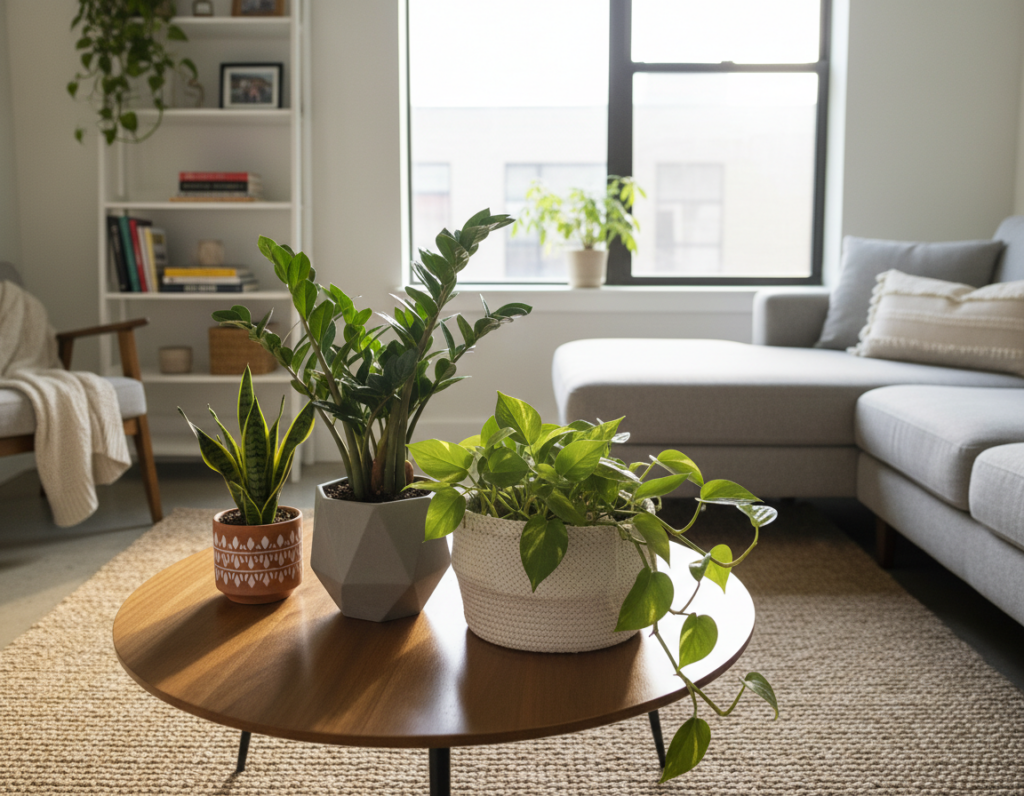
- Snake plant — famed for tolerance; it can grow from a few inches to several feet and does well in a bathroom.
- Monstera Adansonii — a compact vine with fenestrated leaves that climbs or trails and shows steady growth.
- Hoya Carnosa — a waxy trailer that flowers with sweet-smelling clusters on long stems.
- Philodendron ‘Brasil’ — vivid lime-and-emerald variegation on stems and leaves; low maintenance.
- Rubber Plant (Ficus elastica) — a forgiving tree-like option with a sturdy trunk that prefers medium bright light.
“Choose one resilient species and learn its simple routine; steady growth follows.”
For a quick reference to similar selections and care tips, see easy indoor options.
Essential Light Requirements for Indoor Greenery
Light determines how well indoor greenery converts care into steady growth. Proper exposure reduces stretching, preserves leaf color, and cuts down on watering mistakes caused by weak photosynthesis.
Maximizing Natural Light
All plants need light to photosynthesize, but some species tolerate limited natural exposure better than others. Position specimens where they receive the right balance of sunlight and shade.
Key actions:
- Know the difference between direct sun and indirect light; direct rays can scorch thin leaves while indirect light fuels steady growth.
- If a space lacks a south-facing window, add a Mossify Adjustable LED Plant Light to supplement brightness without heat stress.
- A single leaf may show stress when it doesn’t get enough bright light; that sign often precedes wider decline.
- Some species manage low light, but many need bright indirect light or medium bright exposure to prevent leggy stems and ensure consistent growth.
“Place plants where they get the light they were bred for—this simple choice prevents most common problems.”
Mastering the Watering Routine
Simple timing and a quick soil check remove guesswork from plant care. A clear routine keeps stems firm and roots healthy across a lot of common houseplants.
Water when the top inch of soil feels dry. That check usually happens every 7–14 weeks depending on light and room conditions. Adjust timing based on how fast the pot dries rather than a fixed schedule.
Repotting matters. Most of these selections are fine in the same pot for two to three years before they need more room. If roots circle the bottom or water runs straight through, move up one pot size.
- Use a half-strength balanced liquid fertilizer once a month in spring and summer to support healthy stems.
- Develop a simple watering habit to avoid overwatering and soggy roots.
| Sign | Likely Cause | Action |
|---|---|---|
| Wilting or yellowing leaves | Soggy soil or root decline | Let soil dry; check drainage; skip water for a week |
| Dry, crispy leaf tips | Irregular water or low humidity | Increase routine frequency slightly; mist in dry months |
| Roots visible at drainage hole | Root bound in pot | Repot to next size; refresh soil |
| Water runs straight through | Compacted or hydrophobic soil | Replace soil; water slowly to rehydrate |
“A steady, simple habit beats sporadic effort — that is the real skill a beginner needs.”
Creative Placement Ideas for Small Spaces
Clever placement can make a small living area feel lush without adding clutter. These ideas help each specimen get the right light and airflow while saving floor area.
Utilizing Vertical Shelving
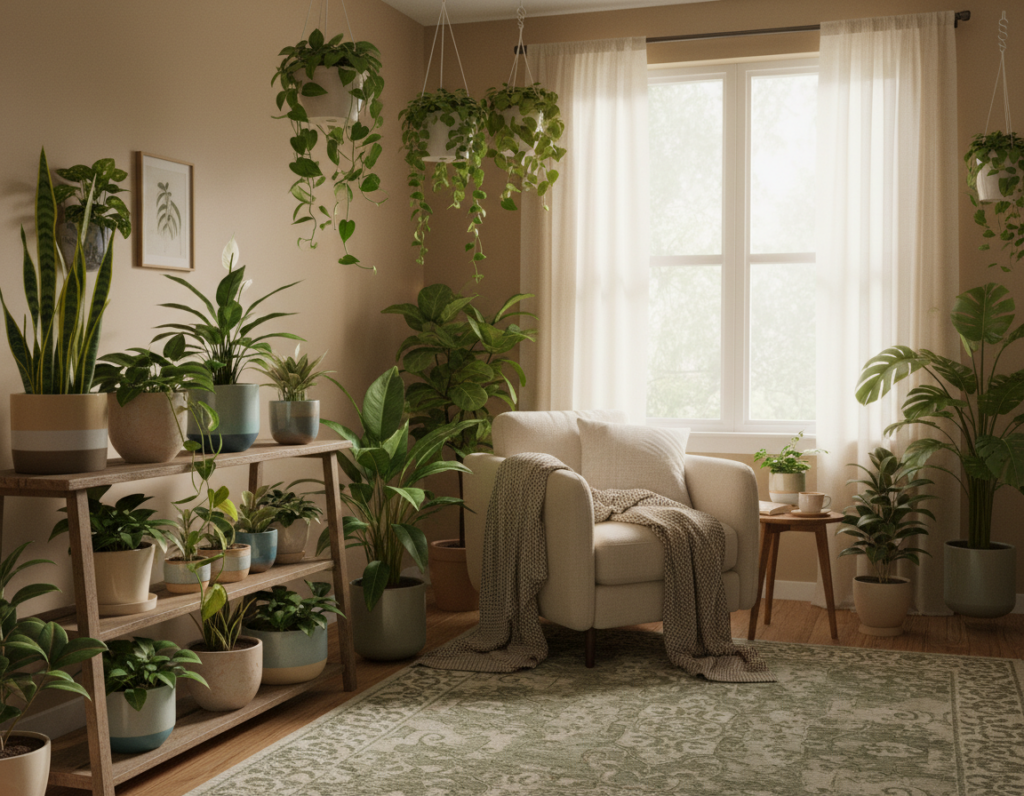
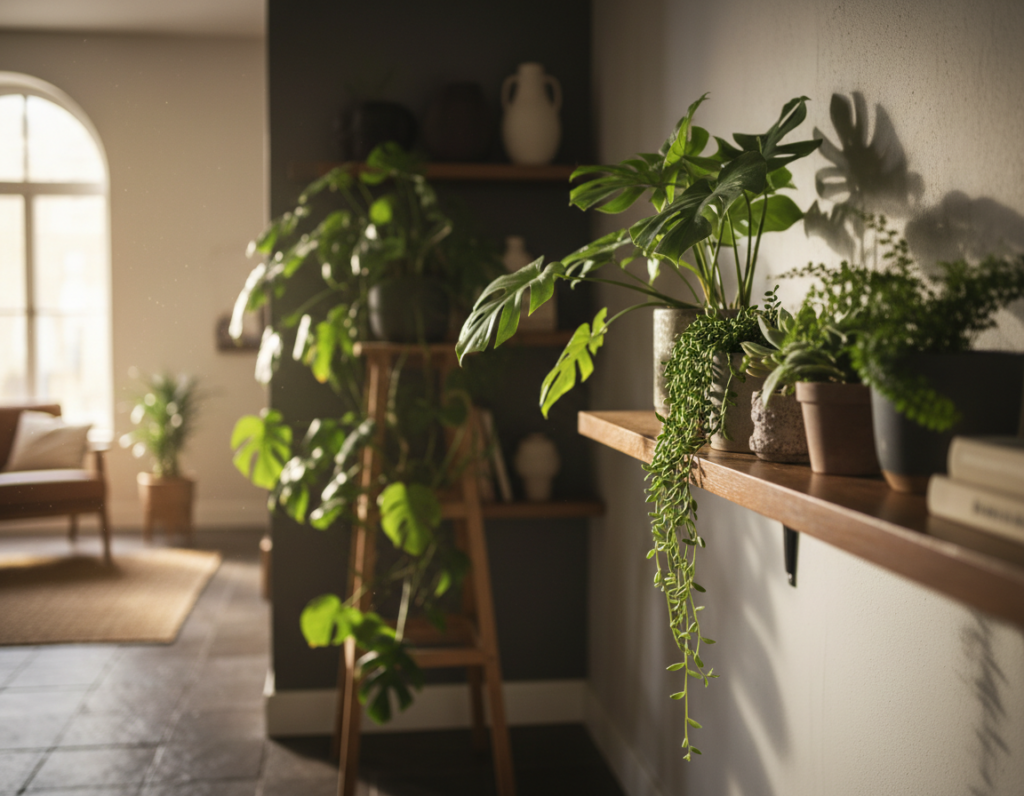
Vertical shelving lets taller foliage sit low while trailing vines occupy higher tiers. This keeps larger leaves visible and frees counters and floors.
Stack heavier pots on lower shelves and lighter pots above to prevent tipping. It also creates layered color and texture in a compact space.
Hanging Macramé Planters
Macramé hangers unlock ceiling space near windows. They are ideal for a monstera or trailing species that prefer bright indirect light and some airflow.
Hang at varying heights so each specimen receives balanced sunlight without crowding.
Optimizing Window Ledges
Window ledges are perfect for grouping sun-loving specimens across a bright sill. Rotate pots so leaves face the sun and avoid one-sided stretching.
A corner stand can hold a dracaena or rubber plant in a bathroom where humidity helps growth.
“Place each specimen where its leaves can reach consistent light — that small choice prevents many problems.”
| Placement | Best Use | Light |
|---|---|---|
| Vertical shelf | Mix of tall and trailing specimens | bright indirect light |
| Macramé hangers | Trailing vines, free counters | indirect light |
| Window ledge | Sun-loving pots; rotation spot | bright light / sun |
For styling tips and decorative ideas, consult this guide on decorating with plants.
Maintenance Tips for Long-Term Growth
A few targeted maintenance moves extend healthy growth far beyond the first year. Small, regular actions protect leaves, stems, and roots while keeping sunlight and moisture balanced.
Weekly checks spot brown tips, pests, or compacted soil. If leaf tips brown on a Dracaena ‘Janet Craig’, flush salts by watering heavily and letting the pot drain thoroughly.
Prune to keep vines and trunks tidy. Trimming monstera or snake plant stems encourages bushy growth and prevents unruly stretching.
- Propagate a snake plant by placing a stalk in water; patience speeds root development.
- Wipe dust from leaves with a damp cloth to improve photosynthesis and appearance.
- Inspect easy care specimens every few weeks to confirm conditions suit their needs.
“Regular, small care sessions preserve vigor and prevent larger problems.”
| Issue | Action | When |
|---|---|---|
| Brown leaf tips | Flush salts; trim damaged leaf | Once when noticed |
| Leggy stems | Prune stems; rotate pot toward light | Every 3–6 months |
| Dusty leaves | Wipe with damp cloth; check light | Monthly |
| No new roots (propagation) | Keep cutting in water; change water | Every few weeks |
Conclusion: Building Your Low-Maintenance Indoor Jungle
A small, steady routine turns a few hardy choices into a lush indoor collection. Starting with one or two specimens from this list keeps the process manageable for any beginner and makes good use of limited space.
Provide reliable light and measured water and the most forgiving plants will reward attention with healthy leaves and steady growth. A single houseplant such as a snake plant will lower maintenance demands while improving air and visual texture.
The goal is gradual confidence. Learn each specimen’s needs, keep short care sessions, and expand the collection as habits form. Over time, sunlight, sensible watering, and small adjustments create a resilient, vibrant indoor jungle.