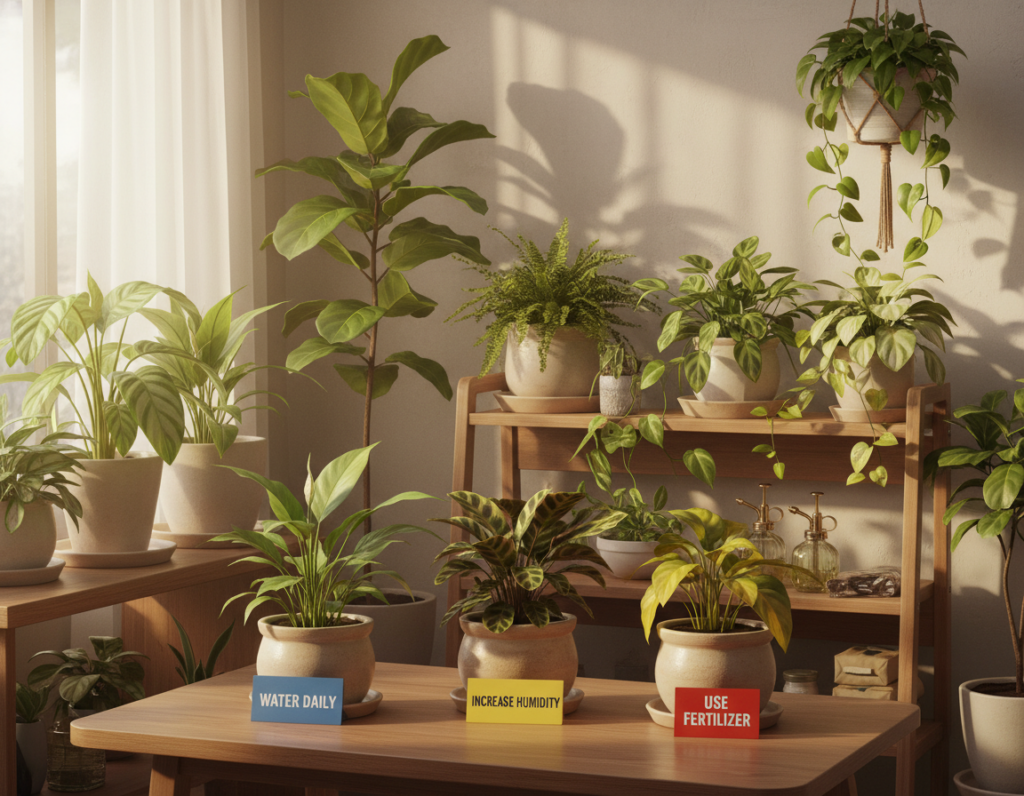
Roots need both water and air to stay healthy. Too much water pushes air out of the soil and suffocates the root system. This introduction explains the key signs and simple steps a gardener can use right away.
Many beginners notice drooping stems and dull leaves and assume the plant is thirsty. In reality, soggy soil prevents nutrient uptake and leads to rot. Checking moisture and the pot’s drainage is a quick, important habit.
Proper drainage matters. If a pot lacks holes, water has nowhere to go and roots weaken over time. Air circulation and the right soil mix help the root and soil balance recover.
Before adding more water, inspect the root and soil. Small changes in light, watering rhythm, and pot choice often stop damage early, making recovery far more likely.
Identifying the Signs of Overwatered Indoor Plants
Yellowing lower leaves often signal that the root zone is drowning rather than thirsty. A quick visual check helps catch problems early and raises the chance of recovery.
Visual Cues of Distress
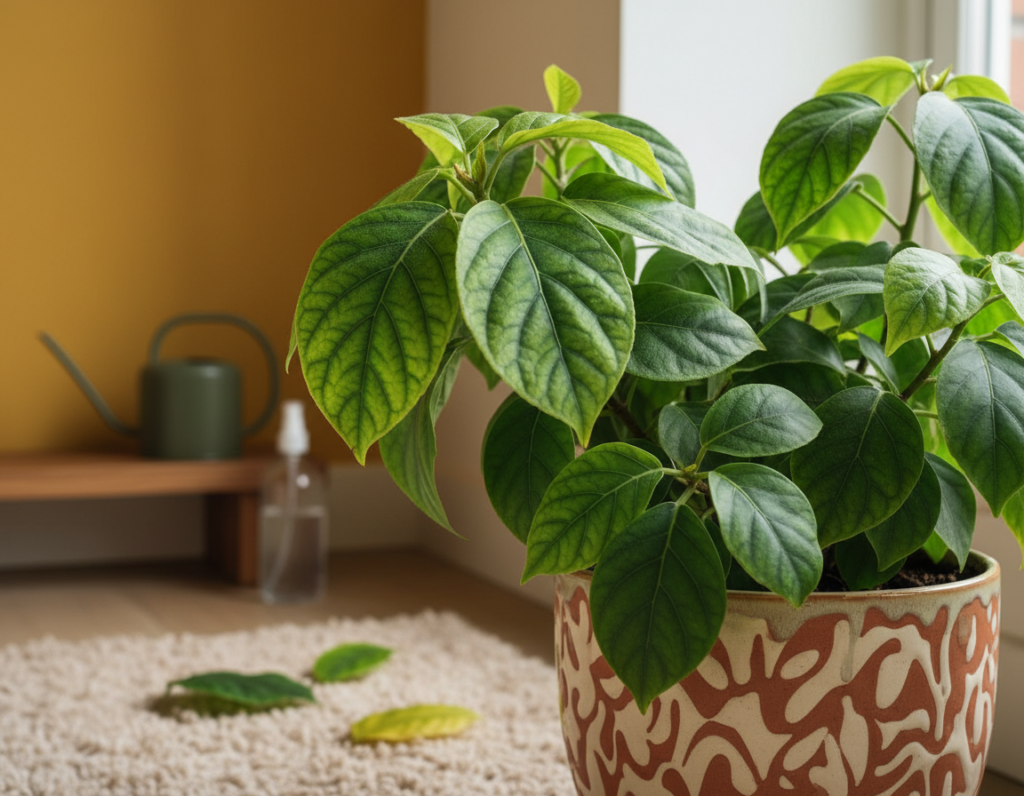
When leaves turning yellow and falling appear, the soil is often too saturated. Lower foliage that feels soft or stems that go mushy are clear signs of rot.
Mold on the surface or a foul smell points to bacterial or fungal growth. Fungus gnats hovering near the pot suggest persistently wet soil.
Soil and Environmental Indicators
Always check soil first with a finger. If the soil feels soggy or compacted, drainage holes may not be working. A moisture meter can confirm whether roots sit in standing water.
- Stunted growth often follows poor air exchange at the root level.
- Succulents show soft spots early; they are sensitive to excess moisture.
- Keep a consistent watering schedule, but rely on soil checks, not a clock.
How to Save Overwatered Indoor Plants Before It Is Too Late
A prompt response can stop soggy soil from turning minor stress into root rot. The good news is that many overwatered plants recover if removed from wet soil quickly.
If the soil feels soggy, stop watering immediately and move the plant into bright, indirect light. Let the top few inches air out until the soil dry.
For severe cases, they must trim mushy roots and repot into fresh, well-draining soil. Pothos often bounce back within about two weeks when roots remain healthy.
- If leaves turning yellow appear, move the pot away from standing water and let it breathe.
- Use paper towels to wick excess moisture from the pot if needed.
- Expect mild recovery in 3–7 days; severe overwatering can take 1–2+ months of steady care.
If leaves are falling and stems feel weak, the plant is shedding to survive.
Always check drainage and avoid letting houseplants sit in standing water — that is one of the most common things that kills them.
Assessing Root Health and Pruning Damaged Growth
Inspecting the root ball offers the clearest picture of a plant’s true condition. A prompt, careful check helps decide whether trimming and repotting will help.
Inspecting the Root System
Gently remove the specimen from its pot and shake away excess soil. Observe the roots: healthy roots are firm and white or tan. Rotten roots are brown or black, soft, and often smell bad.
Trimming Rotten Roots
Use clean scissors or pruning shears and disinfect before use. Cut any mushy or dark sections back to firm, pale tissue.
- Discard cottony or slimy pieces that indicate rot.
- Remove damaged leaves and weak stems so the plant can direct energy to recovery.
- Clean tools after trimming to avoid spreading pathogens.
Repotting in Fresh Mix
Replace any wet soil and repot into a well-draining soil mix or potting mix that includes perlite or sand. Choose a pot with drainage holes to prevent standing water and encourage air in the root zone.
After repotting, place the plant in indirect light and wait for signs of new growth before resuming normal watering or fertilizing.
For detailed step-by-step guidance, review this practical root recovery guide.
Long-Term Strategies for Preventing Waterlogged Soil
Preventing waterlogged soil starts with small habits that protect roots over time. Consistent checks and the right materials cut the chance that a plant will suffer from standing moisture.
Mastering the Finger Test Method
The simplest step is to check soil first. Insert a finger 1–2 inches deep to feel for dampness before adding any water.
For larger pots where the surface may mislead, a moisture meter or meter probe gives a reliable reading.
- Drainage holes keep excess water moving out of the pot and protect roots.
- Choose a potting mix with perlite or sand so the soil is well-draining soil and free-draining at the root zone.
- Adjust the watering schedule by season; plants usually need less water in winter when growth slows.
“Make checking soil a routine — it prevents the common signs of overwatering before they start.”
For tools and the right mixes, the Wilco Farm Store has locations where gardeners can buy meters and suitable mixes for succulents and other houseplants.
Conclusion
Good news: prompt care and attention to early signs give most plants a real chance after overwatering. Prompt action helps roots stabilize and stops decay before it spreads.
Check soil first and use a moisture meter when unsure. Keeping the surface and deeper soil at proper moisture levels helps recover the root zone.
Choose pots with drainage holes, replace soggy mix with fresh soil, and trim any damaged roots or soft leaves. Let the pot breathe and avoid adding more water until new growth appears.
For clear root recovery steps, see this practical root recovery steps. A flexible watering schedule and patience will support steady growth and long-term health.