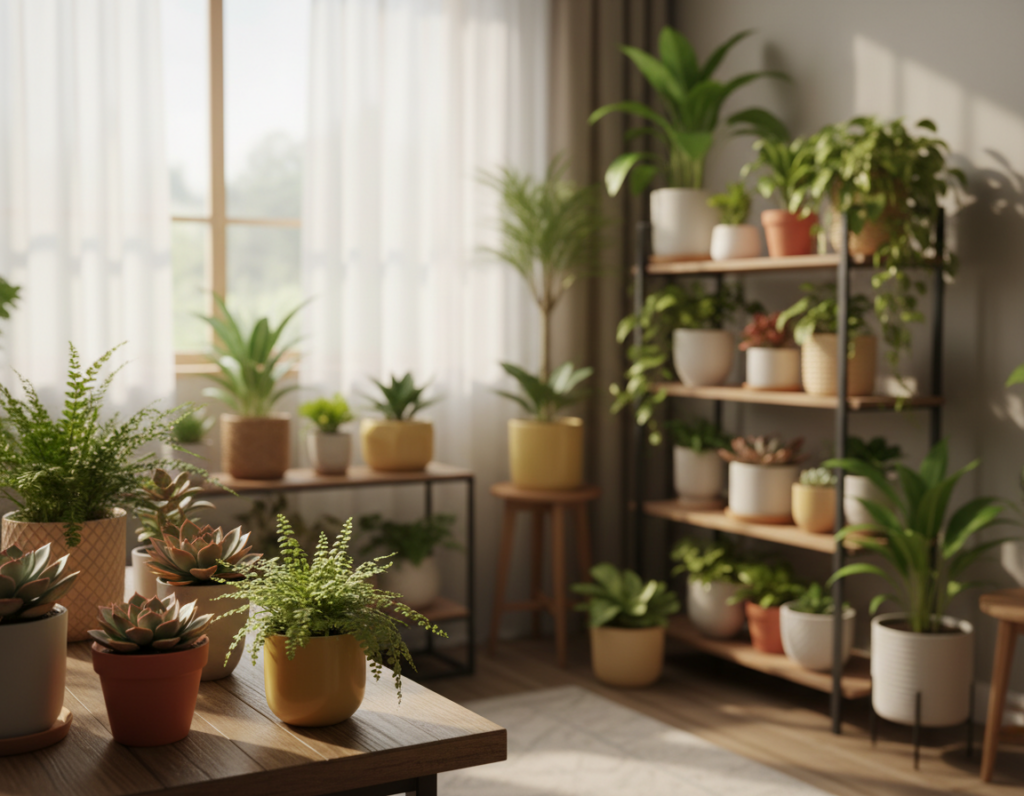
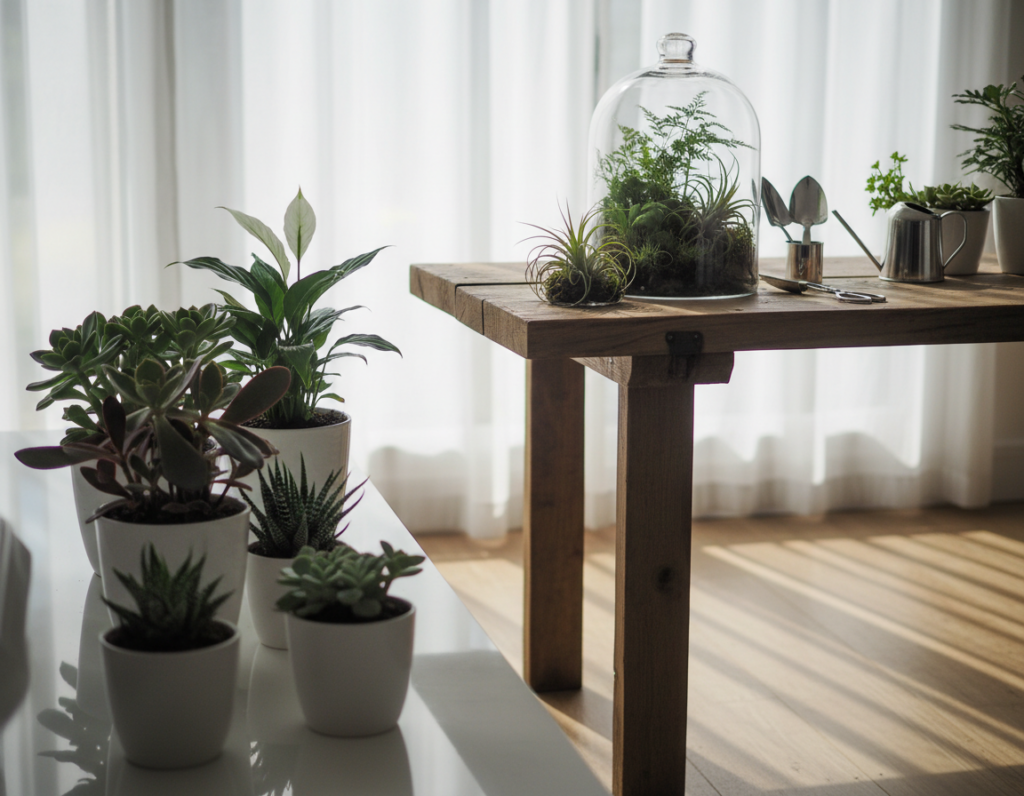
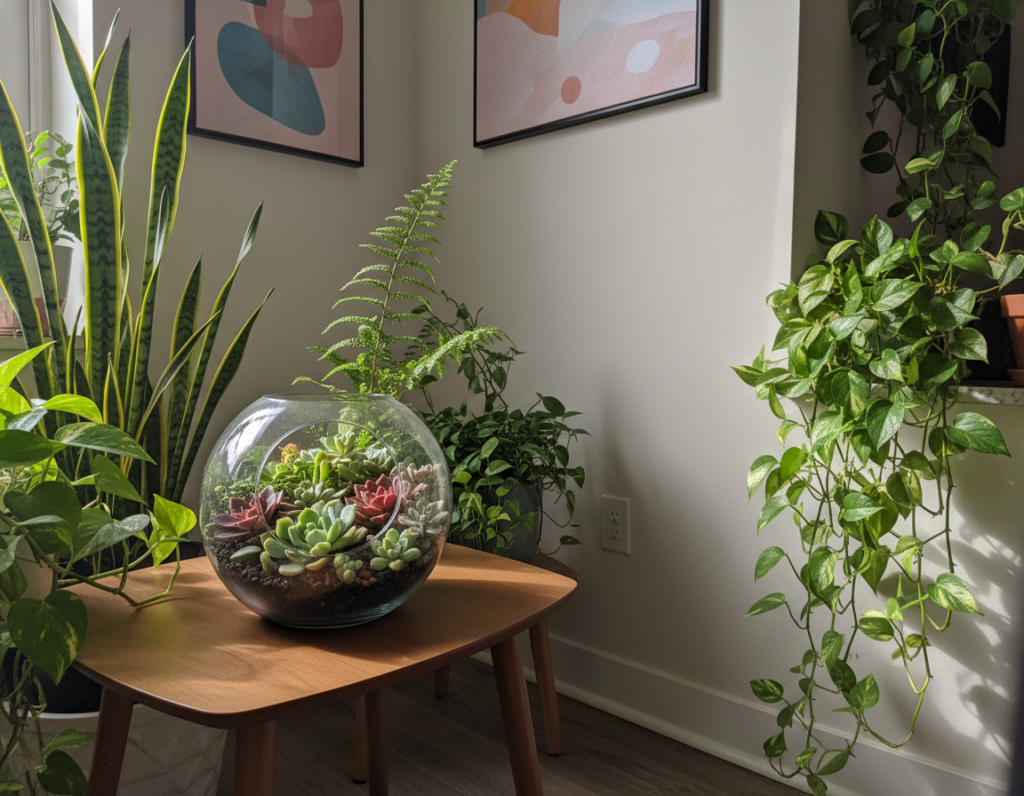
Many houseplants can thrive with modest sun. While all greenery needs light to photosynthesize, some species cope with less sunlight than others. This makes it possible to bring life into dim rooms without major changes.
Choosing the best low-light varieties helps turn a shaded corner into a vibrant spot. Understanding room conditions, the right soil mix, and simple watering routines keeps a houseplant healthy for many weeks.
Finding the right location and brief care tips prevents common problems in a dark window area. With a few smart choices about soil and water, even a tiny apartment can support lush foliage.
These indoor plants suit busy lives and fit into tight spaces. Whether someone is new to houseplants or has experience, selecting suitable varieties makes any home feel greener today.
Understanding Light Conditions for Indoor Greenery
Light levels shape how well indoor greenery grows, even in tight corners with little sky view. First, identify whether the sky is visible from the spot where the plant will sit. If it is not, that area counts as low light by common gardening standards.
Defining low exposure
When the sky cannot be seen from a chosen spot, the amount of natural illumination drops. Plants placed there receive far less energy for photosynthesis than those near a clear window.
The role of window direction
East- or west-facing openings usually give better daily light than north facing ones. A north-facing window offers the least sun, so avoid putting species that like direct sunlight there.
- Rooms that face east or west often supply enough sun for many indoor plants.
- If bright light cannot be provided, avoid direct sun that might scorch foliage.
- Understanding these conditions helps decide whether to add grow lights or move the plant seasonally.
Top Small Plants for Low Light Windows
Rooms that get little direct sun can still host attractive, resilient foliage that requires minimal fuss.
Resilient Snake Plants
Snake plants (Sansevieria) thrive in modest light and use CAM photosynthesis to release oxygen at night.
Their sword-shaped leaves demand little water and tolerate varied room conditions, making them a reliable option.
The Versatile Spider Plant
Spider plants (Chlorophytum comosum) form compact clumps up to 60 cm tall and help clean indoor air from formaldehyde.
They prefer steady room temperature and regular watering but resist many common problems.
Compact Foliage Varieties
Other good selections include the ZZ, which came from East Africa about 20 years ago and tolerates dry air.
Mind-your-own-business and Japanese aralia offer different textures; the former likes rich soil while the latter grows fast in cool, shady spots.
- Quick picks: snake plants, spider plants, ZZ, golden pothos.
- Check soil and water needs; keep medium moist but not waterlogged.
- Consider location and occasional rotation to balance light conditions.
Essential Care Tips for Dimly Lit Spaces
Consistent, mild care helps a houseplant thrive despite limited natural illumination. Start by checking the soil before you add water. Many indoor varieties need less water than those grown in full sunlight.
Watch the leaves for signs of thirst. Wilting, curling, or dull color usually means the plant needs moisture or a change in conditions.
Keep room temperature steady. Sudden drops or heat spikes cause stress and can make foliage fall or stop new growth.
- Give water only when the top soil is dry; overwatering causes root problems.
- If the location faces north, consider grow lights to supplement natural light for years.
- Repot every few years so a houseplant has fresh soil and room to gain nutrients.
Avoid direct sunlight in shaded rooms, as brief patches of sun can burn delicate leaves. With steady care and simple checks, indoor greenery stays healthy even in dim conditions.
Managing Soil and Watering Needs
A well-draining pot mix and measured watering schedule stop many common root issues. Good soil gives nutrients and holds just enough moisture. High-quality potting soil with some organic matter suits many indoor species, including mind-your-own-business.
Prevent waterlogging by ensuring the pot has a drainage hole and a loose base layer. A shallow gravel or coarse grit layer helps excess water move away from roots.
Let the top layer of soil dry before adding water again. Check the soil dry status every few weeks so the root zone does not sit in water. Yellowing leaves may signal an overly frequent watering routine given the available light.
- Use a pot with drainage and a quality soil mix to avoid root rot.
- Let the top inch of soil dry; then water thoroughly but drain excess.
- Repot every few years to restore structure and nutrients.
Proper watering is the most critical care step, especially when a plant lives in a dim corner. For guidance on choosing suitable varieties and care, see careful selection.
Troubleshooting Common Plant Problems
A quick check of leaves and soil solves many common indoor garden troubles.
Inspect foliage weekly. Look under the leaves for fine webbing; that often signals spider mites. If you find them, raise humidity by misting or place a shallow water tray nearby.
Rare infestations of thrips or aphids also occur in very dry air. Always inspect the leaves of spider plants and other species to catch pests early.
- If spider mites appear, increase humidity and wipe leaves with a damp cloth.
- Snake plants resist neglect but can rot when watering is too frequent in dim spots.
- Brown edges usually mean too much direct sun or inconsistent moisture.
- Yellowing lower foliage often indicates excess water or root rot, especially in ZZ specimens.
“Troubleshooting early helps save a plant and keeps home greenery vibrant all year.”
If a snake plant droops, check soil moisture and drainage. Correct watering and repotting when needed will often restore vigor and prevent repeat problems.
Conclusion
A thoughtful location plus simple routines keeps indoor foliage healthy in darker areas. Choosing the right spot near a window and noting available light helps the plant settle into its room.
Check soil and water regularly. Inspect the leaves and top soil every few weeks, adjust watering, and keep room temperature steady. These care tips prevent most problems and support steady growth.
Selecting resilient varieties makes this option easy. With proper maintenance, houseplants also clean air and reward owners with leaves and occasional flowers for years to come.