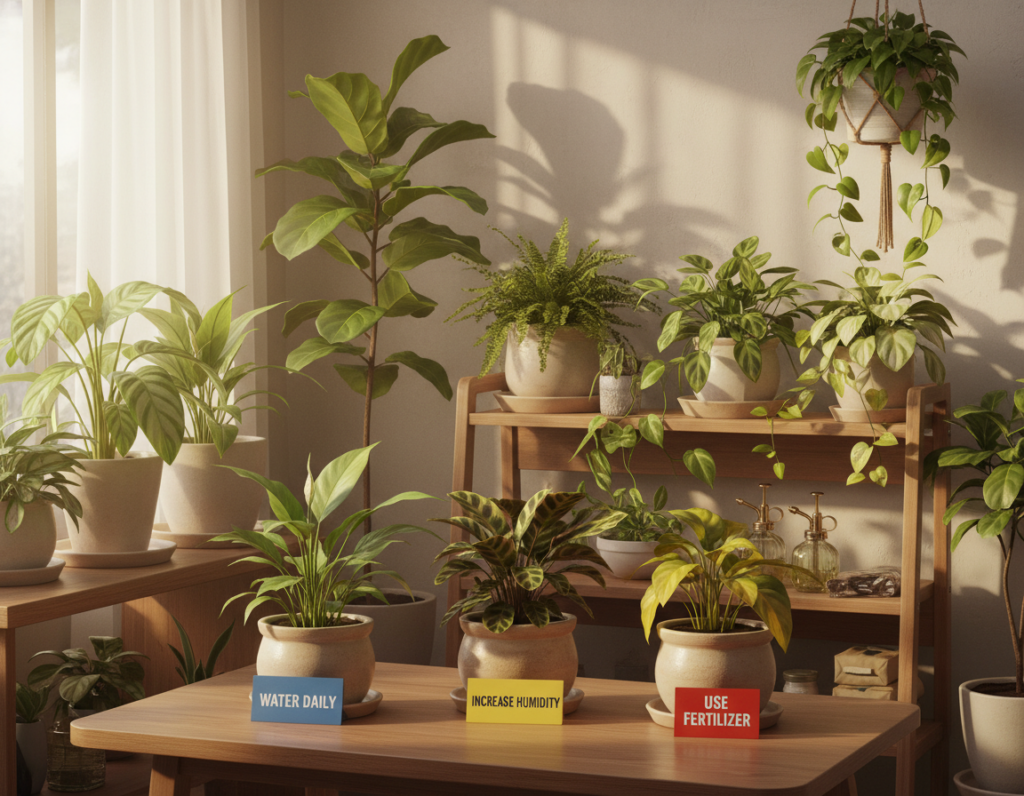
This concise guide draws on more than 30 years of hands-on care and a collection that grew from five to over one hundred specimens. The author explains why even experienced hobbyists miss the earliest signs of a common fungal problem. Early detection saves time, money, and beloved green additions.
The article clarifies how the biology of root rot works and why soil management matters. It outlines simple checks to spot trouble and steps to stop the spread before the damage becomes fatal.
Readers will learn practical tips for observation, diagnosis, and action. With this professional overview, anyone caring for a plant collection in the United States can protect their investments and keep foliage healthy all season.
Understanding Root Rot Indoor Plants Symptoms
Early detection begins with watching growth and foliage closely. Early signs often show up as slowed growth and subtle leaf changes before more obvious decline appears. Many beginners miss this because the plant still looks mostly healthy at first.
Early Warning Signs
Stunted growth is a top indicator. When a specimen stops producing new shoots, the underground system may be failing. Two common fungi, Pythium and Phytophthora, can damage a root network in days.
Check the soil surface. If the soil feels damp yet the foliage wilts, that contradiction is a clear sign. A foul, swampy smell from the pot confirms decay is active and needs urgent care.
Foliage Indicators
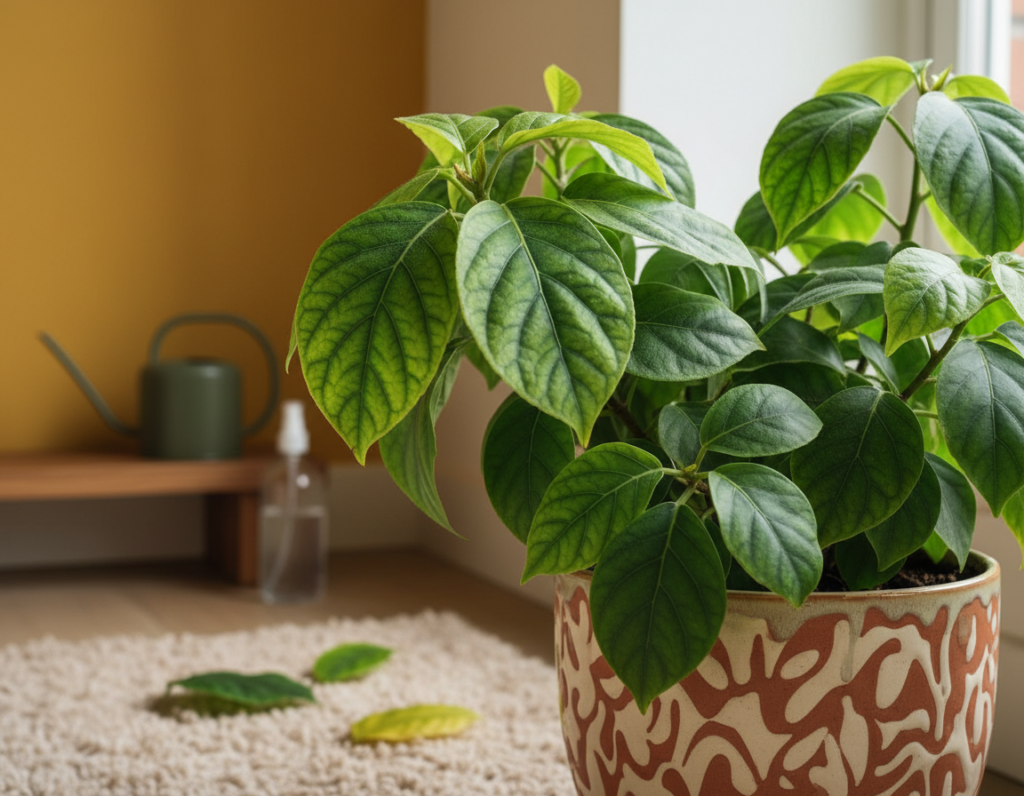
Leaves often yellow first on lower stems. This happens because damaged roots cannot move nutrients upward. Persistent wilting and pale lower leaves together point to systemic trouble.
- Stunted growth and reduced vigor
- Wilting despite moist soil surface
- Yellowing leaves low on the plant
- Foul smell coming from the pot
For a practical, step-by-step guide on spotting and treating these issues, see this treatment overview.
Why Root Rot Develops in Your Collection
Excess moisture and poor aeration set the stage for serious fungal damage in a collection. Overwatering creates low-oxygen pockets in the soil where pathogens thrive. Pythium and Phytophthora can spread quickly and cause death if left untreated.
Fungus gnats are often a clear sign that the mix stays too wet. Their presence means the environment favors decay and makes transmission between plants easier.
Poor drainage matters. Pots with insufficient holes or containers that are too large hold excess water. That saturates the soil and prevents roots from taking up nutrients.
When the top two inches soil never dry, roots suffocate. The plant then shows yellowing leaves and wilting because it cannot move water or nutrients upward.
- Keep the top 2 inches soil dry before watering again.
- Use pots with good drainage holes and avoid oversized containers.
- Watch for gnats and remove standing water promptly.
Immediate Steps to Take When You Suspect Decay
Act fast. When a caregiver suspects decay, a prompt inspection gives the best chance to save the specimen. The following steps guide a careful, safe check of the underground system.
Inspecting the Root System
Remove the plant from its pot and gently wash away old soil so the team can see which sections of the plant root are healthy. Make sure hands and tools are sterile before touching tissue.
Healthy roots feel firm and look white or tan. Decayed sections will be mushy, slimy, and dark brown or black. If there is a foul smell coming from the mass, that is a clear signal to act immediately to save plant life.
- Expect the outer cortex to pull away easily where decay is present.
- Check thoroughly—small areas of decay can spread after repotting if missed.
- Work over a clean surface and rinse roots with water to remove clinging soil.
Professional Techniques for Treating Affected Roots
A calm, methodical approach separates salvageable plants from total loss. Begin with a clear plan: clean work area, sterile tools, and a fresh medium ready for repotting. Quick action limits spread and improves recovery odds.
Pruning Decayed Tissue
Use sterilized shears to remove all rotting sections, cutting back into firm, healthy tissue. Make sure to discard infected material and sterilize tools between cuts to lower the risk of transfer.
Using Hydrogen Peroxide
Mix 3% hydrogen peroxide with an equal part of water for rinsing remaining roots and sterilizing the pot. This solution kills spores and oxygenates the system, helping the plant root recover faster after trimming.
After pruning, dunk remaining roots briefly in a systemic fungicide such as Buxus Blight for up to 30 days of protection if recommended by label instructions.
Taking Insurance Cuttings
Always take tip cuttings from healthy growth to save genetics in case the mother plant fails. If very few roots remain, downsize the pot and use a fast-draining soil mix to avoid excess water.
- Prune to healthy tissue with sterile tools.
- Use 1:1 3% hydrogen peroxide and water on roots and soil surface.
- Take cuttings as insurance and consider a systemic dip for the remaining roots.
Essential Strategies for Preventing Future Outbreaks
Preventing future outbreaks starts with simple daily habits that stop fungi before they gain a foothold. Careful watering and good air movement cut disease risk quickly.
Avoid overwatering. Let the top of the soil dry between sessions. This is the single best way to prevent root rot and preserve healthy roots.
Use pots with reliable drainage and a fast-draining mix that includes perlite or pumice. Proper drainage prevents stagnant water at the bottom of a container, a common cause of rot.
- Do not share standing water between plants; spores travel easily that way.
- Control fungus gnats with sticky traps or Mozzie Bits; they can carry spores on their feet.
- Increase airflow and provide enough light so the plant transpires and the soil dries faster.
Monitor regularly. Frequent checks catch small problems before they become outbreaks. Consistent care is the best method to prevent root issues and keep a collection healthy.
Optimizing Your Environment for Plant Health
Optimized light levels and gentle air movement cut humidity at the soil surface and support faster drying between waterings.
The Role of Light and Airflow
Good illumination gives each plant the energy to use water efficiently. Professional-grade grow lights, such as the Soltech Aspect Gen 2™, supply steady PAR so photosynthesis and transpiration keep pace with watering.
Consistent light helps the soil dry at a predictable rate. That lowers the risk of root rot and helps roots remain firm and functional.
Airflow matters just as much. Gentle circulation prevents moisture buildup on the soil surface and around leaves. This supports regular transpiration and speeds recovery after watering.
- Set grow lights on a timer to mimic day length and encourage steady growth.
- Use fans or passive ventilation to keep air moving and prevent surface dampness.
- Keep pots off flat trays of standing water so the soil can dry between sessions.
Monitor moisture with a meter or finger check. When light, air, and temperature are balanced, soil dry cycles become predictable and the chance of rot drops sharply.
Managing Soil and Drainage for Long-Term Success
Simple tests and the right mix prevent excess moisture from becoming a fatal problem. Caregivers should use the finger test: press into the top 2 inches soil to see if it feels dry before they water plant specimens.
Choose a pot with drainage holes and a chunky, well-draining soil mix that includes perlite or orchid bark. These steps keep water moving and support healthy roots.
- Use pots with reliable drainage holes to prevent excess water accumulation.
- Avoid adding a rock layer — it does not improve drainage and raises the risk of rot.
- Match pot size to the root system so soil does not hold water too long.
- If yellowing leaves appear, check soil and drainage immediately.
Managing soil composition is the best long-term way to prevent root rot. Good drainage and aeration create an environment where roots can breathe and thrive without ongoing risk.
Conclusion
Catching problems early and responding fast is the single most effective way to preserve growth. If caregivers spot wilting or yellowing leaves, those signs merit an immediate check of the soil and roots. Acting now can save a specimen that might otherwise face death.
Use the practical tips in this guide to fix root rot quickly. If left untreated, decay spreads and recovery becomes harder. Prevention remains the best plan: ensure good soil drainage and water only when the top layer is dry.
Stay observant. Listening to what foliage and roots reveal helps long-term care. For a step-by-step rescue plan, see this guide to fix root rot with proven methods: fix root rot.