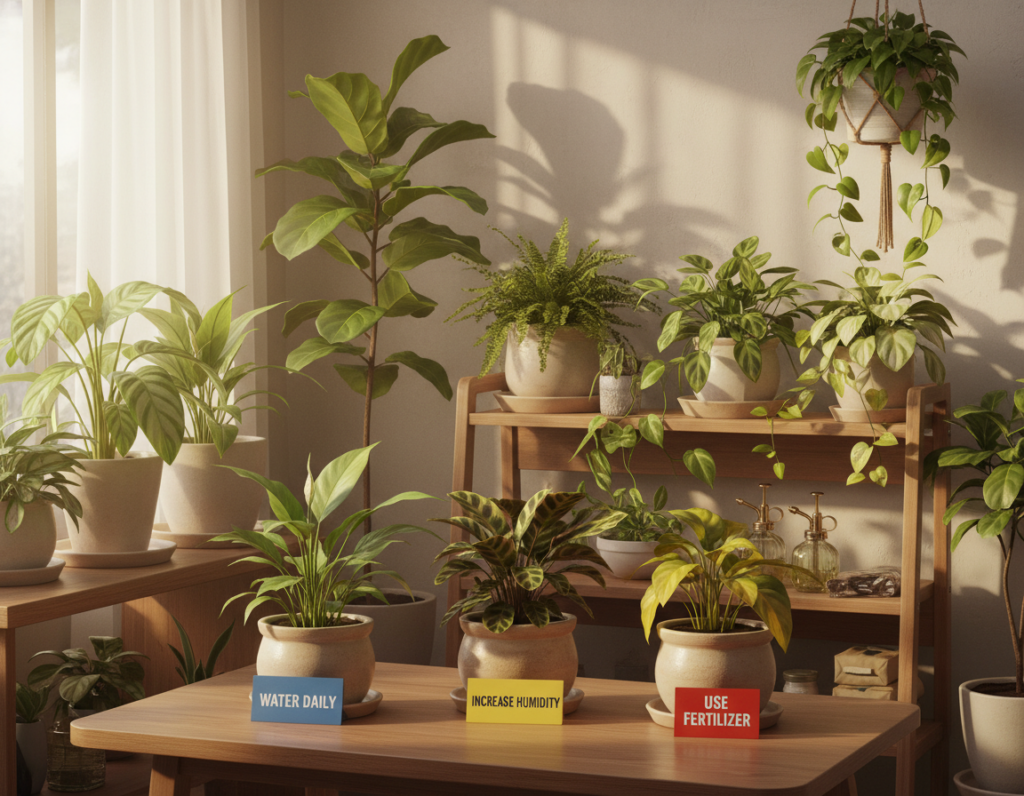
Many new owners feel crushed when a once-vibrant plant fades in weeks. Research shows that mismatch between species needs and indoor conditions is the top cause.
In a busy home office or flat, proper light and water are the first things to check. Temperature and humidity also shape whether a houseplant thrives or struggles.
Before buying, people should research a plant’s care needs. A quick web search or the care guide on the pot helps set expectations and avoid common reasons for failure.
Science links green spaces to better mood and focus, so it is worth taking simple steps to support new greenery. Small changes in placement and routine often turn a failing plant into a healthy addition to the plant home.
Understanding Why Apartment Plants Die
The common thread in early losses is a mismatch between routine and a plant’s needs. New owners often treat failures as personal faults, but the reality is simpler: small changes in daily care make a big difference.
It helps to be a detective. Look at light, watering, soil and temperature to spot which conditions are off. Even someone who calls themself a black-thumb can improve quickly by observing and adjusting routines.
Start with the five most important checks: drainage, watering frequency, light level, humidity and pests. Identifying these common reasons helps rescue struggling plants and prevents repeats.
- Observe changes each week.
- Keep notes on water and light.
- Choose forgiving varieties first.
Most people master easier houseplants, then move on to showier specimens like a Fiddle-Leaf Fig. Treat mistakes as lessons; improving one thing at a time builds a healthy plant home.
The Impact of Watering Habits
Small errors in watering quickly show up in leaves and roots. Proper water routines help healthy growth. A quick soil check saves many struggling plants.
Check moisture before you add more water. Stick a finger to the second knuckle to test the soil. If it feels damp, skip watering and let the top dry.
Signs of Overwatering
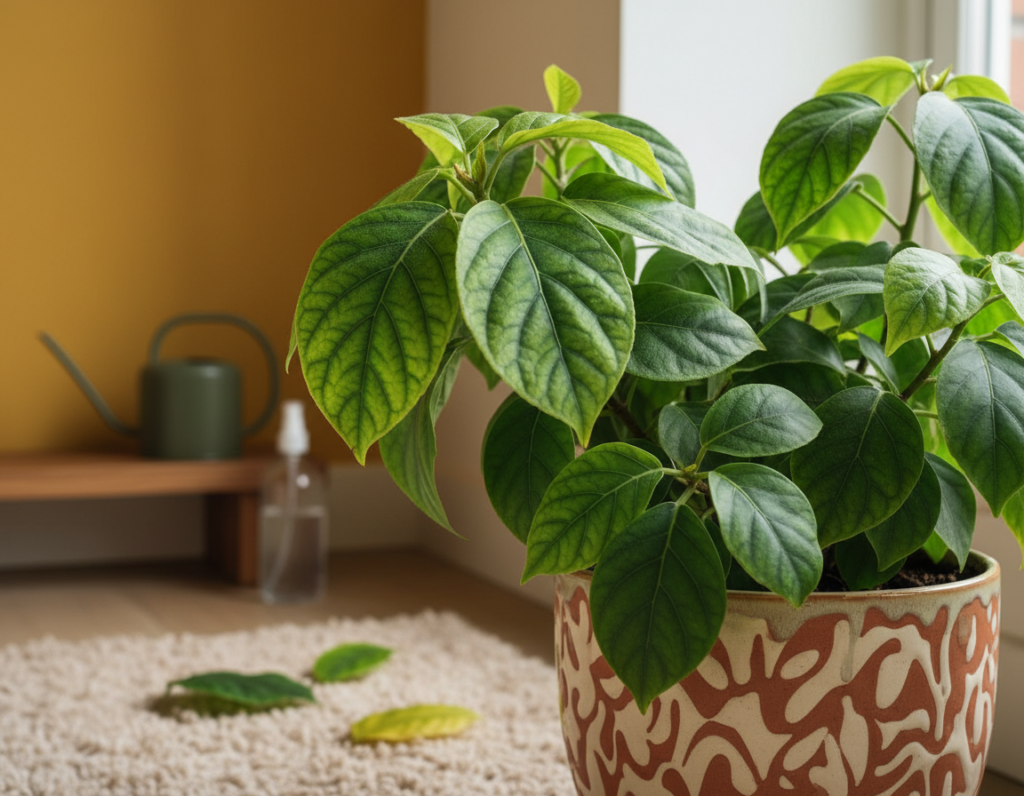
- Yellow leaves and soft, limp foliage that do not perk up.
- Wet soil that stays soggy at the top and bottom of the pot.
- Slow growth and a musty smell from the roots; root rot can appear.
- When root rot appears, use sterilized scissors to trim damaged roots and repot in fresh soil.
Signs of Underwatering
- Crisp, wilted leaves that feel dry and brittle.
- Soil that pulls away from the pot edge and is dry several inches down.
- Slow growth and brown leaf tips on less tolerant ones, while varieties like succulents prefer to dry fully between drinks.
Practical tips: make sure the pot has good drainage, set a consistent watering schedule, or try the SQUARELY COPENHAGEN self-watering system. For more on common habits, see this article about a harmful watering habit at watering habit.
Optimizing Light Conditions for Indoor Growth
Small changes in where a plant sits can make a big difference in leaf color and growth. Assessing light levels across the day helps match species to the right windows and prevents common symptoms like yellow leaves or stretched stems.
Adjusting for Too Much or Too Little Light
Too little light often shows as leggy stems and pale leaves. If a plant is reaching toward the window or becoming sparse, move plant placement closer to a brighter side or add supplemental grow lights in a dark home office.
Too much sun can scorch leaf edges and cause wilted leaves or brown spots. For specimens near strong sun, use sheer curtains or move plant a few feet back from south-facing windows to reduce heat stress.
- Rotate pots so every side gets equal exposure and avoid permanent leaning.
- Use a light meter or watch plant leaves to judge if they are getting enough; new growth is a good sign.
- When windows stay dim, install full-spectrum grow lights to sustain steady growth.
Reference: For practical guidance on indoor lighting conditions, consult the University of Minnesota guide on lighting for indoor plants.
Managing Humidity and Air Quality
Air moisture and circulation are simple controls that greatly affect foliage and stems. In humid climates such as Florida, 70–80% humidity suits many tropical varieties. In dry states like Arizona, low humidity stresses a plant fast.
Dry indoor air often leads to wilted leaves or brown, crispy edges. Grouping pots or placing a tray of water and pebbles under them raises local humidity without added tech.
Conversely, too much moisture causes mold on leaves, stems, or soil. Black, slimy stems and rotten roots signal extreme moisture and prompt cuts and less frequent water.
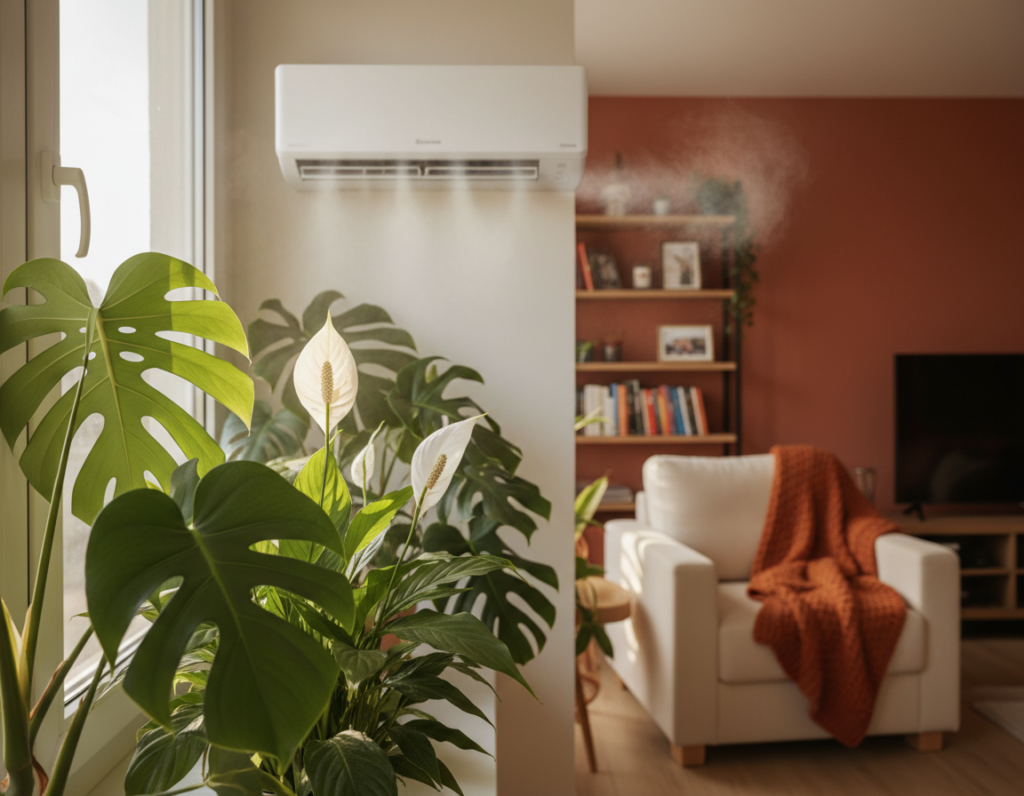
- Keep pots away from air conditioning vents that strip moisture.
- Use a humidifier for tropical species and consider a terrarium for very picky ones.
- Monitor indoor air quality; smoke and chemicals stress foliage and invite pests.
Practical tip: choose species that match home humidity—ones adapted to dry air, like succulents, will suffer if kept too wet.
Soil Quality and Potting Essentials
A healthy root zone starts with the simple choices made at potting time. Good soil and the right container give a plant its best chance for steady growth.
Good drainage protects roots
Choose a plant pot with drainage holes so excess water can escape. Compacted mixes hold moisture and can cause wet soil at the bottom while the top looks dry.
Use a high-quality potting mix so roots get air and nutrients. For species like succulents, pick a sandy, fast-draining blend.
Signs you should repot
If roots grow out of the bottom or start circling, it is time to repot into a larger container. Gently tease circling roots and place the plant in fresh soil to support new growth.
- Make sure the pot has drainage holes.
- Check that the top of the soil dries between waterings.
- Never repot a blooming plant; wait until flowers fade.
Dealing with Pests and Diseases
Early pest and disease problems often start quietly, hiding under leaves or in damp soil.
Common offenders include spider mites, mealybugs and fungus gnats. These pests damage leaves, stems and roots fast if left unchecked.
Identifying infestations means inspecting the undersides of leaves, feeling the top of the soil, and looking for sticky residue or tiny moving dots.
Spotting and treating early signs
Isolate any affected plant to stop spread. Treat many infestations with neem oil or insecticidal soap, applying on leaves and stems until the pests are gone.
If unusual growths or yellow leaves appear, remove the damaged parts with sterilized scissors. For severe problems, clean the roots and repot in fresh soil.
“Act quickly and keep tools clean; good hygiene limits repeat outbreaks.”
- Always check soil and leaf undersides for eggs and larvae.
- Improve air flow and space pots apart to reduce disease risk.
- Consult a local garden center if identification is unclear.
Final note: strong, well-cared-for plants resist pests better. Regular checks and prompt action keep a home collection healthy.
Conclusion: Cultivating a Thriving Indoor Garden
A few steady habits give each plant a much better chance to thrive indoors.
Consistent care focuses on simple checks: light, water and soil. Make sure the plant is getting enough light and nutrients for steady growth.
Watch leaves and roots for early signs. If a plant struggles, move plant location or adjust watering to help recovery quickly.
With small routine changes and clear care steps, houseplants reward patience. Enjoy the process and learn from each thing that improves growth.