Adding greenery can refresh a home without crowding a room. This brief intro shows how a single leaf or a well-placed fig brings life and design balance. It highlights easy care and smart placement to keep a curated look.
He or she who wants a durable option may choose a rubber plant. It can be pruned at the top to stop taller growth and fit tidy pots and compact soil mixes. A fiddle leaf fig, by contrast, needs stable air and should stay away from cold drafts or electric heaters.
Care is straightforward: attention to sun, water, and right pots keeps a small garden thriving. Following simple care tips makes these green accents both healthy and stylish.
Why Minimal Space Indoor Plants Are Perfect for Modern Homes
A few well-chosen greens can lift a modern home without overwhelming it. They add texture and warmth while keeping clean lines intact.
Experts with 50 years of gardening experience warned that some varieties will overrun a room if not managed. That is why compact selections matter.
The right choice depends on light and soil conditions. For example, a fiddle leaf fig thrives in steady indirect light and steady care. It can serve as a focal plant when placed correctly.
- Compact houseplants fit apartments and protect design lines.
- Understanding water and soil needs keeps a small garden healthy.
- Bright indirect light helps many varieties purify the air without lots of sun.
Choosing the best indoor plants for modern interiors means picking species that match room conditions. With patience and basic care, even a small bit of greenery can make a home feel inviting.
Top Greenery Picks for Compact Living
Smart selections of hardy greens let a home feel lively while staying tidy. The right choices deliver texture and calm without taking over a room. Below are reliable options that suit shelves, corners, and hanging pots.
Succulents and Cacti
Zebra Haworthia is one of the most sold succulents. It stays compact, needs very little water, and thrives in bright indirect light. Small pots and well-draining soil keep it happy.
Trailing Varieties
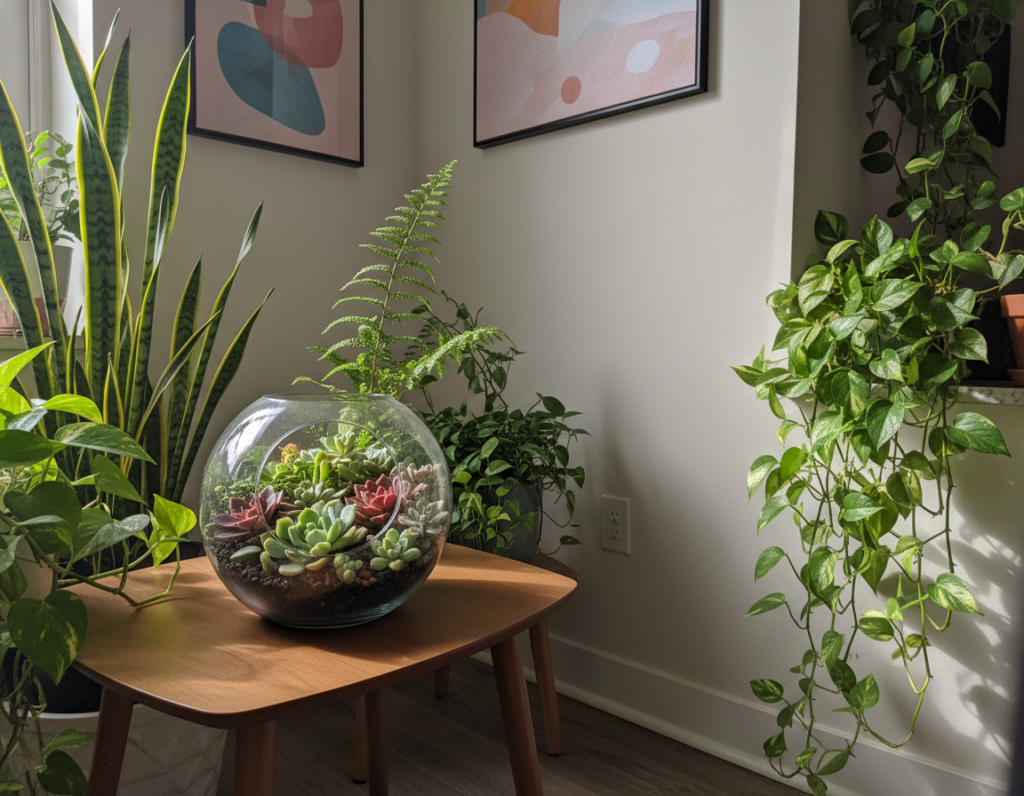
Trailing types like Pothos work well in hanging vessels. They add lush green leaves to a room while freeing up surfaces. Group a few for a simple indoor garden effect.
Upright Statement Plants
Dwarf snake plants such as Golden Hahnii stay under 12 inches tall. They grow slowly and keep a clean look. A smaller fiddle leaf fig or leaf fig cultivar can also serve as a focal piece when chosen for fit.
- Best indoor plants for shelves favor bright indirect light.
- Mixing forms—trailing, upright, and compact—maximizes a bit of greenery without crowding.
- Choose durable species for low-effort care and lasting look.
Essential Care Tips for Thriving Houseplants
Good light and careful watering are the backbone of any healthy houseplant. A concise routine makes care manageable and keeps leaves looking vibrant.
Mastering Light and Water Requirements
Check light conditions before you place a plant. Most species prefer bright indirect light; that steady glow supports steady growth without burning foliage.
Always test the soil before watering. Stick a finger an inch into the pot—if the soil dry, it is time to water. Tiny pots (2–4 inches) dry out faster, so they need water more often than larger containers.
Use pots with drainage holes to avoid standing water and root rot. Pick a spot and leave the plant there; frequent moves slow adaptation and can stunt growth.
- Mastering light and water requirements is the most important of all care tips for ensuring your indoor plants remain healthy and vibrant.
- Proper air circulation helps prevent pests and disease, keeping your small garden in top condition.
- Adjust sun exposure and water to manage growth in a compact home.
Follow these simple care tips and they will reward you with lasting leaves and steady growth. With attention to light, water, and soil, a tidy collection can flourish for years.
Creative Ways to Display Your Botanical Collection
Display choices can turn a small collection into a striking focal point without changing a room’s layout.
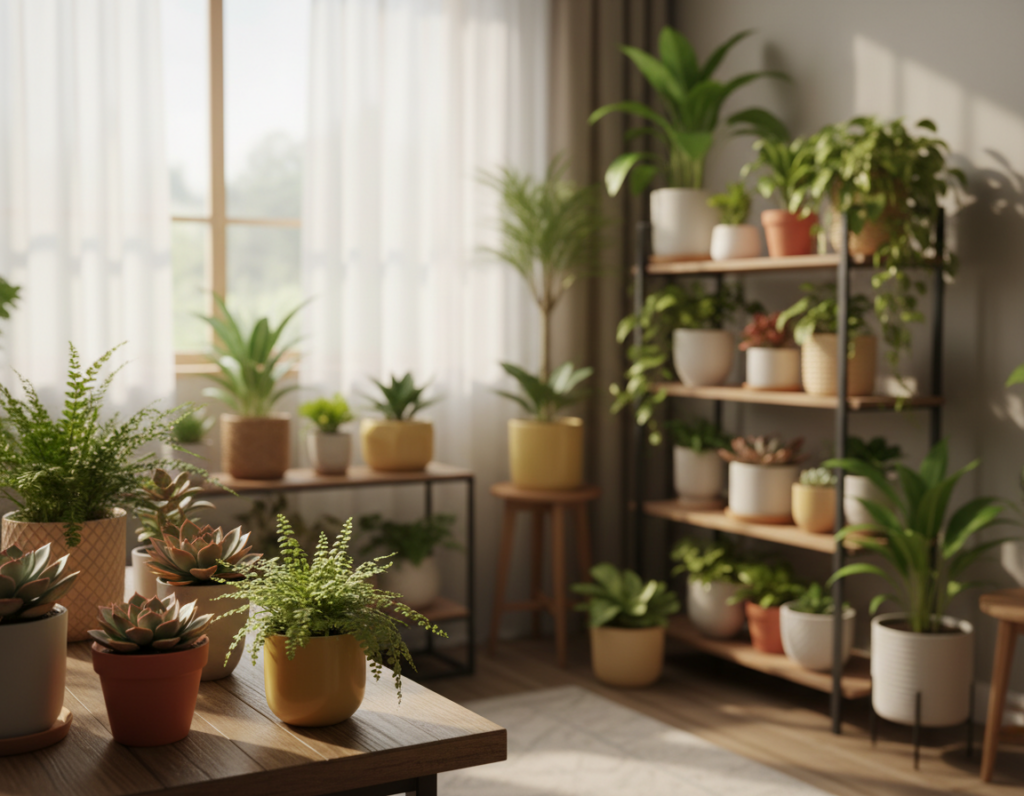
Use vertical mounts and hanging shelves to free floor real estate. Stagger shelves at different heights to create depth and a gallery feel. This approach groups varieties together for a cohesive look.
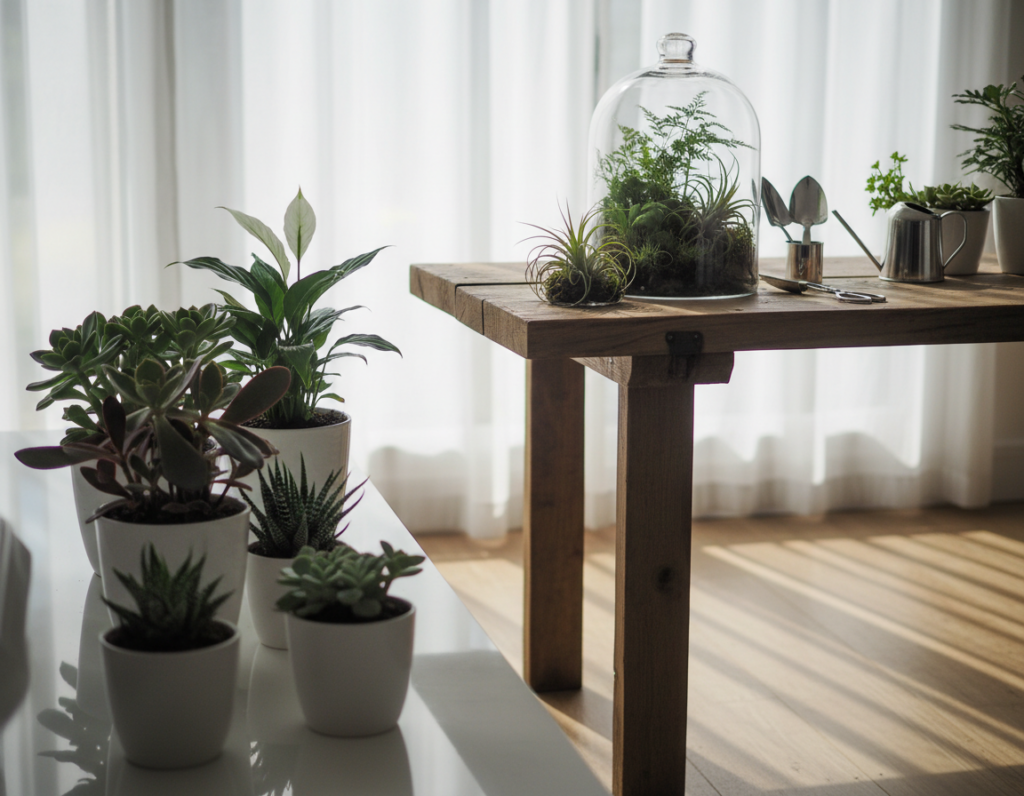
Air plants (tillandsias) make artful accents because they grow without soil. They can be placed in glass globes, driftwood, or wall frames for a living sculpture that needs only occasional misting.
- A snake plant in a decorative pot offers a bold design element on a desk or side table.
- Mix pot styles—ceramic, woven, metal—to enhance design while meeting each plant’s care needs for water and soil.
- Place every plant in a spot that gets bright indirect light to keep green leaves healthy and lively.
Whether choosing hanging holders or tabletop displays, the best indoor options reflect personal style and help plants thrive. Proper placement ensures good air, correct light, and steady care for a polished garden look at home.
Managing Growth and Size in Small Areas
Regular attention to pruning and pots preserves the balance between living décor and livable rooms. He or she who tends a collection will find that careful maintenance keeps each piece fitting its chosen spot. This short guide covers timing and containers to control growth without stress.
The Art of Pruning
Prune during the active season—spring through early fall. Trim back excess leaves to shape the plant and prevent it from outgrowing its shelf or table. Small snips remove dead growth and redirect energy to healthy stems.
- Cut above a node to encourage branching and fuller form.
- Remove crowded leaves to improve air flow and light exposure.
- Check varieties such as snake and fiddle types; each has its own growth habit.
Choosing the Right Pot Size
Choose a pot that matches the plant’s current roots. Small pots (2–4 inches) will make the soil dry faster and need more frequent watering.
Drainage is key. Use pots with holes and a well-draining mix to avoid root rot. For hanging holders, monitor light conditions so vines and leaves stay healthy.
With timely pruning and correct pots, a compact garden stays tidy and manageable with minimal fuss. These simple care tips help even fast growth remain a welcome bit of green in the home.
Conclusion
A single healthy specimen can bring calm and character to any corner of a home. It proves that a modest collection can still deliver real life and visual interest without crowding a room.
With steady care and the right pot, even larger varieties were kept manageable through routine pruning and pot choices. Following simple care tips helped leaves stay glossy and growth predictable.
There is always a perfect plant for tight spaces. For more ideas on the best fits, see the best indoor plants for small spaces. Consistent care keeps your small garden healthy and brings lasting life and greenery to daily living.