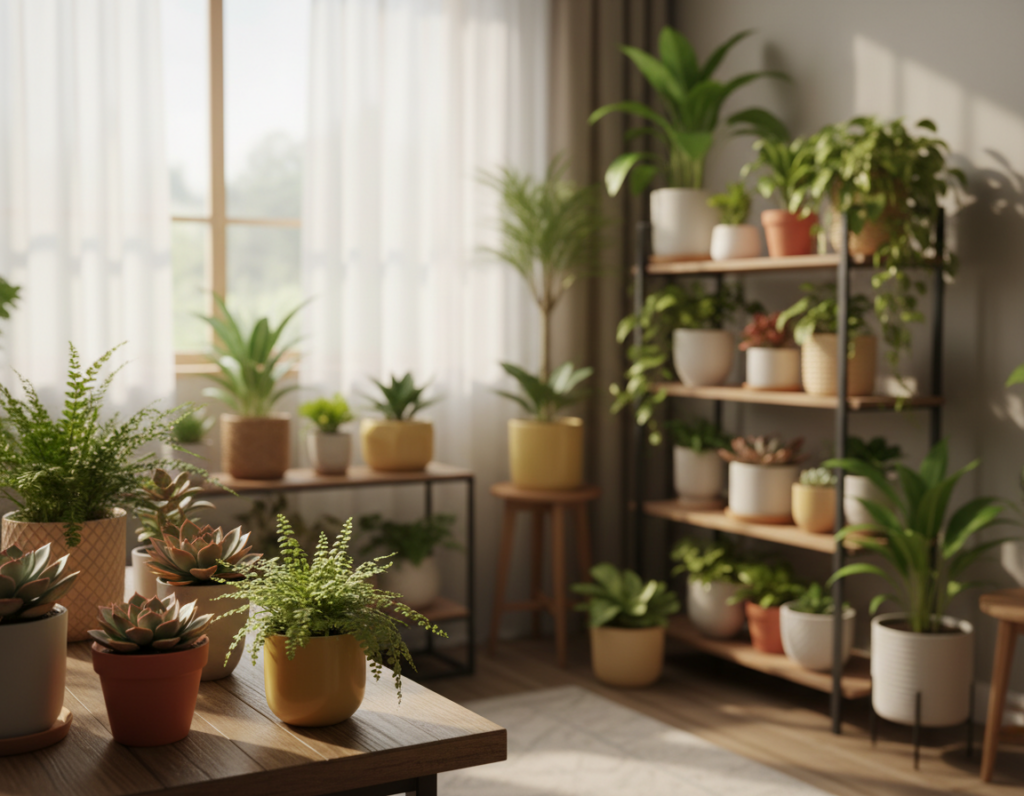
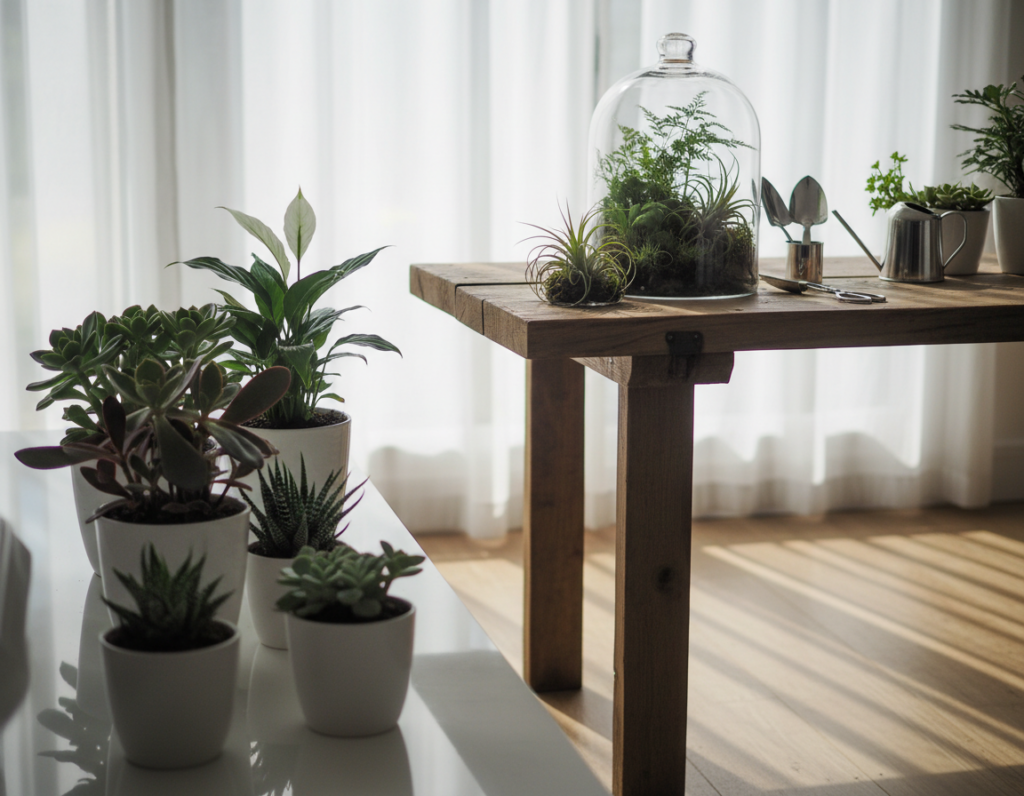
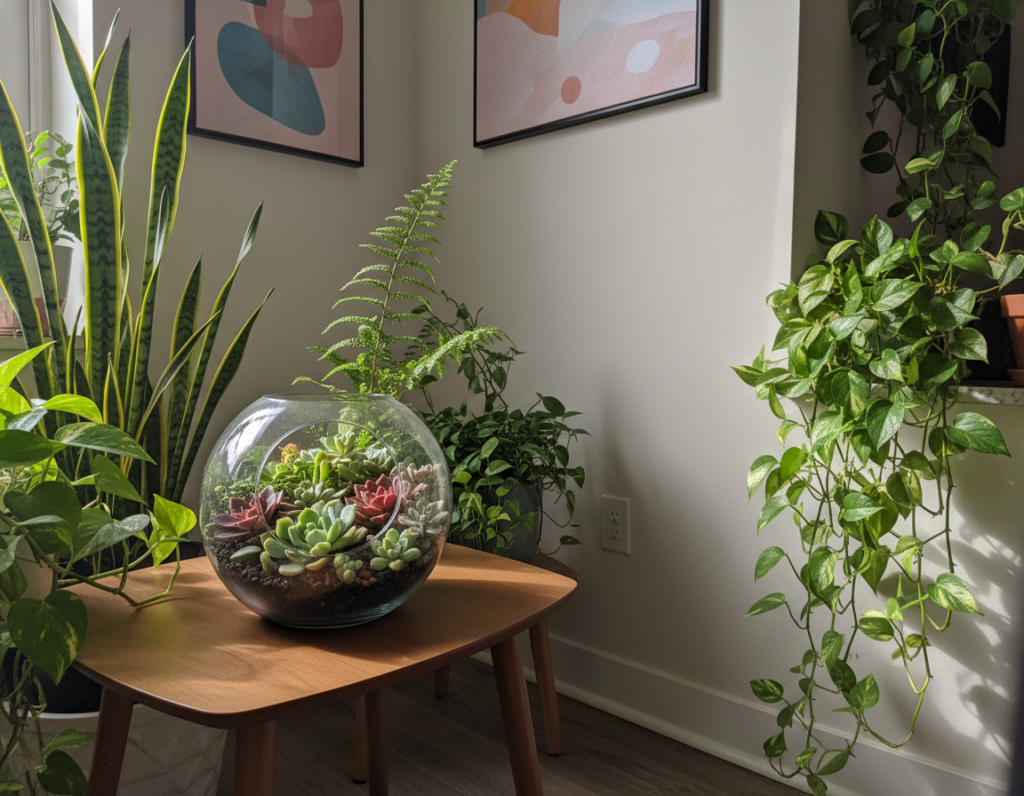
The #Plantshelfie wave has changed how people style their bookshelves and home nooks. It shows how compact green life can lift a room. Choosing the right shelf means placing it where light reaches and where a plant can spread without crowding.
They should pick a shelf that is easy to reach for regular water and simple care. A smart match of plant and space reduces the need to move items later. Texture, leaf shape, and pot size all add to a polished display.
Begin with adaptable options like a snake plant or devil ivy. These options handle varied light and soil conditions and help ensure early success. Small, steady steps lead to a richer shelf display that suits the room and the person who tends it.
Elevating Your Home Decor with the Best Plants for Shelves Indoors
Strategically placed foliage gives bookshelves a polished, intentional feel. Interior designers often use a single green piece to break a long row of books and add visual interest.
Use varied pots and heights to create depth. Sweet Pea Pots come in three sizes and look striking when clustered on a shelf. Grouping small, medium, and large pots makes the display feel planned rather than random.
Choose hardy species that match your light and water routine. The Bird’s Nest Snake Plant is nearly impossible to kill and fits tight shelf gaps. Every plant should have room to spread its leaves and thrive in the soil you provide.
- Bring life to bookshelves by mixing pots and objects.
- Select specimens that match indoor light and need little care.
- Arrange pots in odd-numbered groups for a balanced look.
Essential Rules for Styling Your Plant Shelves
A few clear rules help turn a cluttered shelf into a calm, leafy vignette. Keep design and care in balance so the display looks intentional and the plants stay healthy.
The Rule of Three
The rule of three guides grouping: cluster three pots of different sizes or line up three identical pots across a shelf. This mimicry of nature avoids strict symmetry and adds visual flow.
Choosing the Right Containers
Choose pots that fit the shelf depth and give each plant enough soil. If the shelf is shallow, a pot without drainage can work—use an absorbent mat or a long tray to protect wood from spills.
- Apply the rule of three to create natural, aesthetic groupings.
- Make sure pot size matches the plant’s root needs and shelf space.
- Water carefully and keep a steady watering routine to avoid damage.
- Balance the content of pots, height, and leaf texture for polished success.
Top Trailing Varieties for Cascading Greenery
Trailing greenery brings motion and softness to high ledges and tight nooks. A few hardy choices make quick work of a drab shelf while staying low maintenance.
Golden Pothos
Golden Pothos grows fast and trails well from higher shelves. It also helps purify air by reducing formaldehyde and tolerates varied light levels.
Philodendron Micans
Philodendron Micans is a rare tropical vine with velvety leaves. It prefers bright, indirect light and rewards gentle care with rich, green foliage.
String of Hearts
String of Hearts adds delicate silver-and-green hearts that trail gracefully over bookshelves. This low maintenance option likes its soil dry between watering.
- The Swiss Cheese Vine creates an instant jungle vibe with holey leaves.
- Hoya Carnosa flowers in bright light and can handle reduced winter water.
- Prune long stems to control growth and encourage fuller new growth.
Upright Plants for Compact Shelf Spaces
Upright varieties bring vertical interest to compact shelf corners without taking up precious depth.
Snake plant varieties are often the one best plants shelves owners choose because their tall green leaves save room on crowded bookshelves.
Snake Plant Varieties
Laurentii, nicknamed Mother-In-Law’s Tongue, sends stiff, vertical leaves that fit narrow pots and tight spaces.
The Bird’s Nest Snake Plant is native to West Africa and is prized as a low maintenance air purifier that will thrive where other indoor plants struggle.
Smaller upright options like Watermelon Peperomia suit tiny pots and keep shelf content balanced.
- Pilea Depressa grows fast and spills slightly, adding movement without overtaking the shelf.
- A lipstick plant adds texture with upright stems, given the right soil and occasional water.
- Group upright growers with trailing varieties to let each plant thrive while creating a layered display.
Mastering Light and Watering for Shelf Success
Consistent watering and smart placement help shelf-grown greenery stay healthy year-round. Rotate items every few days so each set of leaves gets bright, indirect light. If remembering is hard, rotate when watering.
Higher shelves dry faster; check soil moisture every few days. Most indoor plants prefer moderate humidity and room temps between 65–75°F.
Make sure a snake plant or devil ivy sits with soil dry between waterings. These choices forgive occasional lapses, but soggy soil harms roots fast.
“Rotate your plants each watering to keep light exposure even and avoid legginess.”
- Check soil before adding water — never assume a pot is dry.
- Adjust watering in winter when lower light and cool temps slow growth.
- If stems weaken, increase bright indirect light or tweak the watering routine.
Propagation Techniques for Expanding Your Collection
Expanding a collection often begins with a single healthy stem and simple tools. Propagation gives hobbyists a low-cost way to create new plants and refresh shelf content.
Start small. Pick a vigorous stem with several nodes. Let the soil dry slightly before you cut; this shows the parent is healthy and ready.
Water Propagation
Water rooting is ideal for beginners. Snip a 2–4 inch stem, remove lower leaves, and place the cutting in a clear jar of water.
- Wax Plants and Rosary Vines root quickly in water.
- Change water weekly and keep cuttings in bright, indirect light.
- Once roots reach 1–2 inches, move the cutting into potting soil.
Soil Cuttings
Some species prefer direct soil rooting. Use a moist, well-draining mix and insert the stem to the first node.
- Peperomia Hope roots from leaf or stem cuttings in moist soil.
- Keep humidity high with a clear bag or dome until new leaves appear.
- Gradual acclimation to lower humidity ensures long-term success.
“Propagation is a simple way to share greenery and to let new stems cascade from your shelves.”
Tip: When trailing plants are propagated, they can grow quite a few stems that will cascade beautifully from a shelf. For step-by-step guidance, see this propagation primer.
Maintenance Tips for Healthy Indoor Foliage
Small, regular steps keep shelf displays healthy and attractive. A quick weekly sweep prevents dust buildup that blocks bright light and slows photosynthesis.
Pruning and Cleaning
Pruning is a low maintenance task that helps plants keep shape and encourages new stems. Trim the golden pothos in early spring to promote fuller growth and use clean shears to avoid spreading disease.
Wipe dust from green leaves of a snake plant or devil ivy so they can absorb light. Watch for yellowing leaves, rootbound pots, or pests like spider mites and act fast.
Cuttings from a Heartleaf Philodendron root easily and make new plants to refill bookshelves. Make sure to adjust watering and indirect light after pruning to reduce stress and aid recovery.
“Remove dead foliage promptly; healthy pruning prevents pest spread and keeps shelf greenery vivid.”
- Regular pruning and cleaning support success on higher shelves.
- Trim trailing plants and prayer plant stems to keep them within their space.
- Use cuttings to propagate new plants and refresh shelf arrangements.
For detailed routines, review this houseplant care basics.
Conclusion
A thoughtful shelf display lifts a room and rewards steady attention. A few well-chosen plants that match light and space offer long-term satisfaction and easy care.
Rotate pots, check soil moisture, and prune stems to keep leaves healthy and shape tidy. Propagation helps expand a collection and is a simple way to share greenery with friends.
With steady attention, a shelf can become a lush, living feature that improves mood and adds texture to a home. Choose the right pieces, follow basic care, and let the display grow over time into the best plants shelves choice for your space.