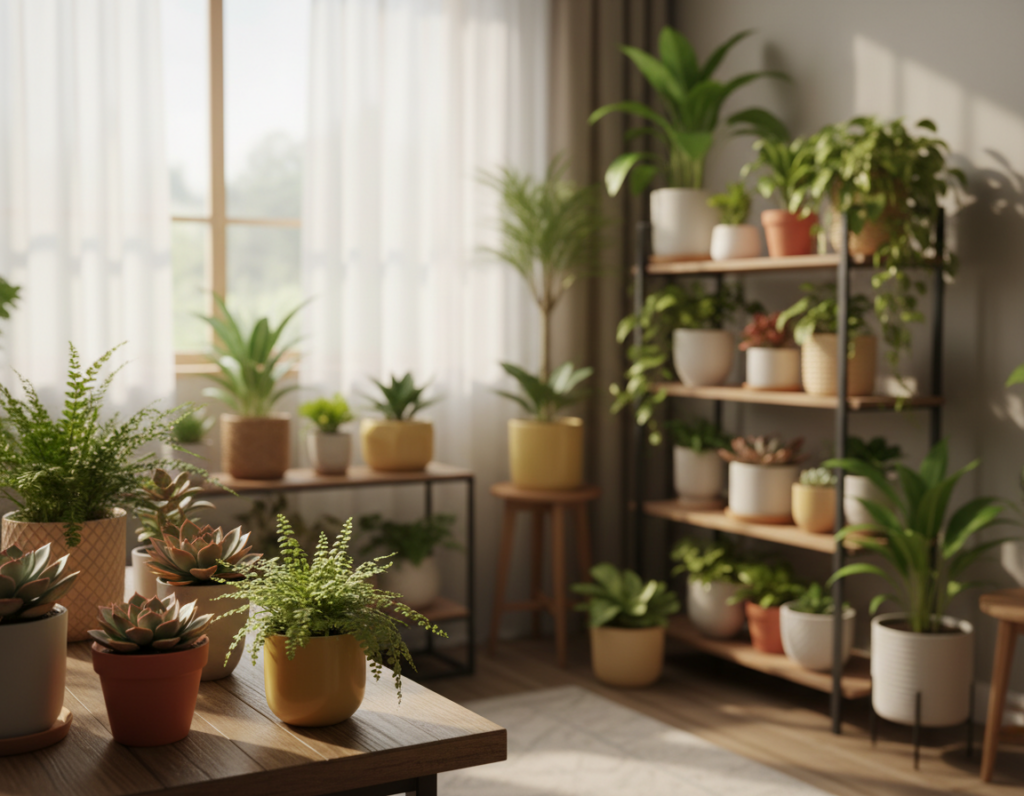
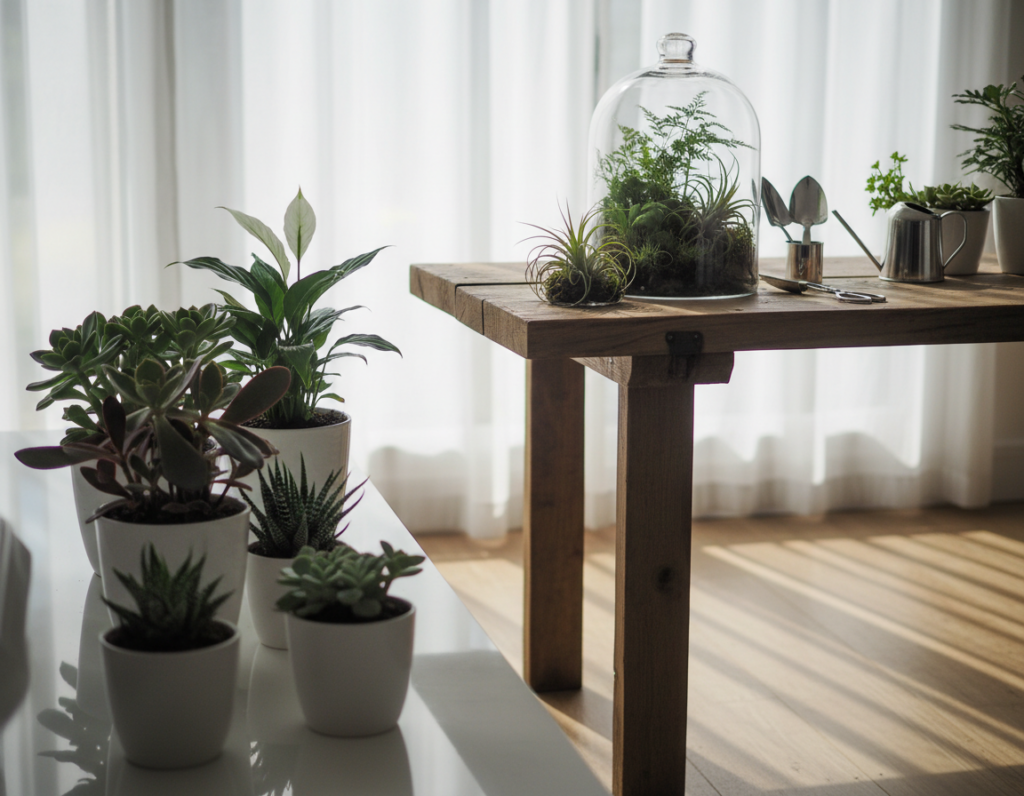
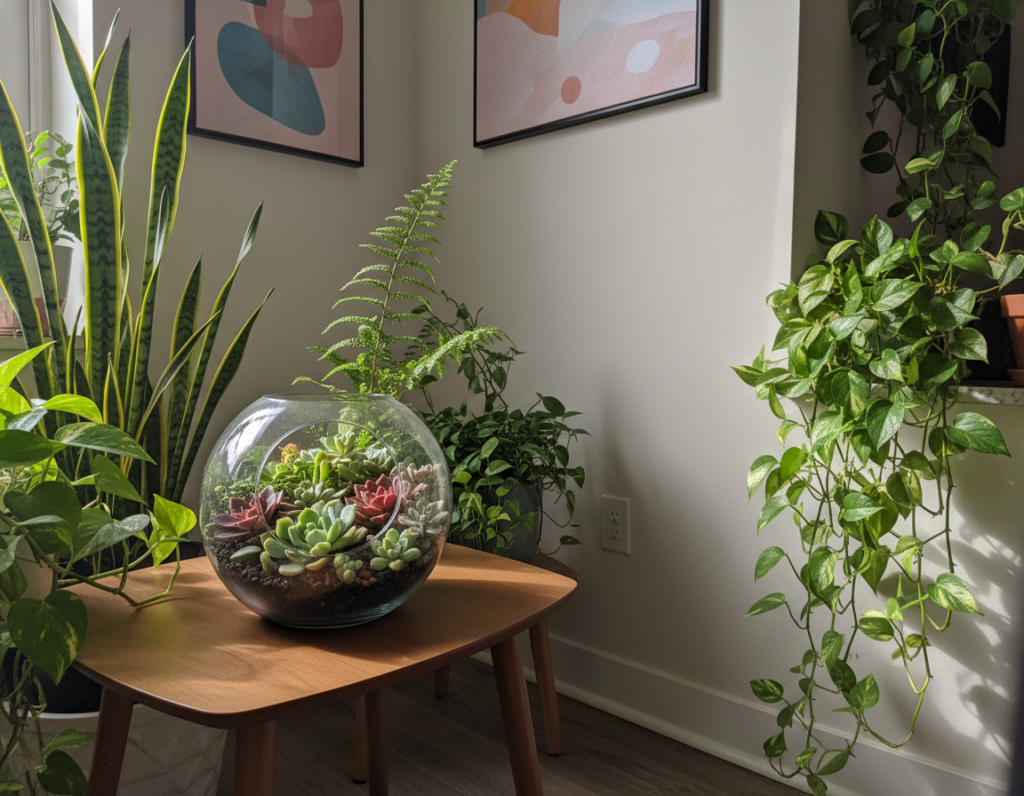
Finding the right plants can transform a tiny home into a calm, living oasis. They add color and help freshen the air without taking up precious floor space.
Many people assume a large specimen is needed to change a room. In reality, plenty of modest houseplants placed on a shelf or desk can bring drama and life while keeping the floor clear.
The right selection makes a measurable difference in both look and feel. A single plant on a table can lift mood and improve indoor air quality.
Experts say that thoughtful placement is key. With a little planning, even the smallest space in an apartment becomes a spot for thriving greenery.
Key points: Small species save floor space, enhance air quality, and offer flexible styling options for any room.
The Benefits of Bringing Nature Into Small Apartments
Adding a touch of greenery can change how a tiny living area feels and functions. Residents who add a bit of life to their rooms often report lower stress and a clearer mind.
According to WebMD, houseplants provide significant health benefits. They help purify the air by removing toxins and add humidity that can ease breathing in a dry home.
City dwellers in places like New York find that even one plant can make a room feel more inviting and boost productivity. Research also links houseplants to faster recovery from illness, which makes them a practical wellness tool.
- Cleaner air: Many varieties filter common indoor pollutants.
- Calmer living: Greenery reduces stress and promotes focus.
- Better wellbeing: Regular care routines support mental health in small spaces.
“A single healthy houseplant can shift the mood of a room and the day of its owner.”
For tips on how to incorporate nature without crowding your space, follow simple placement and care steps. They make the way to a greener, healthier apartment easy and satisfying.
Top Compact Indoor Plants for Small Apartments
Choosing the right greenery helps maximize limited shelf and wall space while adding life to a room. Below are three easy groups to consider, each suited to unique light and care conditions.
Succulents and Cacti
Succulents and cacti give a sculptural look with minimal care. They thrive with well-draining soil and plenty of light.
Make sure to avoid overwatering; these specimens store moisture in their leaves and do best when allowed to dry between waterings.
Trailing Vines
Vines like pothos and string of pearls add lush foliage without using floor space. They suit hanging baskets or shelves and soften walls and corners.
Chinese Money Plant cuttings, brought to Norway by Agnar Espergen in the 1940s, also work well on a desk or small table.
Air-Purifying Varieties
The snake plant is a top pick because it tolerates a wide range of light conditions and helps clean the air. Peace lily also copes with low light and offers blooms.
- Snake plant: durable in low light.
- Pothos: ideal for hanging or shelf displays.
- Rubber tree: can grow up to 10 feet but stays manageable with proper pruning.
“A few well-placed specimens can change a room’s look and mood.”
Essential Care Tips for Thriving Houseplants
Simple daily routines make a big difference in how well houseplants thrive. A steady schedule helps steady growth and limits surprises.
Watering and Soil Management
Establish a predictable watering pattern. Let the soil dry between sessions to prevent root rot in most specimens.
Keep a close eye on soil conditions. The snake plant tolerates drought, but it should never sit in stagnant water.
- Proper plant care needs a consistent timetable, especially with sensitive species like the peace lily.
- When watering Lucky Bamboo, make sure to replace the water every 7 to 10 days for healthy growth.
- Prune during the growing season to keep sizes manageable and save space in the home.
Always inspect the leaves for stress; discoloration or droop is often the first sign that the care routine or light conditions need adjustment.
“Finding the right balance of light and water is essential for long-term health.”
Creative Ways to Maximize Your Vertical Space
Think upward: using vertical surfaces transforms empty walls into lively, living displays. These strategies keep the floor clear and add texture to a room.
Utilizing Wall Gardens
Wall gardens are a clever way to add greenery without sacrificing floor space. A row of wall-mounted planters or a panel of pockets can turn a plain wall into a living piece of art.
Rotate plants so all sides get enough light and even growth. Use lightweight soil mixes and secure anchors to protect both the wall and the roots.
Hanging Planters
Hanging planters display trailing vines such as pothos beautifully. They free shelves and desk areas while creating striking foliage cascades.
- Install sturdy hooks or ceiling mounts near bright windows.
- Group pots at varied heights to add depth and improve light exposure.
- Keep a simple watering routine so hanging pots don’t drip on floors or furniture.
“A bit of creativity goes a long way when vertical space becomes the canvas.”
For more ideas on arranging small houseplants, see this small houseplant guide.
Selecting Plants Based on Your Apartment Lighting
Before buying any plant, map how sunlight moves through each room during the day. This simple check shows where bright, indirect light appears and where shade settles.
Most species thrive in bright, indirect light rather than harsh sun. If light is limited, choose varieties that keep vibrant leaves in lower levels of illumination. That choice improves the look of a shelf or desk without extra fuss.
Rotate each plant near windows so all sides get even exposure. This supports steady growth and prevents one-sided stretching toward a single source of light.
- Check shelves at different times to see how light reaches those spots.
- Monitor soil moisture: higher light speeds evaporation and raises water needs.
- Match species to room conditions and adjust placement as seasons change.
“Observing light in the home helps place each specimen where it will flourish.”
Common Mistakes to Avoid When Gardening Indoors
Routine checks beat rigid schedules when it comes to plant care. With 50 years of experience, experts say overwatering is the top error that breaks the balance between soil and roots.
Make sure to test the soil before you add more water. Many beginners pour on a strict timetable and then wonder why roots rot.
Check humidity often; some species need higher moisture to keep foliage healthy. Also, dust the leaves regularly so each specimen can absorb natural light and look its best.
Avoid placing snake plants in scorching sun. Direct heat can burn leaves and reduce the plant’s ability to clean the air.
Watch for pests and act quickly; infestations spread fast across a wall of pots or hanging baskets. Hanging vines too far from light causes leggy growth, so adjust placement in time.
“A simple care guide and steady attention save more plants than rare expertise.”
- Quick tips: check soil, watch humidity, clean foliage.
- Balance: light and water keep growth steady and healthy.
- Act fast: pests or burned leaves need immediate care.
Conclusion
Thoughtful selection and placement turn limited corners into lively, calming spots. Even in tight space, a few well-chosen plants add life and texture to a room without crowding the floor.
Each plant has specific needs for light and water. Match species to conditions, keep a steady care routine, and rotate pots so growth stays balanced.
Use shelves and vertical ideas to expand living areas visually. With the right choices, houseplants improve air quality and make any home feel fresher.
Start small, be consistent, and one thoughtful addition can brighten daily life in apartments of any size.