In 2026, the biophilic trend pushes greenery into tiny units as both decor and a way to boost air quality and calm. This guide helps readers pick the right specimens and learn simple care basics. It shows how to adapt to limited sunlight and tight space while keeping a healthy indoor garden.
Indoor plants now serve practical roles. They improve mood and filter air. The text explains how specific conditions, like low light, shape which varieties thrive.
The guide covers leaf shape and overall look, so someone can choose pieces that change a room’s feel through the day. It also describes the best ways to water and maintain a compact collection when life gets busy.
Readers will find a clear way to match each plant to their space and sunlight. With a bit of care, nature becomes part of daily living, even in the smallest urban unit.
Why Easy Small Plants for Studio Apartments Are Essential
Compact greenery helps urban dwellers keep nature close without sacrificing valuable floor area. In 2026, people use indoor plants to stretch limited floor space and bring life into a living room or bedroom.
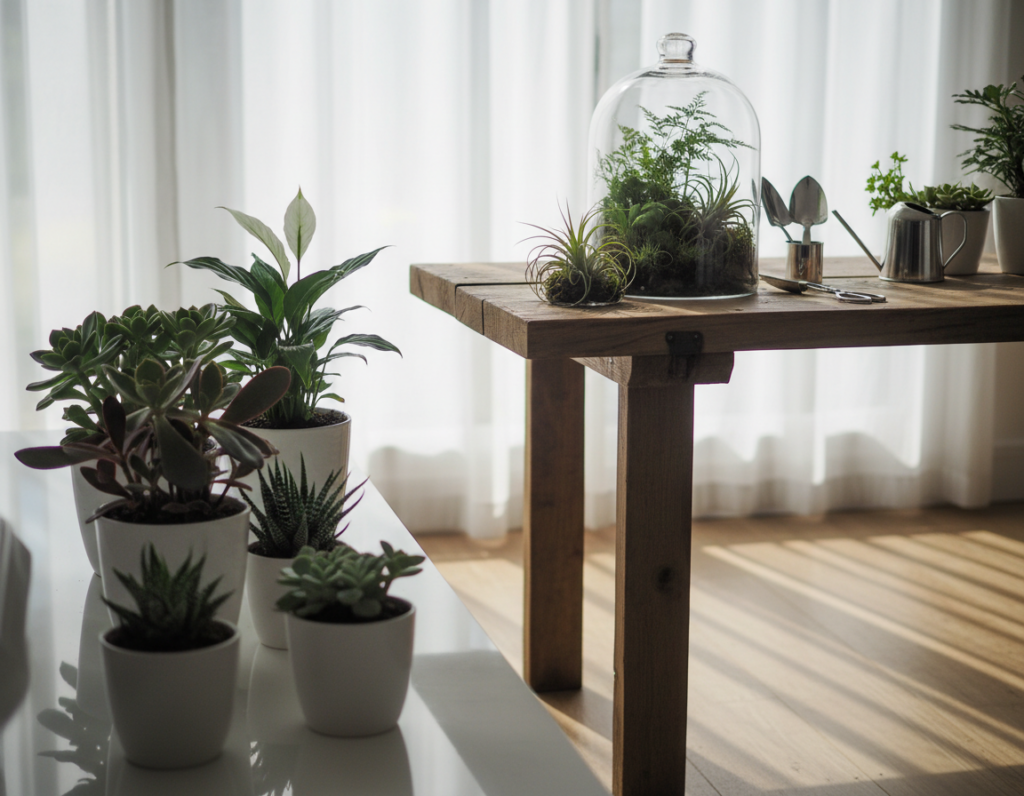
The right selection of specimens fits on a tabletop or nightstand and keeps care routines manageable. Succulents and air varieties are classic picks; they need modest light and careful water habits to thrive.
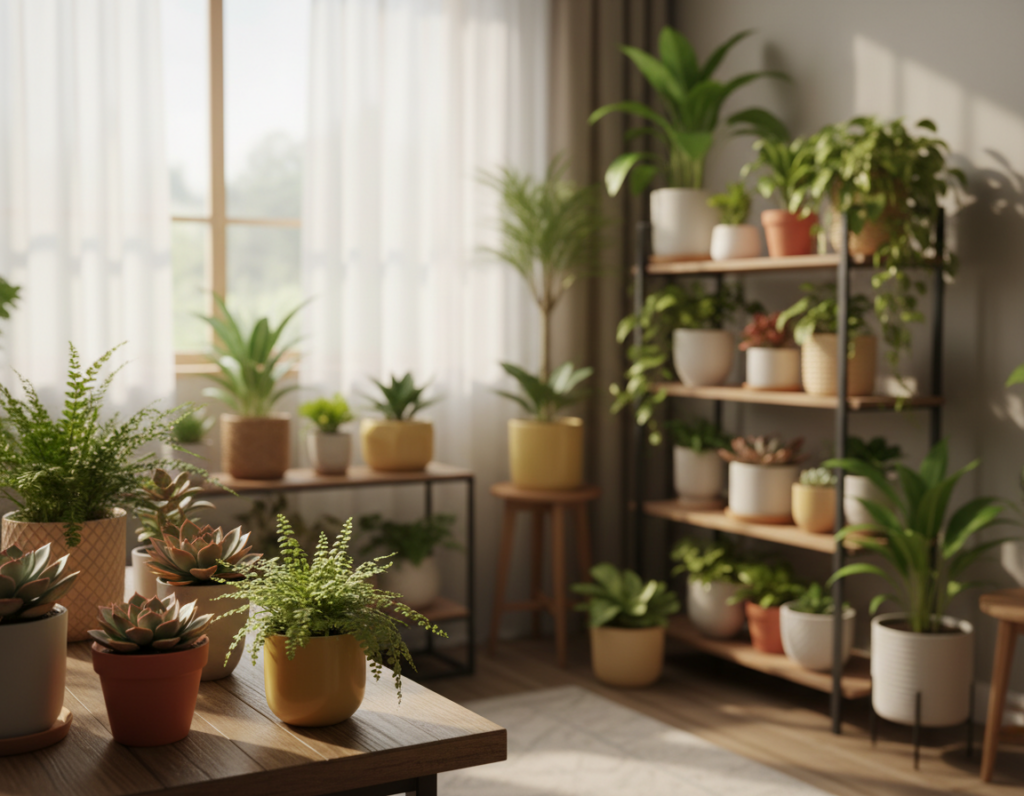
Proper placement matters. Placing a group on a shelf or a corner table preserves floor space while adding greenery and visual texture. Healthy leaves also signal good air quality and steady care.
- Space-saving: Use compact pots to protect floor space.
- Low maintenance: Choose specimens that match available light and your routine.
- Health benefit: Small botanicals can help freshen the air in a tight room.
“Small selections make big differences in mood and the look of a home.”
Low-Light Champions for Dim Corners
Dim corners can still host resilient greenery that asks little light and less fuss. Choose species that store water, keep an upright profile, and tolerate limited sunlight to make a dark corner feel intentional.
The Indestructible ZZ Plant
ZZ plants have waxy, deep green leaves that reflect available light. Their thick rhizomes store water, so they survive weeks without water in low light. Many people pick the ZZ as the best choice for a dark corner because it keeps a sleek look with minimal effort.
Snake Plants for Air Quality
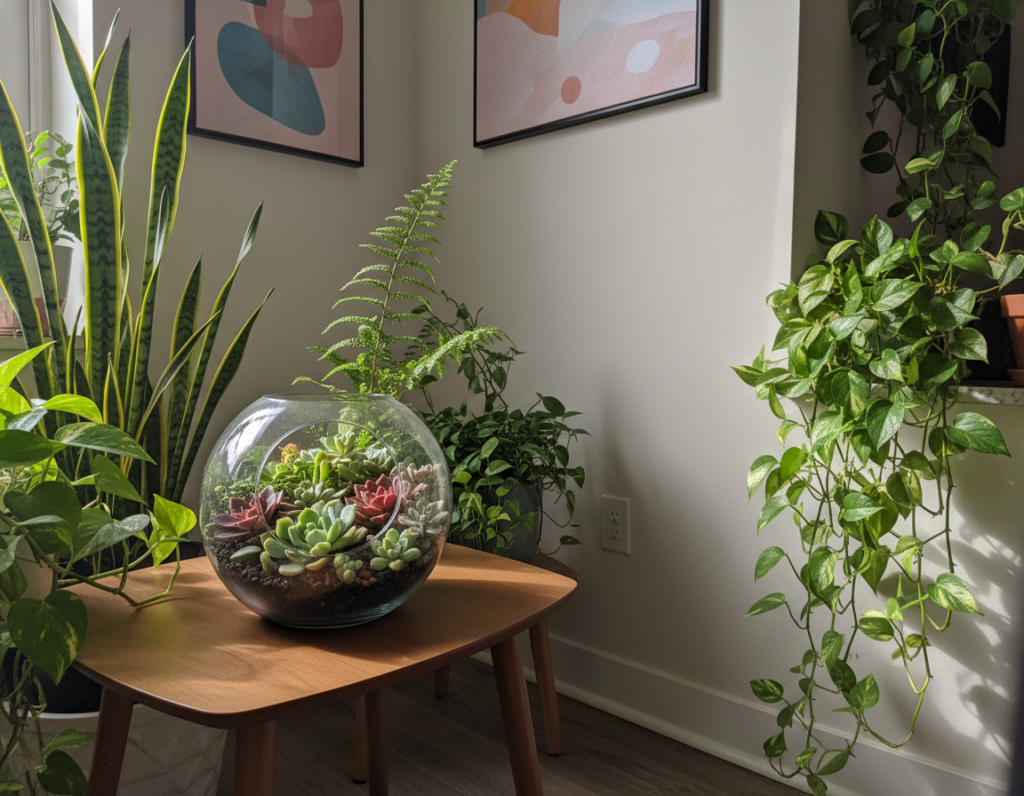
Snake plant varieties are famous for vertical leaves that save space and suit narrow corners. They continue to produce oxygen at night, which makes them an excellent bedroom choice.
- Follow a simple plant care guide to keep snake plants thriving in challenging conditions.
- The peace lily tolerates low light and signals when it needs water, making it a practical living room option.
- Placing these species near a window boosts daytime sunlight and keeps leaves healthy.
“Understanding home light conditions is essential for long-term growth.”
Maximizing Vertical Space with Trailing Greenery
Vertical displays turn bare walls into living features without taking up precious floor area. This approach is a practical way to add texture and color while keeping surfaces clear.
Hanging planters and wall-mounted shelves let residents use height to showcase trailing species. Golden Pothos is a classic choice, as its cascading vines grow fast and can spill over a shelf or climb a trellis.
Hanging Planters and Wall Shelves
Using hanging planters maximizes vertical space and draws the eye upward. It creates the sense of a larger room and keeps the pots out of reach of pets and foot traffic.
- Maximize space: Place a row of planters along a high shelf to save floor room.
- Choose the right spot: Keep trailing pots where they receive indirect light to keep leaves bright.
- Pick reliable choices: The spider plant thrives in hanging planters; its arching leaves and baby offshoots make a lush display.
- Train vines: Plants like Pothos can be guided along hooks or a trellis to create living art on a wall.
“A tiered shelf filled with trailing greenery makes a dramatic statement without crowding the living area.”
High-Impact Statement Plants for Sunny Spots
A single tall specimen in bright sun can anchor a room and instantly elevate its style.
The Monstera Deliciosa, often called the Swiss Cheese Plant, brings large, fenestrated leaves that make an instant statement in a sunny corner. Its sculptural form fills vertical space without cluttering floor space.
The Fiddle Leaf Fig needs consistent bright light and should be rotated weekly to promote even growth. Place it near a bright window or on a sturdy tabletop so it becomes a focal point in the living room.
Proper plant care for these statement species includes steady watering and weekly rotation toward sunlight. Large leaves demand regular hydration to keep their structure and glossy look.
- Monstera Deliciosa: the top choice for a sunny corner that wants dramatic foliage.
- Fiddle Leaf Fig: adds height and elegance when given bright, consistent sun.
- Peace lily: adds white blooms and helps purify indoor air while fitting near a window with moderate light.
“Placing a large plant in a sunny corner can transform a living room into a lush, inviting sanctuary.”
Enhancing Growth with Modern Lighting Solutions
Modern lighting lets greenery thrive even when natural light is scarce. High-efficiency LEDs now mimic sunlight and make it possible to keep an indoor garden healthy all year.
Benefits of LED Grow Lights
LED systems consume little electricity and emit minimal heat, so they are safe in confined spaces. They provide a full spectrum that supports strong leaves, steady growth, and regular blooms.
Choosing the Right Spectrum
Different wavelengths influence stages of growth. Blue-rich light promotes leaf and root development, while red tones encourage flowering. Selecting a full-spectrum fixture ensures balanced results across the day.
Renter-Friendly Setup
Compact fixtures like the Soltech Versa offer flexible placement with 310-degree horizontal rotation and 180-degree vertical articulation. This lets one aim light precisely at a snake plant, spider plant, or a group of pots without permanent mounts.
- Minimal heat: Safe for limited space and near shelving.
- Targeted coverage: Directs light to specific spots to reduce wasted energy.
- Simple care: Using a timer mimics natural sunlight cycles and eases watering and maintenance routines.
“Investing in quality LED lighting is a practical way to maintain healthy growth and improve indoor air by keeping plants in peak condition.”
Conclusion: Creating Your Personal Apartment Oasis
Smart choices about pots, position, and watering turn limited space into a thriving indoor garden. This approach helps readers build a calming, green corner that supports daily living.
Choose resilient options like a snake plant or a spider plant and match them to available light. A peace lily can revive a low light nook and also improve air quality through healthy leaves.
Prioritizing consistent plant care and mindful placement creates a sustainable system. Learn more about top picks and placement tips at best plants for apartments, then start pairing specimens to your home and watch nature come alive.