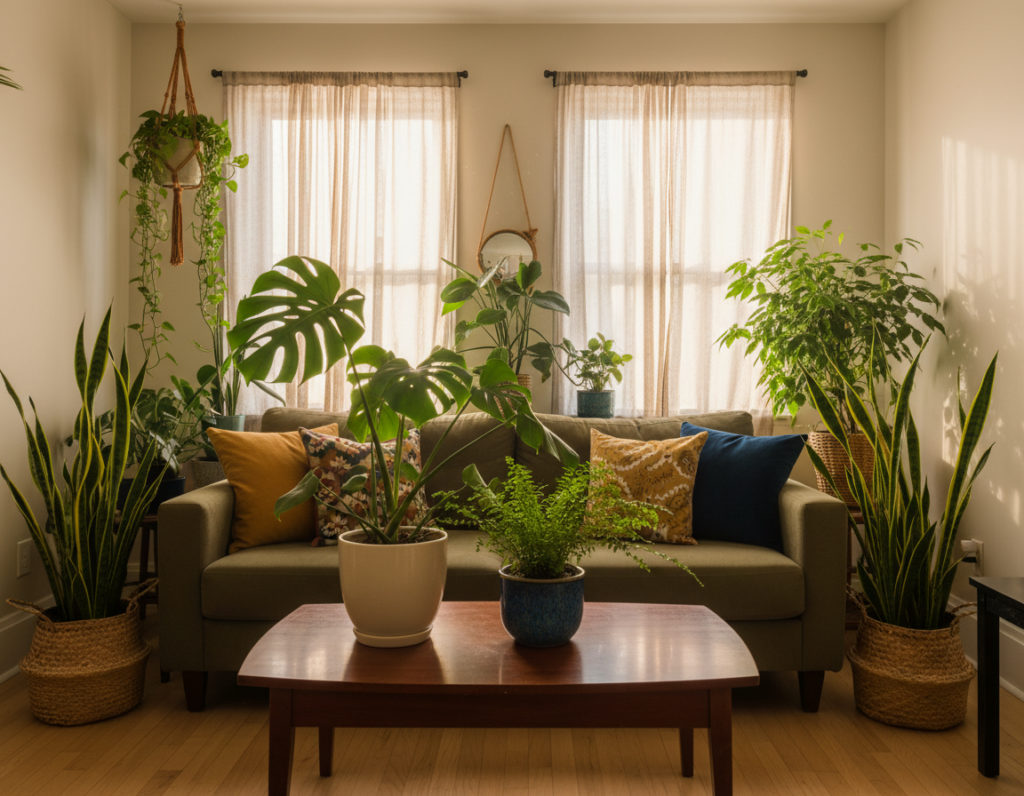
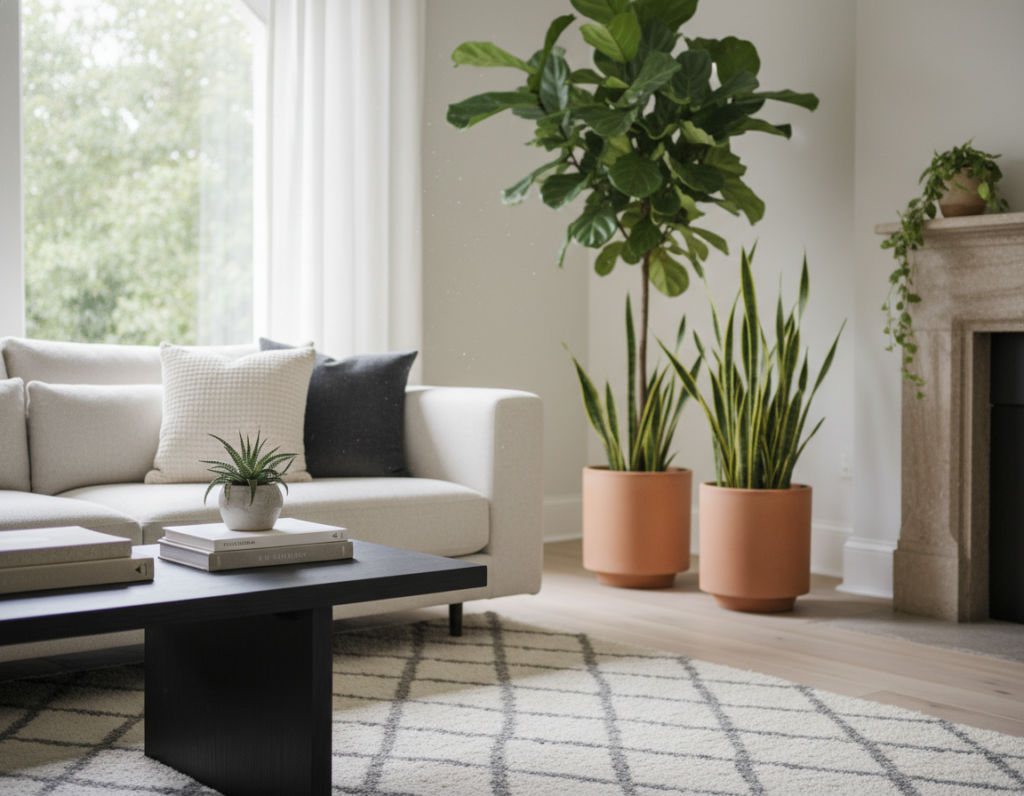
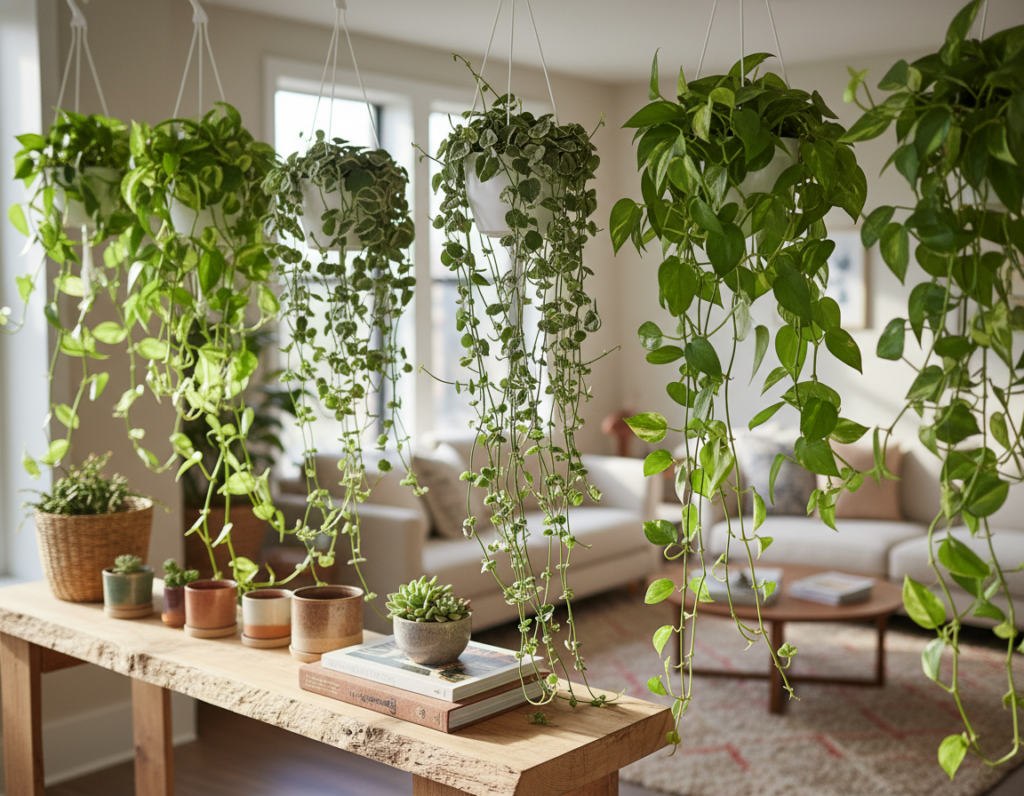
Create a calm green corner to change the feel of a home in an instant. Small groups of plants add beauty, fresh air, and a relaxed mood to any room. Nurserylive noted on September 1, 2021, that these living accents can transform daily life quickly.
This guide shows simple ways to arrange greens in a house or apartment. It covers smart choices for containers, placement, and mixes of foliage. Readers will learn affordable methods and one easy way to layer heights and textures for a lush look.
Whether someone rents or owns, adding a touch of nature brings a fresh interior vibe. The tips focus on practical steps and top plants to try so a serene, green sanctuary can be enjoyed today.
Understanding Your Space and Light
Start by mapping how light moves through your room over a full day. Small changes in sun angle can make a big difference in where plants thrive.
Assessing Natural Light
Stand by each window in the morning, midday, and late afternoon. Note which spots get direct sun and which stay shaded.
Before purchasing, make sure a chosen plant matches that light level. South-facing windows usually suit bright-light species. North-facing spots favor low-light houseplant varieties.
Identifying Temperature Needs
Temperature and air humidity shape plant health. Paris Lalicata, a plant expert with over 10 years of experience, stresses that plants perform best when the environment mimics their native habitat.
Whether in a house or an apartment, place sensitive species away from drafts, heaters, and night-time chill near windows. This helps indoor plants maintain steady growth and improves air quality in the living space.
- Make sure to assess natural light near your window before you buy.
- Check room temperature swings and humidity for long-term success.
- Pick a stable spot that supports growth and reduces stress at night.
Budget Indoor Plant Decor Ideas for Every Room
Grouping foliage by similar color or texture makes a cohesive look that fits any room. This approach guides the eye and makes a small corner feel intentional.
Collect several modest specimens instead of buying one large specimen. A mix of heights and leaf shapes creates depth and a more curated design without high cost.
According to Nurserylive, an accumulated small garden can resemble a curiosity cabinet. That layered display brings charm and a sense of discovery to a living space.
- Group similar foliage to unify the look across a room.
- Mix sizes and types to achieve a professional design feel.
- Use repeat colors to tie the green collection into home color schemes.
Whether decorating a house or a compact apartment, these ways help make a fresh, natural corner that reads as intentional and stylish while keeping costs low.
Selecting Low-Maintenance Houseplants
Opt for resilient houseplants that reward simple care with steady growth. A thoughtful start makes the journey enjoyable and sustainable for any home.
Choosing Hardy Varieties
They should handle light swings and missed waterings. Paris Lalicata recommends fail-proof species like the snake plant, pothos, and spider plant for new growers.
These hardy choices tolerate low care and still freshen the air in a bedroom or bathroom. That resilience reduces stress and boosts long-term success.
Starting with Small Collections
Begin with a few simple specimens rather than a large collection. Small numbers are easier to place near a window with plenty of light and to monitor for pests or watering needs.
Growing confidence matters: as care skills improve, more demanding tropical varieties can be added slowly.
Benefits of Snake Plants
Snake plant stands out for its tolerance of low light and irregular watering. It also helps purify the air, making it a practical choice for apartments and homes alike.
“Start with a resilient species and let success build your collection.”
- Choose hardy houseplants to simplify care.
- Place initial specimens where light is steady.
- Expand slowly once basic care is mastered.
The Art of Accumulating Plant Collections
Collecting multiple specimens gives any corner immediate texture and a fuller, more intentional display.
Nurserylive notes that a single specimen can look lonely. Grouping several plants creates volume and the lush density many people seek.
Mix pots and sizes to build lower layers that mimic an urban garden. Vary heights and shapes so the composition reads as deliberate rather than random.
A well-curated collection brings color and life to a living room and helps the whole home feel more complete.
When designing this small garden, focus on pot harmony. Matching tones or repeating a finish ties the look together and supports the overall design of the room.
- Use mixed sizes to add depth and a natural feel.
- Choose consistent pot tones so the display feels cohesive.
- Grow slowly—building a collection turns a house into a personal sanctuary.
“A layered group of plants makes a space feel cared for and alive.”
Utilizing Vertical Space with Hanging Planters
Using hanging planters turns empty wall space into a living, layered feature. This is a smart way to add greens without crowding floors in a small apartment or tight bathroom.
DIY hanging solutions can be simple and stylish. Mason jars, coconut skins, or macramé holders display a trailing pothos or a spider specimen. These options save space and add texture to a wall or window area.
DIY Hanging Solutions
Safety first: pick sturdy wall hooks and anchors that match the weight of wet soil and planters. Moisture-loving species should hang where air circulates to reduce rot.
- Use wall-mounted shelves or hangers to draw the eye upward and create dynamic layers.
- Group several small planters on staggered hooks for depth and a bohemian feel.
- For practical how-tos, see this guide on decorating with greens: living room plant styling.
Repurposing Household Items as Planters
Turn common household objects into charming vessels that showcase greenery. This approach brings character and a personal touch to a small home space.
Everyday containers—like fish bowls, spice jars, or mason jars—work well for small cuttings and houseplant starts. Nurserylive notes that reusing water bottles or jars can save money while giving cuttings a healthy place to root.
A colorful, repurposed container can act as a focal piece on a shelf, a living room wall display, or a bathroom ledge. It adds color and texture without needing new planters.
- Try glass jars for visible roots and easy propagation.
- Use ceramic bowls for a low tray-style arrangement.
- Mount shallow containers on a wall to create a vertical vignette.
Thinking outside the box lets everyday items become functional homes for plants and lifts the interior look of a house with minimal fuss.
Creating a Dedicated Propagation Station
A small propagation station turns spare cuttings into a steady source of new plants. It is a hands-on project that kids and adults can enjoy together.
Use simple vessels such as clear glass bottles or jars. Nurserylive highlights that little glass bottles make propagation fun and visible. Watching roots form helps learners stay engaged.
They can take cuttings from existing specimens or borrow stems from friends. This approach expands a collection without extra purchases and encourages sharing among neighbors.
- Place a shallow tray, several glass bottles, and bright indirect light.
- Change water weekly and label each cutting by species and date.
- Move rooting cuttings to pots once roots reach an inch or two.
A dedicated station not only helps multiply greens but also becomes an attractive shelf display in the home. It combines learning with a living focal point that grows over time.
Styling Plants on Floors and Empty Corners
A tall green specimen can anchor an empty corner and instantly change the feel of a room.
Placing a large floor plant in a spare spot fills negative space and adds a fresh focal point in a bedroom or living area. Nurserylive suggests that floor specimens often finish a room’s design and give scale to nearby furniture.
Use plant stands to lift smaller pots and make a layered display along a wall or by a window. Elevation creates visual steps and keeps low shelves from feeling overcrowded.
Whether in a small apartment or a larger house, floor styling balances the layout and softens hard corners. A well-placed specimen in a bathroom or hallway can revive an unused spot into a lively display for the home.
- Anchor a corner with a large specimen for instant impact.
- Combine stands and shelves to build height and depth near a wall or window.
- Place one near seating to tie the green display into the living room.
Incorporating Plants into Office and Work Areas
A small shelf or hanging pot beside a workstation brings calm and a touch of life to a busy day.
Adding greens to a work area can boost creativity and make a home office more pleasant. Simple choices keep a desk tidy and help sustain focus during long stretches of work.
Optimizing Desk Space
Keep the immediate desk surface clear for equipment and papers. Paris Lalicata advises leaving plenty of room for monitors, keyboards, and notepads while styling nearby areas with small pots or a compact shelf display.
When surface area is limited, hanging options or a narrow shelf on the wall work well. These save desk room and still let plants be visible without blocking workflow.
- Choose low-care species like pothos so care time stays minimal and the work life balance improves.
- Arrange greens so they do not obstruct screens or cables; keep pathways clear for comfort and efficiency.
- Use a small shelf or a hanging display to layer interest without crowding an apartment workspace.
“Place plants where they lift mood but never interrupt the task at hand.”
For more lush office options and specific recommendations, see this guide on lush office options.
Designing a Serene Bathroom Oasis
A bathroom can become a quiet spa-like retreat with a few well-chosen humidity-loving plants. Ferns and orchids thrive in steam and soft light, so they fit a bathing area naturally.
Place greens around a tub or on a shelf to create a calm vignette. Paris Lalicata notes that surrounding a bathtub with plant life can evoke calm and may help promote a better night’s rest.
Choose moisture-tolerant species such as a spider plant or ferns for shelves, corners, and window sills. These choices improve air quality and make the small space feel refreshed.
- Select houseplants that like humidity and low-to-medium light.
- Use matching pots or repeat a color to tie the look to the bedroom or hallway.
- Keep care simple: rotate for even light and trim spent foliage to keep the area neat.
“Designing a serene bathroom with plenty of plants is one of the most effective ways to improve your indoor air quality.”
Using Plant Packs to Save Money
Starting with a coordinated set removes guesswork about which species go well together. Purchasing curated packs is a smart way to build a houseplants collection quickly and with less stress.
Nurserylive offers curated sets that group low-maintenance specimens. These mixes are designed so light and water needs align, which keeps care simple for beginners.
Buying a pack helps the display look intentional. The matched styles and care requirements make arranging a shelf or corner straightforward. New growers spend less time swapping pots and more time enjoying a lush result.
- Save time: curated sets reduce trial-and-error.
- Consistency: similar care means healthier specimens.
- Fast impact: a single purchase achieves a fuller look.
“Investing in a collection pack is one of the most efficient ways to achieve a vibrant look with minimal fuss.”
Styling Shelves and Bookcases for Visual Interest
Shelves and bookcases become small stages where greens can bring texture and movement to a room. Styling at varied heights adds depth and makes a shelf feel curated rather than cluttered.
Group plants by leaf shape and color to form a cohesive display. Paris Lalicata recommends pairing contrasting foliage to keep the eye moving across a shelf and to balance light needs within a collection.
Incorporate hanging specimens to cascade along the side of a bookcase for a living accent on the wall. Use plant stands on a shelf to lift a pot and create clear visual steps in the layout.
- Mix books and knick-knacks with a few greens to personalize the shelf look.
- Place taller items at the back and lower items in front for layered depth.
- Rotate items under changing light so each species gets proper light and air circulation.
“Group specimens with varied textures and heights to make a shelf display feel intentional and alive.”
Adding Decorative Accents to Your Display
A few well-chosen accents help a shelf display read as intentional rather than accidental.
Combine family photos, small art pieces, and ceramics with greenery to create a warm, personal vignette. This unifies the look and ties the living area to the home’s personality.
Paris Lalicata suggests using household objects already on hand to boost visual interest. A stack of books, a favorite mug, or a small figurine adds texture without buying new furniture.
- Use unique planters and a hanging basket to add layers and tactile contrast.
- Place a framed photo on one shelf and a low ceramic on the next to create balance.
- Keep pieces proportionate so the wall area does not feel crowded.
By selecting accents that complement the planters, the overall display feels cohesive and curated. Small changes make a big visual difference and keep the arrangement practical for daily life.
Seasonal Decorating with Indoor Plants
Seasonal swaps let a small green corner reflect holidays and shifting months with minimal effort. Changing a few elements refreshes the room and keeps home decor feeling new.
“A fireplace mantle can become a beautiful display area for houseplants and seasonal decorations throughout the year,” suggests Paris Lalicata.
By mixing color and texture, one can adapt an indoor plants arrangement to match any season. Add a few hanging accents in spring, swap in warmer tones for fall, or place festive greens during the holidays.
- Refresh a shelf or mantel with seasonal accents instead of replacing the whole collection.
- Use small changes—ribbons, ceramic touches, or seasonal pots—to alter the display quickly.
- Try simple seasonal ideas like swapping one specimen or rearranging groupings for a new look.
Always confirm proper light and care for any seasonal addition. A healthy switch stays vibrant and keeps the room inviting without extra work.
Essential Care Tips for Long-Term Success
Small, steady habits help plants live longer and resist stress. Consistent care is the simplest way to protect a collection and extend its life.
Monitor thirst and light stress. Check soil moisture and watch leaves for browning or pale color. Move a pot if it shows signs of too much sun or too little light.
Keep leaves clean. Paris Lalicata recommends regular dusting and proper watering as essential ways to keep houseplants healthy and vibrant.
- Set a simple watering schedule and adjust by season.
- Dust foliage weekly to help plants absorb light and air.
- Choose hardy species—such as the snake plant—to purify air and lower maintenance needs.
- Build a basic routine for your garden so care becomes second nature.
One practical way to succeed is to log small tasks: water, rotate for even light, and trim spent leaves. By following these essential tips, anyone can enjoy a lush, healthy indoor green space for years to come.
Conclusion
In short, with a few hardy specimens and a clear plan, anyone can craft a soothing living nook at home.
They should start small, match species to light, and build slowly. Using vertical shelves, repurposed vessels, and grouped greens stretches style without excess cost.
Consistent care and good placement are the real foundations. Water, rotate, and trim on a simple schedule to keep foliage healthy and vibrant.
Start today by choosing a couple of easy-to-grow choices and arranging them thoughtfully. The result is a calm, green sanctuary that improves mood and lifts a room’s look over time.