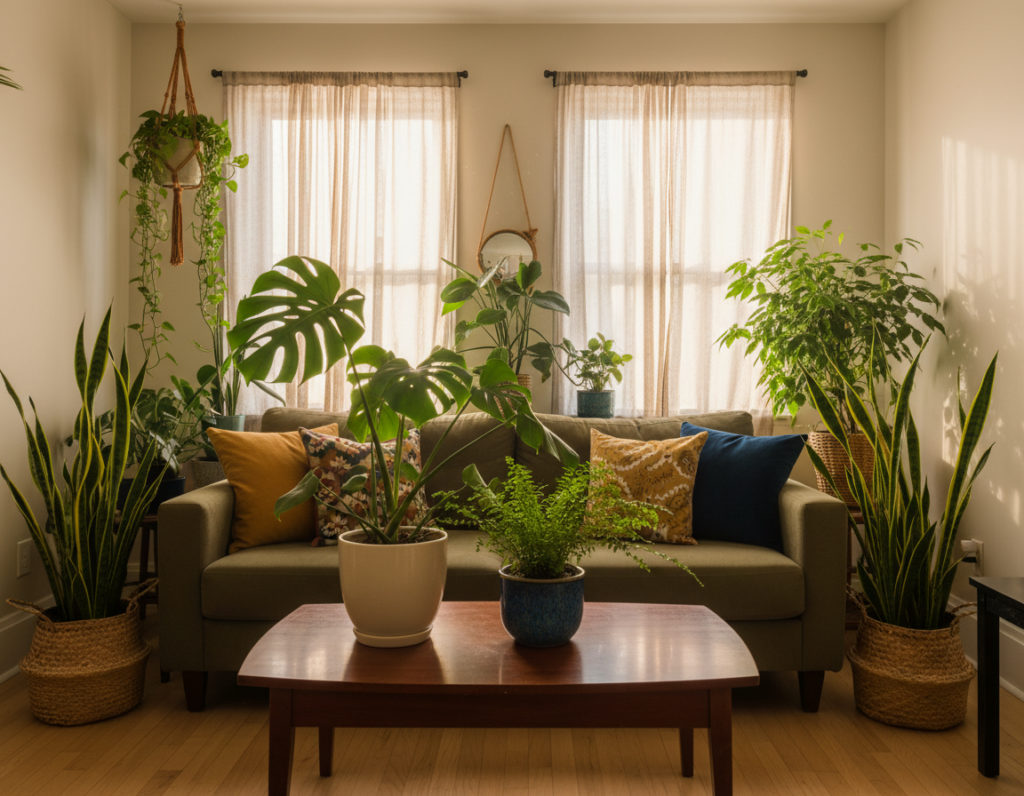
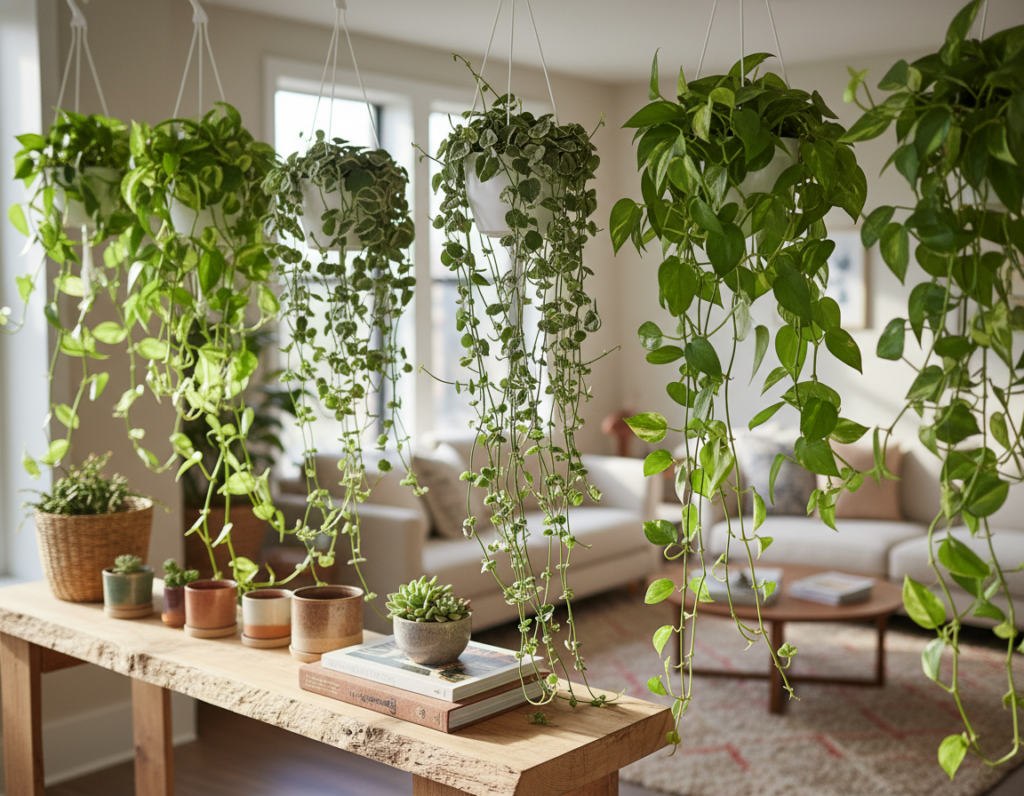
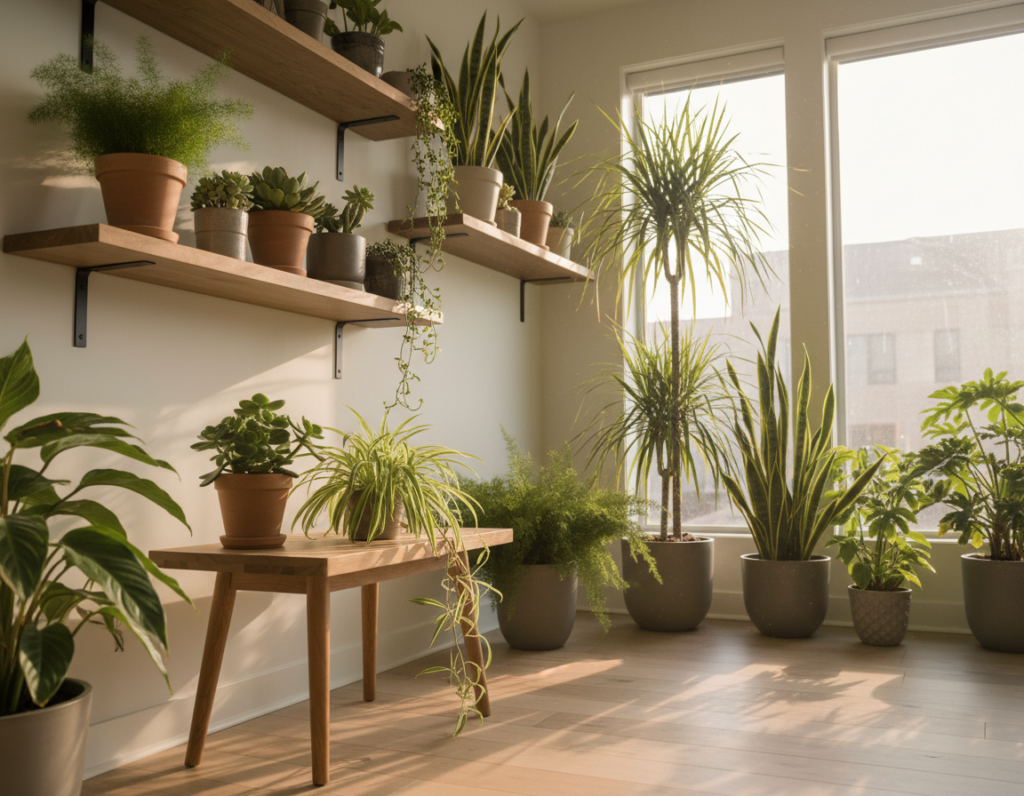
Integrating green life can change any living room into a calm, chic retreat. They start small, placing a single plant on a side table to add a natural touch and an intentional look.
Shoppers often turn to The Home Depot® for the leafjoy® collection, which offers easy options for beginners and seasoned collectors alike. A well-chosen indoor plant improves air quality and brings color to a muted interior.
Arranging houseplants across a room defines the space and the style. Using varied pots and colors lets someone personalize their home decor and create visual appeal.
The effect is profound: a few green accents can lift the whole interior and make a living area feel intentional and alive.
The Benefits of Integrating Nature into Your Home
Natural greenery makes living areas feel calmer and more alive. Research shows that close contact with lush foliage helps lower daily stress and can even support better sleep. An indoor plant in a living room does more than look good; it can help mood and rest.
Houseplants also improve air quality. Several common varieties filter harmful toxins and refresh the air in a room. That cleaner air promotes a healthier home environment for family and guests.
Practical benefits are easy to enjoy. Caring for an indoor plant offers small daily rituals that boost well-being. A lush grouping creates warmth and life, turning rooms into peaceful retreats.
“Living with greenery can significantly lower stress levels and improve sleep quality,”
- Lower stress in any room
- Improved air quality for a healthier environment
- Added warmth and life to living room spaces
Essential Planning for Neutral Apartment Decor With Plants
Start by mapping light and airflow to help houseplants flourish in any living area. A quick survey of each room and window shows where an indoor plant will thrive.
Assessing Light Requirements
Measure light at different times of day. South- and west-facing windows give bright light. North-facing spots offer low light.
Note: The leafjoy® Atrium® Collection is curated for high-light, bright spaces and fits well near sunny living room windows.
Also check humidity and air movement. Some houseplants prefer steady humidity; others tolerate dry air.
Choosing Hardy Varieties
For builders of a low-maintenance green corner, select fail-proof varieties. The ZZ, snake plant, pothos, philodendron, and spider plant are forgiving choices.
- Place hardy pots near moderate light so they consistently thrive.
- Group plants by light and humidity needs to simplify care.
- Research each plant’s water schedule to protect air quality and root health.
“A clear plan helps balance style and plant health for a lasting indoor garden.”
Design Principles for a Cohesive Aesthetic
A thoughtful layout turns greenery into a polished element that ties an entire room together. This section explains how to build visual balance so the living room feels intentional and refined.
Creating Visual Balance
Start by grouping foliage by similar color or style to create unity across the space. Matching tones and complementary colors help the arrangement read as a single design gesture.
Vary heights and textures. Place floor specimens next to tabletop pieces and hang a trailing variety to draw the eye through the living room. That movement keeps the interior lively.
- Use a consistent style for pots to unify the look across a room.
- Mix pot textures to add depth without overpowering existing home decor.
- Select an indoor plant that complements the room’s color palette to enhance, not distract.
Professional designers recommend treating each plant like a curated object in the interior. For more on blending styles, see styling secrets.
“Creating a cohesive aesthetic transforms a simple room into a stylish and harmonious living space.”
Strategic Placement for Maximum Visual Impact
Think vertically: stacking foliage draws the eye upward and opens floor space. This approach creates layers of interest in a living room while keeping the floor clear for movement and furniture.
Utilizing Vertical Space
Hang planters or install wall shelves to use empty wall area. A tiered stand or a tall shelf gives small indoor plants room to thrive and makes the whole space feel curated.
Enhancing Unused Corners
Turn a neglected corner into a focal point by placing a large spider plant or a statement specimen. Grouping three items at varied heights creates a dramatic effect and defines that room zone.
Styling Tabletops and Mantles
Keep table and mantle displays tight and intentional. A small cluster of houseplants, a sculptural pot, and one low object balance each other and add warmth to living spaces.
- Tip: Place plants near a window to let natural light highlight leaf color and texture.
- Tip: Use the leafjoy® SpaScene® Collection for humid rooms where greenery will thrive.
- Tip: A single well-placed indoor plant can act as a focal point and lift the room’s appeal.
For more ideas on arranging living room features, see room styling ideas.
Selecting the Right Containers and Accessories
Choosing the right containers bridges practical care and aesthetic intent in any living room. The style of pots can reshape how a room feels and how an indoor plant performs.
The leafjoy H20® collection, including the H20 Mini and H20 Bowl, offers an elegant way to display plant cuttings in water. These glass vessels add a clean, modern design element that suits many home decor schemes.
Consider how pot colors interact with existing room tones. Ceramic, metal, and glass each lend a different feel and help tie houseplants into the overall style.
Humidity-loving varieties need containers that allow for proper drainage or a tray to protect air quality and roots. Proper pots support plant health and prevent overwatering problems.
- Pick materials that match your room decor and practical needs.
- Use glass vessels for cuttings and ceramic or metal for potted specimens.
- Match pot colors to the living room palette for a cohesive look.
“Thoughtful containers make greenery feel like a curated part of the living space.”
Maintaining Your Indoor Greenery for Long-Term Health
Consistent habits—like checking soil and light—are the best way to protect a plant collection over time. Simple routines keep greenery vibrant and help the living room feel calm and intentional.
Watering and Drainage Best Practices
Water smart, not often. Check soil moisture before adding water. Overwatering causes root rot and harms air quality in the room.
- Test soil: Insert a finger an inch deep to judge moisture.
- Drain well: Use pots with drainage holes or a shallow tray to prevent standing water.
- Spot-check hardy types: Monitor a snake plant and a spider plant less often; they tolerate dry spells.
- Wipe leaves: Dust-free foliage absorbs more light and stays healthier.
- Place plants wisely: Use the leafjoy® WorkLife® Collection for desks and the Cocoon® Collection for low-light rooms without a nearby window.
“Proper drainage is essential for the long-term health of your collection.”
Whether in a house or an apartment, these ideas protect your indoor plants and extend the benefits they bring to a living space. Small, steady care keeps color, texture, and air quality at their best.
Conclusion: Creating Your Personal Green Sanctuary
, Small choices—like a table grouping or a wall display—build a lasting sense of calm in the living room.
Creating a personal green sanctuary brings life and warmth into the home while improving air quality and comfort. Thoughtful design ideas help each room feel intentional and useful.
They should choose easy-care indoor plants and give each indoor plant the right space to thrive. With routine care and smart placement, the collection will add long-term appeal and benefits to the living room.
These simple steps turn a corner of any apartment or house into a peaceful, plant-forward retreat.