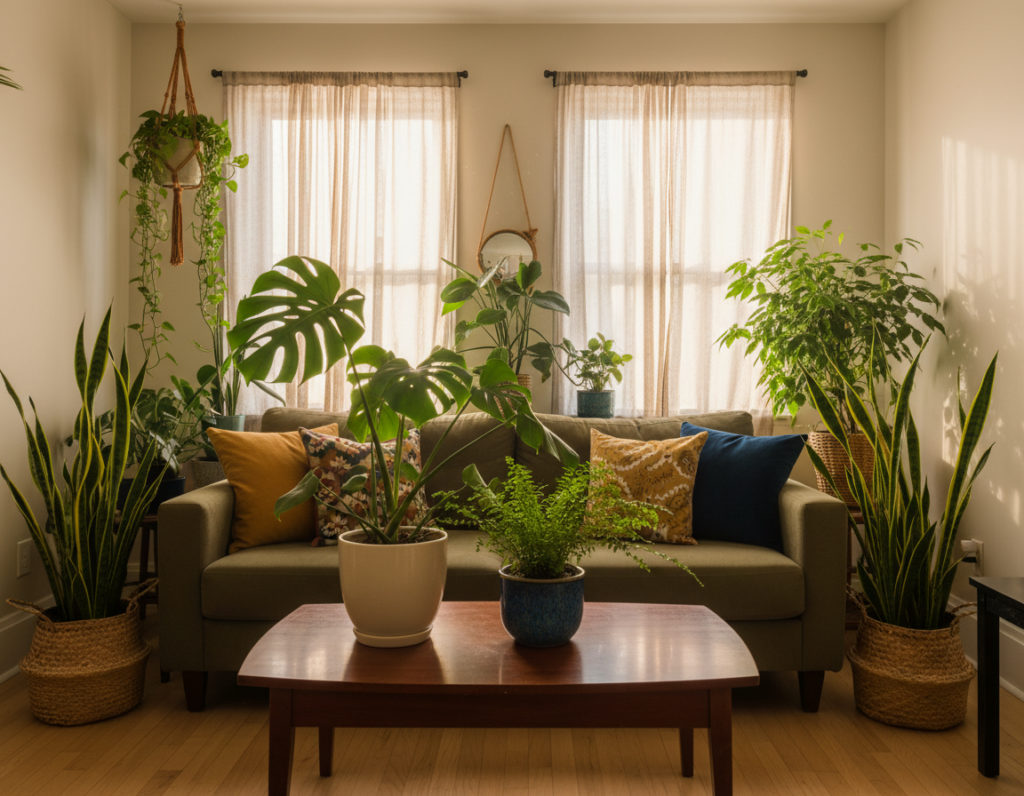
The Monstera Deliciosa brings an organic, architectural touch to compact living areas. It helps a small room feel intentional and alive.
Adding greenery to home decor creates calm and a sense of well-being. Many residents notice that a single plant can change the mood of a living space.
Houseplants add a dynamic element as they grow and change over time. A well-placed plant can make a static room feel welcoming and lived in.
This page explores how the right selections elevate interior decor and help people connect with the outdoors while staying inside. Readers will learn simple ways to add life and a tasteful touch to any size house.
Key takeaways: A single plant can transform a room, plants add calm and life, and careful placement boosts decor and connection to nature.
Why Greenery Transforms Apartment Living
A single verdant silhouette can soften a room and shift how someone experiences their home. People respond to living elements instinctively, and this biophilic connection helps reduce stress and boost comfort in daily life.
Biophilic Connection
Being near nature matters. A well-placed plant invites calm and makes urban living feel less removed from the natural world.
Residents often report a stronger sense of belonging when foliage is visible in their living space.
Natural Softness
Organic shapes and soft leaves break up the hard lines of modern interiors. That gentle texture complements furniture and adds a tactile touch that feels intentional.
Plants also improve indoor air quality and act as subtle purifiers in dense city settings.
- Visual interest: varied leaf shapes reduce monotony on plain walls.
- Comfort: greenery turns a cold space into a warmer sanctuary.
- Health: simple foliage supports fresher air and a livelier atmosphere.
For suggestions on specific selections that work in compact homes, see this quick guide.
Selecting the Best Indoor Plants for Apartment Aesthetics
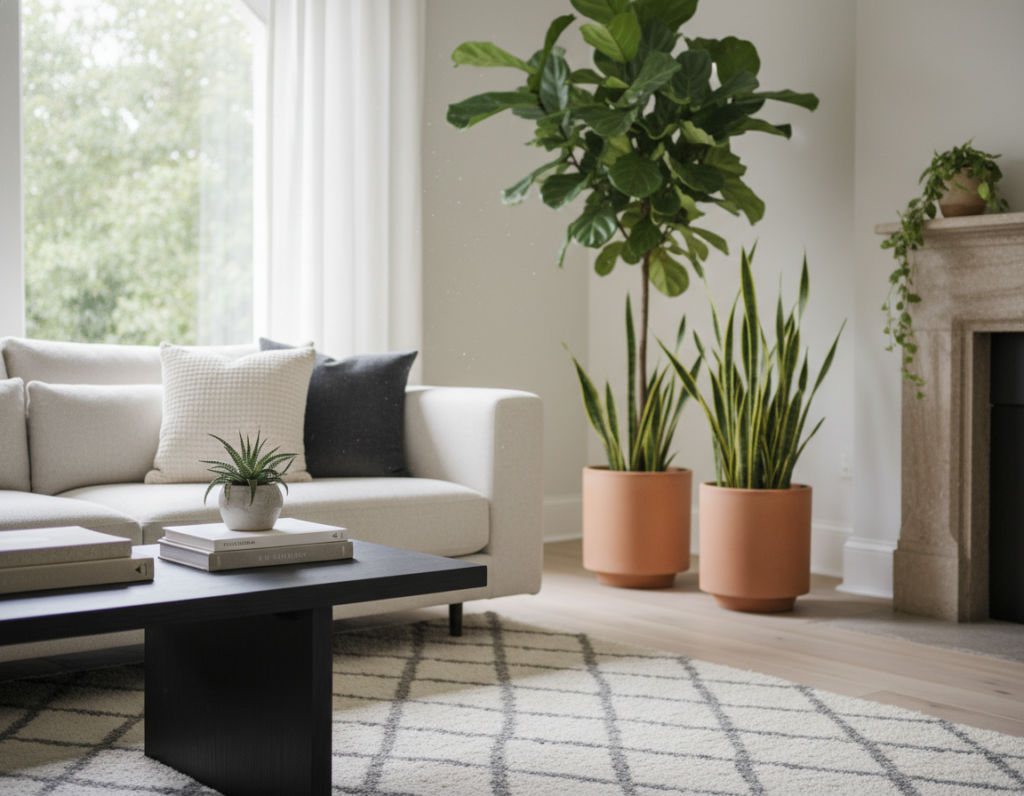
Choose species that match the light and scale of your space. The Monstera Deliciosa offers iconic split leaves that suit tall corners, while a Fiddle Leaf Fig works well in a bright interior with room to grow.
Low-effort options include Zamioculcas zamiifolia (ZZ) and pothos. They tolerate varied conditions and need modest watering and basic soil management over the weeks.
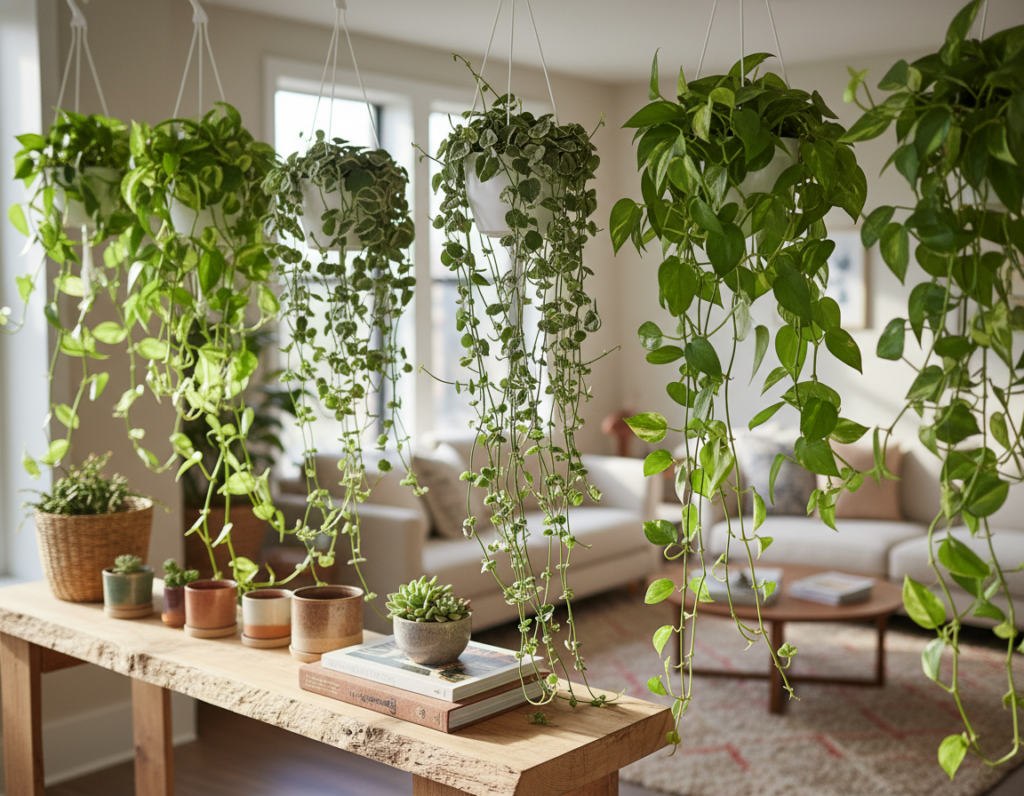
Hanging baskets are a smart way to add greenery without losing floor space. Pothos and spider plant trail nicely from a hook, showing off stems and small plantlets.
- Size and space: pick scale-appropriate foliage to avoid crowding.
- Light: assess indirect light before selecting a spot.
- Care: match watering routines and soil to each plant’s needs.
“Select plants that bring lasting beauty and suit daily care rhythms.”
Consider a prayer plant for patterned leaves and a spider plant for an easy, classic option. This page helps readers find choices that elevate a home while fitting real-life routines.
Understanding Light Requirements for Thriving Foliage
Light quality determines whether foliage simply survives or truly thrives in a small living space. Knowing a room’s light profile helps match species and tools to each spot. This reduces yellowing leaves and supports steady growth in a living area.
Bright Indirect Light
Bright indirect light suits tall specimens like a Fiddle Leaf Fig. Use the Aspect X Stello Pendant Stand Set to direct light without harsh sun. Place larger pots near east or north-facing windows for filtered sunlight.
Low Light Options
Some plants tolerate low light and steady moisture. Choose species that resist leaf drop and slow growth when light is limited. Rotate groupings so each plant receives an occasional brighter hour.
Full Spectrum Lighting
When natural sunlight is scarce, add artificial sources. The Versa Tabletop Grow Light gives bright indirect light for shelves and desks.
The Vita Grow Bulb provides full-spectrum light to mimic sunlight and support photosynthesis. Check soil; when the soil drys, water to restore moisture and encourage new growth.
- Tip: Match size and light to avoid crowding.
- Tip: Monitor leaves for color changes.
- Tip: Use targeted lighting when windows fall short.
Essential Care Tips for Healthy Growth
Regular checks of soil and light are the foundation of successful plant care. A quick finger test every few weeks shows whether the soil is moist or needs water. Many houseplants thrive when you water every two weeks, though species may vary.
Place each specimen where it gets the right light for its needs. Bright, indirect light suits some types, while others tolerate lower light. Adjust location within a room as the seasons change.
Monitor leaves and stems for signs of stress. Yellowing, droop, or slow growth often point to overwatering, too little light, or cramped roots. Check the plant’s size and repot when roots crowd the pot.
- Soil: let the top inch dry before watering again.
- Watering: most need a steady routine—every two weeks is common.
- Light: match species to the room’s brightness for steady growth.
Consistent attention keeps plants a vibrant part of home living. Small, steady actions prevent problems and promote vigorous growth over weeks and months.
Styling Techniques for Small Spaces
Thoughtful arrangements make small rooms feel fuller without crowding precious floor space. Styling should balance scale, light, and care needs so each piece contributes to a calm living vignette.
Creating Plant Groupings
Groupings increase local humidity, which benefits many tropical species like pothos. Arrange several plants with similar light needs together so each receives the same indirect light and steady care.
Watering plants in a group makes regular watering and soil checks simpler. It also keeps moisture levels more consistent and supports steady growth.
- Match light: cluster species with similar light and water needs.
- Balance size: mix heights so larger leaves frame smaller pots.
- Monitor soil: check topsoil moisture when you water the grouping.
Utilizing Vertical Space
Use shelves and hanging planters to maximize floor space. Trailing stems from a pothos add movement along a bookshelf or wall.
Proper lighting and placement prevent uneven growth. Place taller pieces above or behind lower pots so each plant gets enough light and develops healthy leaves.
“A conscious layout turns limited square footage into a layered, green retreat.”
Incorporating Plants into Bathroom Decor
A small green specimen can turn a basic bathroom into a calm, spa-like corner. Bathrooms offer steady humidity, which many houseplants prefer. This helps leaves stay clean and vibrant with less fuss.
Choose moisture-loving species such as a fern or pothos. A hanging plant is a smart option when space is tight. It frees counters and adds vertical interest without crowding the sink area.
Ensure each plant gets some indirect light or a bit of sunlight near a window. In low light spaces, pick tolerant houseplants and check soil less often, since humidity lowers water needs.
- Place: hang or mount to save floor space.
- Care: water sparingly; ambient humidity often reduces frequency.
- Health: inspect leaves for pests and rotate plants so growth stays even.
A thoughtfully placed plant lifts decor and brings a refreshing touch to daily living in a small room. It makes the bathroom feel like a short retreat without major changes.
Choosing the Right Pots and Containers
Containers shape how a plant grows and how it sits in a room. A good pot protects roots, controls soil moisture, and keeps a specimen stable.
Material matters: terracotta lets soil dry faster, while glazed ceramic holds moisture longer. Choose based on how often they will water and the needs of the plant.
Drainage is critical. Always pick pots with drainage holes to prevent water pooling at the bottom. That simple step reduces root rot and keeps leaves healthy.
- Size: match the pot to root spread; too large pots hold excess moisture.
- Lighting: place sturdy lamp stands if using the Vita Grow Bulb—the bulb weighs about 1lb, so ensure the stand supports it.
- Style: a beautiful pot adds to the living space and highlights the natural beauty of the plant.
“Selecting the right container is a key part of successful plant maintenance.”
For a deeper look at pot choices and care, consult this ultimate guide to pots. It helps match size, material, and style to your specimens like pothos and other indoor plants.
Managing Humidity and Soil Moisture
Simple moisture habits help a plant thrive through warm weeks and cooler months alike. Check the top two inches of soil and water every two weeks or when that layer feels dry.
Proper watering techniques prevent soil from becoming waterlogged. Overly wet soil damages roots and dulls leaves. Use pots with drainage and lift saucers after watering.
Group several plants together to keep a steady humidity level in a living room corner. Consistent humidity helps many species keep lush, green leaves year-round.
Monitor soil moisture with a finger test or a simple probe. Some plants need more frequent care during warmer weeks, so adjust watering and pot choice as seasons change.
- Check: topsoil dryness before adding water.
- Balance: avoid both drought and standing water.
- Arrange: cluster plants with similar light and moisture needs.
Understanding each plant’s needs and keeping soil moisture steady ensures healthier growth and a more resilient home collection.
Troubleshooting Common Plant Issues
A quick check can spot trouble before a specimen shows lasting decline. Inspect soil and the underside of leaves to find pests, rot, or stress early.
Yellowing leaves usually point to too much water or too little light. If the soil is dry, give a thorough soak and let excess drain away.
Some species are forgiving. The Ficus Alii drops fewer leaves than a fig, while a Haworthia reaches only about eight inches and needs little fuss. A Rubber Tree can become very large if conditions suit it.
Root rot and pests demand prompt action: trim affected roots, repot into fresh soil, and isolate the specimen. Monitor growth and moisture so issues are caught quickly.
“A healthy Monstera Deliciosa or Pothos will show vibrant green leaves when its needs are met.”
- Check indirect light and adjust placement.
- Test soil before watering; avoid standing water.
- Group plants like prayer plant and spider plant by moisture need.
Conclusion
A few thoughtful selections bring life and personality to each room without overfilling space.
This page has offered clear tips on choosing a plant, styling groupings, and basic care so living areas stay inviting. Consistent watering and proper placement keep roots healthy and soil balanced.
Small additions—whether a single specimen or several plants—can lift an entire room, refresh leaves, and improve the feel of the interior. With steady attention, any space in a home can become a greener part of daily living.
Apply these guidelines and the living collection will reward daily life with calm, color, and presence.