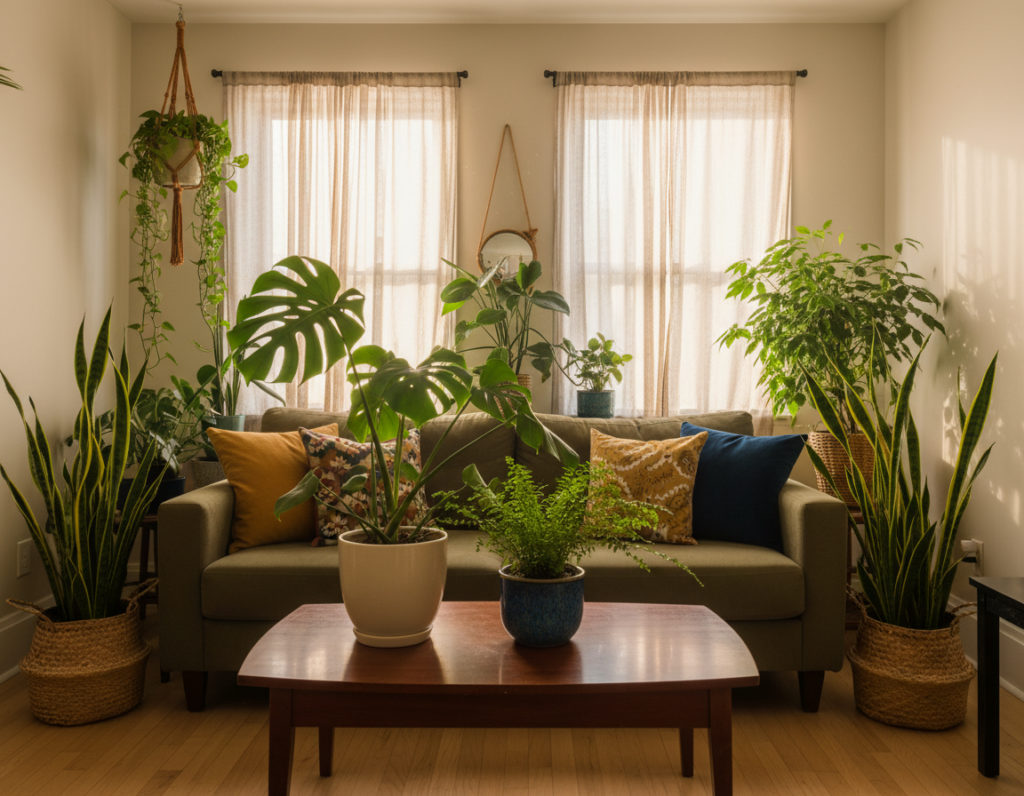
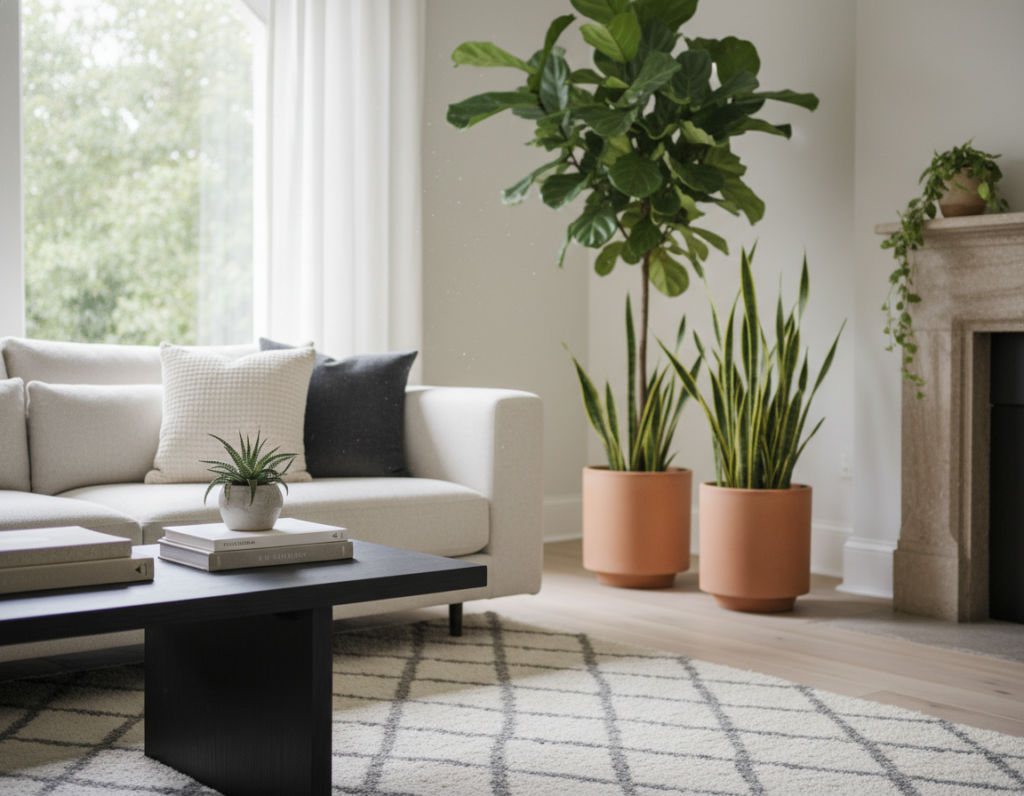
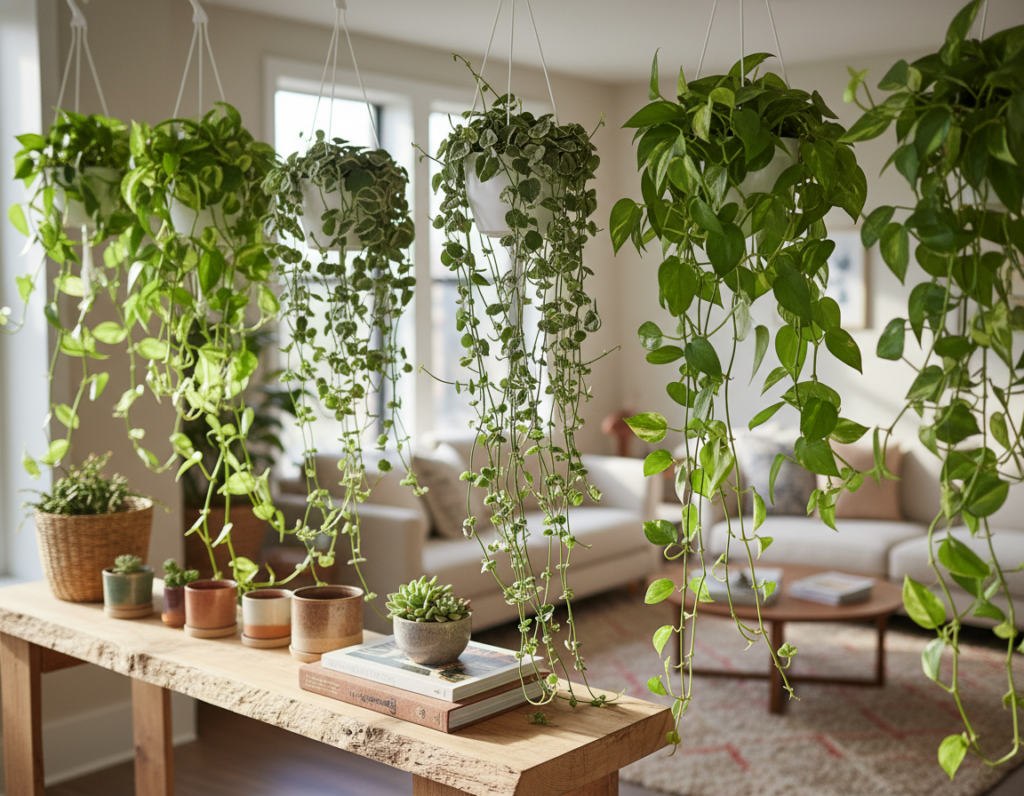
Biophilic design in 2026 puts mental health first. Designers now recommend adding greenery to make small homes calmer and brighter. A single plant can lower stress and lift mood, says recent research.
When residents choose the right way to place plants, a regular apartment becomes a nurturing retreat. Smart placement saves space and helps greenery thrive in urban living rooms and studios.
Houseplants act like natural filters and bring fresher air into the home. Many people report that adding one small green piece changes the whole room and makes daily life feel more vibrant.
The section that follows will offer simple, practical ways to bring nature indoors while keeping style and function in balance.
The Benefits of Bringing Nature Indoors
Bringing greenery into indoor spaces delivers clear gains for mood and focus. Research in 2026 shows that being close to lush green life helps to lower daily stress levels. Adding living elements to an interior creates a calmer, more restorative home environment.
Improving Mental Well-being
Studies indicate that living near green plants reduces stress and supports mental health. Many people report feeling more relaxed after a long day when a plant sits in their living space.
Small changes matter: a single plant can lift mood and make routines feel less hectic.
Enhancing Indoor Air Quality
Houseplants can filter harmful toxins and help improve air quality. This effect makes the home healthier and more pleasant to inhabit.
- Research highlights that indoor plants are functional tools for cleaner air.
- The way plants are arranged affects how well they circulate air.
- Starting with easy-to-care-for species is the best way to maintain benefits long term.
Essential Planning for Your Green Sanctuary
Smart planning makes it simple to build a sustainable indoor garden that fits daily life. The first step is a quick survey of light and traffic. Measure windows, note morning and afternoon sun, and mark shaded corners.
Assess needs before you buy. Research each plant’s light and watering needs so they match the conditions in your home. Consider growth habit and how a specimen will interact with furniture and airflow.
Start small. Many residents begin with a few reliable plants to learn routines without overwhelming their space. Map out where each piece will sit so nothing blocks natural light.
- Check light levels by room and record safest spots for sun‑loving and low‑light species.
- Plan placement that complements overall design and keeps the home organized.
- Think growth: allow room for taller specimens to avoid future reshuffling.
With careful planning, the apartment can become a lush sanctuary that feels intentional and easy to maintain. These simple ideas help ensure plants thrive and enhance daily living.
Cozy Apartment Plant Decor Ideas for Every Room
A thoughtful grouping of houseplants transforms empty corners into lively focal points. Start by pairing low‑maintenance species with smart stands and shelves to create depth and movement in shared spaces.
Living Room Accents
Group a ZZ plant, philodendron, and pothos on varied plant stands to create multiple levels. Use the leafjoy Atrium Collection for sun‑soaked spots and a sturdy pot to anchor the display.
Bedroom Serenity
Place a spider plant or a snake plant on a small shelf or H20 Bowl for a calm bedside look. The leafjoy H20 collection works well for modern shelves and helps the room feel restful.
Bathroom Humidity
Bathrooms suit humidity lovers. The leafjoy SpaScene Collection pairs ferns or calathea with steam to boost foliage health and air quality. Hanging or shelf placement keeps surfaces clear and stylish.
“Using different stands and heights creates a cohesive, living composition that enhances each room’s design.”
- Group sizes and textures for a unified look.
- Use hanging pots or high shelves for trailing pothos.
- Choose colorful pots to add a pop of color and style.
Selecting the Right Plants for Low Light Environments
Even spaces without direct sun can host attractive, long‑lasting greenery. Choosing shade‑adapted specimens helps any dim corner look intentional and healthy.
Hardy species thrive in low light: the snake plant is ideal for a bedroom because it continues producing oxygen at night and needs minimal care. The ZZ has waxy, deep green leaves that reflect scarce light and store water for weeks.
Hardy Species for Dim Corners
The Cast Iron Plant tolerates dark corners where other foliage fades. A spider plant is a forgiving choice for beginners and can boost home air quality even in low light.
- The snake plant adds vertical form and improves air while needing little attention.
- Leafjoy Cocoon Collection offers options for spots without a window.
- Wipe leaves and check soil moisture; low light environments lower watering needs.
“Pick species with dark green leaves; they are adapted to shade and absorb light more efficiently.”
Vertical Solutions for Maximizing Limited Floor Space
Elevating plants with shelves and hangers unlocks new ways to fill a room without shrinking usable floor area.
Hanging planters are a top choice when floor space is tight. They draw the eye upward and make a small home feel taller.
A sturdy shelf on a free wall creates a gallery for trailing plants like pothos. This saves floor space and keeps surfaces tidy.
Vertical plant stands let residents stack pots safely. Mixing heights creates depth and a lush look without cluttering the ground.
- Use wall-mounted shelves to host several small plants at once.
- Choose hanging planters near windows to give trailing plants room to spill down.
- Combine plant stands and wall shelves to build a layered green wall that fits any space.
These vertical solutions help transform walls into living features. They maximize floor space while keeping indoor plants vibrant and visible.
Making a Statement with Large Foliage
Bold, broad leaves change how a home reads; they add scale, texture, and an instant focal point. Large specimens bring life and presence to a living room while also contributing to air quality.
The Fiddle Leaf Fig makes a strong statement in a sunny room. Place it near a window with consistent light and rotate the pot weekly so the large leaves grow evenly toward the source.
Choose a roomy pot that supports root growth and complements the home’s palette. With proper light and rotation, a fig can become a striking, long‑term centerpiece.
Monstera Deliciosa
The Monstera Deliciosa, often called the Swiss Cheese Plant, offers iconic, fenestrated leaves that transform dull corners into vibrant focal points.
Positioning a Monstera near indirect light helps it thrive and supports its air‑filtering role in shared spaces. A neutral pot will let its dramatic leaves take center stage.
“A single large specimen can define the entire vibe of a living room, adding a sense of luxury and life.”
- Rotate broad-leafed specimens weekly for even growth.
- Place large plants near a consistent light source, preferably a window.
- Use a sturdy pot sized for future growth to keep the statement piece healthy.
Creative Ways to Use Decorative Planters
A thoughtfully chosen planter turns ordinary foliage into a curated focal point for living spaces.
Choose materials to match the room’s mood: a ceramic pot reads modern, while a wicker basket adds rustic texture. Metal or wood planters introduce contrast and support layered color and finish across the interior.
Groupings on a shelf or table work well when pots share a color or finish. This creates a cohesive look and lets the greenery unify the display without clutter.
Hanging planters are a smart way to add vertical interest to an empty corner or above a shelf. They free floor space and draw the eye upward for a taller, more open feel.
- Mix textures—ceramic, metal, wicker—so surfaces feel layered and intentional.
- Use a single color family on a shelf to create a tidy, cohesive look.
- Place a striking container where light highlights its color and shape.
One simple swap—placing a specimen in a unique container—can make a modest green piece feel high‑end. This is an easy, versatile way to integrate indoor plants into the home’s overall design and style.
Integrating Grow Lights for Urban Apartments
Full spectrum fixtures now give urban homes precise control over color and intensity for healthy growth. They are especially useful when a window is small or shaded. Modern LEDs supply the wavelengths plants need for leaves and roots to thrive.
Choosing Full Spectrum Options
The Soltech Versa stands out for flexibility. It offers 310-degree horizontal rotation and 180-degree vertical articulation. That makes targeting a trailing plant on a hanging shelf or a specimen on a bedroom shelf simple.
- The Soltech Versa fits a small space and sits neatly on a desk or shelf.
- Full spectrum LEDs mimic daylight so plants get the energy they need in darker environments.
- Grow lights can act as subtle decor while boosting growth all year.
- They allow movers to place foliage away from the only window and keep living areas green.
“A high-quality grow light is a game-changer for any urban dweller who wants a healthy, green living space.”
Best Practices for Long Term Plant Care
Long-term success with indoor greenery comes from steady routines and close observation. Consistent care is the key to healthy houseplants and better air quality in the home.
Check soil moisture before you water, especially for a pothos or other trailing plants. Overwatering leads to root rot, so feel the top inch of soil first.
Maintain humidity for tropical species. A warm bedroom may dry air quickly, so mist leaves or use a humidifier when needed.
Wipe leaves regularly to remove dust. Clean foliage absorbs more light and keeps your room styling crisp.
- Group plants with similar needs on a shelf to keep a cohesive style and simplify routines.
- Check hanging hooks and hardware; they must support the pot and mature weight of the plant.
- Repot when roots crowd the container so the specimen can keep growing strong.
“Observe changes and adjust your schedule — the best plant care is responsive care.”
For more tips on arranging living room plants and improving air quality, see living room plants. Following these practices helps indoor plants stay vibrant and supportive of a healthy living space for years.
Conclusion
A thoughtful mix of durable foliage and simple routines helps a home feel more vibrant and cared for. This approach improves daily life and creates a calmer, healthier setting.
Transforming an , apartment into a green sanctuary is a rewarding process. Small choices add up and make rooms feel lived in and inviting.
By selecting suitable specimens and committing to steady care, anyone can maintain a thriving indoor garden. Regular checks and simple schedules prevent common problems.
These ideas offer practical starting points for any space. With thoughtful design and routine maintenance, the benefits last for years and support both mental and physical wellbeing.