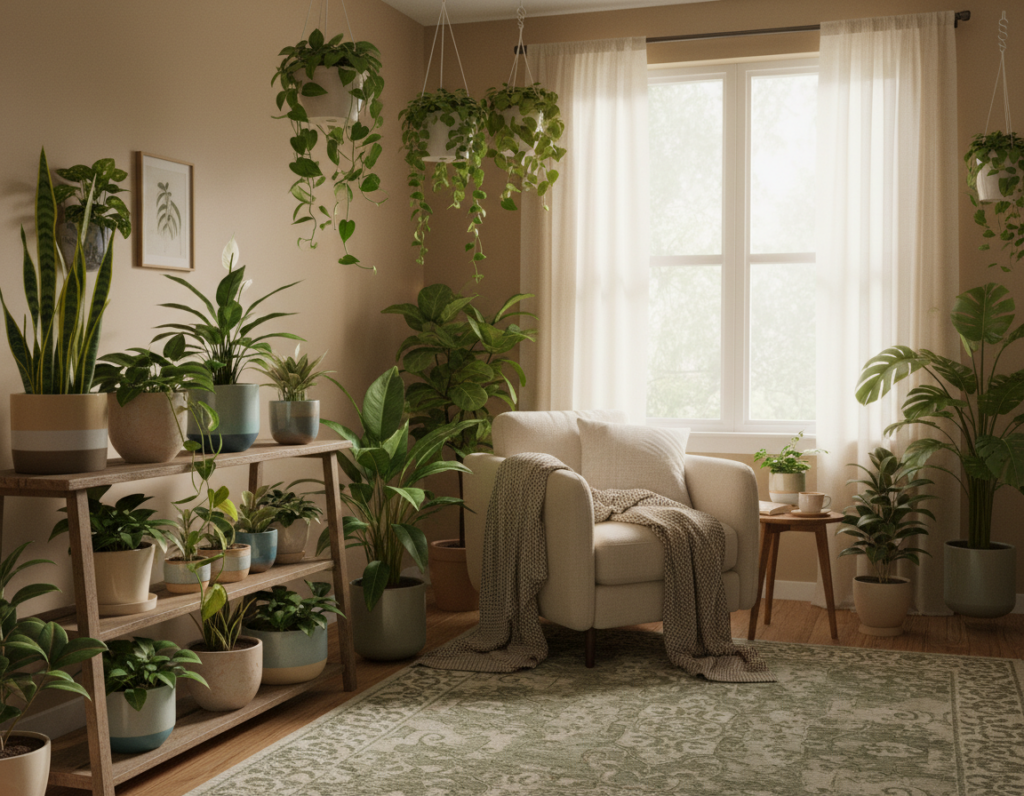
Living in a unit surrounded by taller buildings can feel like a plant owner’s worst nightmare. Many people tried bright-hungry varieties such as ficus or the money tree and watched them fail. That pattern led the author to consult experts and rethink choices.
The right selections change a dim room into a lively, green refuge. A dracaena thrived in one living room corner for two years, proving that resilient species and proper care matter more than bright windows alone.
Success hinges on picking species that suit reduced light, managing humidity and air, and avoiding common care mistakes. With the easiest indoor options and smart placement, even north-facing rooms can support vigorous growth.
Key Takeaways
- Choose species known to tolerate limited light rather than bright-light favorites.
- Proper humidity and air circulation help sustain health in darker rooms.
- Real-world success, like a two-year dracaena, shows it can be done.
- Avoid replacing a failed specimen with the same high-light variety.
- Small, consistent care beats occasional intense effort.
Understanding Low Light Conditions in Urban Apartments
Cities change how daylight reaches interiors. Tall neighboring buildings often cast a steady shade that makes rooms feel dim even at midday.
Indirect light means ambient, reflected, or filtered rays rather than direct sun on leaves. North-facing windows, stair landings, and interior corners typically offer this kind of illumination.
Defining Indirect Light
Some species can photosynthesize with only ambient light. But if a living room needs a lamp on all day, a grow light will likely be necessary.
The Impact of Nearby Buildings
Permanent shade changes temperature and air flow. Cooler nights and stagnant air increase stress and raise the chance of root and leaf issues. Maintaining stable humidity and healthy soil helps offset these effects.
Quick checklist
- Identify exact light conditions before choosing an indoor plant.
- Use a grow light when ambient light is insufficient.
- Improve circulation to prevent dust buildup on leaves.
| Condition | How It Looks | Recommended Action |
|---|---|---|
| Light shaded | Soft, reflected light; no direct rays | Choose tolerant species; monitor soil moisture |
| Mostly dark | Lamp needed during day | Install grow light; stabilize temperature |
| Intermittent sun | Short daily direct sunlight | Place near windows; rotate position weekly |
Top Apartment Plants for Low Sunlight Spaces
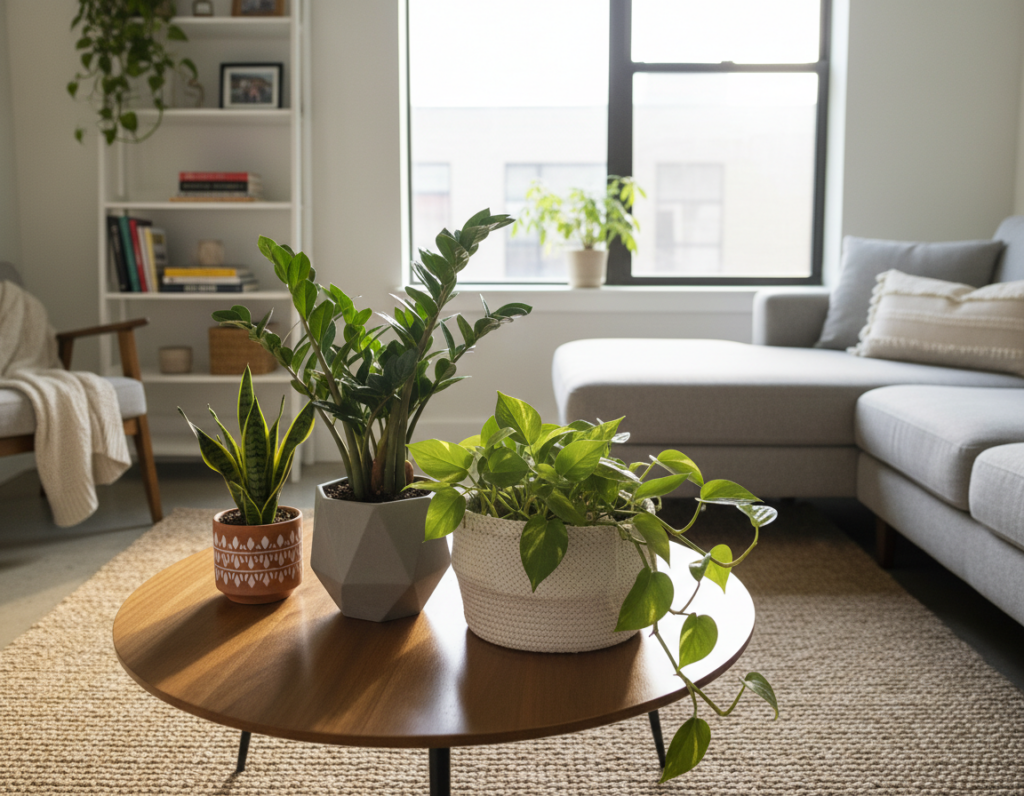
Resilient species can thrive with little direct sun and still look vibrant. The ZZ plant tops many lists. Its glossy, dark green leaves reflect the ambient light and make a dim room feel brighter.
The cast iron plant (Aspidistra elatior) earned its name by tolerating chilly nights and temperature swings. It survives where others struggle and asks for minimal fuss.
- Golden pothos suits shelves and hanging baskets and tolerates light shaded spots while trailing lush vines.
- Aglaonema (Chinese Evergreen) adds variegated color to dark corners and tolerates modest light levels.
- Spider plant is easy to propagate and helps clean indoor air, making it a practical choice for busy residents.
“Choose species that match actual room conditions; resilient types reward consistent, simple care.”
Care note: These options require minimal maintenance but still need proper soil, occasional feeding, and steady humidity to stay healthy.
| Species | Best placement | Key benefit |
|---|---|---|
| ZZ plant | Corner away from direct panes | Reflective leaves; drought tolerant |
| Cast iron plant | Shade near cooler walls | Survives temperature swings |
| Golden pothos | Hanging or high shelf | Trailing growth; forgiving |
| Aglaonema | Dark corners with some ambient light | Variegation brightens the room |
For curated options and specific varieties, browse the low-light collection.
Resilient Indoor Trees for Shaded Corners
Choosing a resilient indoor tree turns an underused niche into a focal point even when direct light is scarce. Tall, sculptural specimens give height and organic texture to a living room while tolerating dimmer conditions.
Selecting the Right Dracaena
The Janet Craig dracaena is a top pick. It stays relatively compact, adapts to reduced light, and showed steady growth—the author recorded about a foot of new height in two years.
Snake plants complement dracaenas. Part of the Asparagaceae family, a snake plant tolerates low light and irregular watering. Both species reward sparse watering and a consistent spot.
- Place indoor trees away from drafty windows to stabilize temperature and humidity.
- Allow soil to dry slightly between waterings to avoid root rot; water sparingly.
- Keep leaves dust-free to maximize the little light available.
| Species | Best spot | Care highlight |
|---|---|---|
| Janet Craig Dracaena | Shaded corner | Compact growth; tolerates shade |
| Snake plant | Near walkways or corners | Forgiving about watering |
| Small indoor trees | Consistent location | Maintain humidity and air flow |
Trailing Varieties for Shelves and High Spots
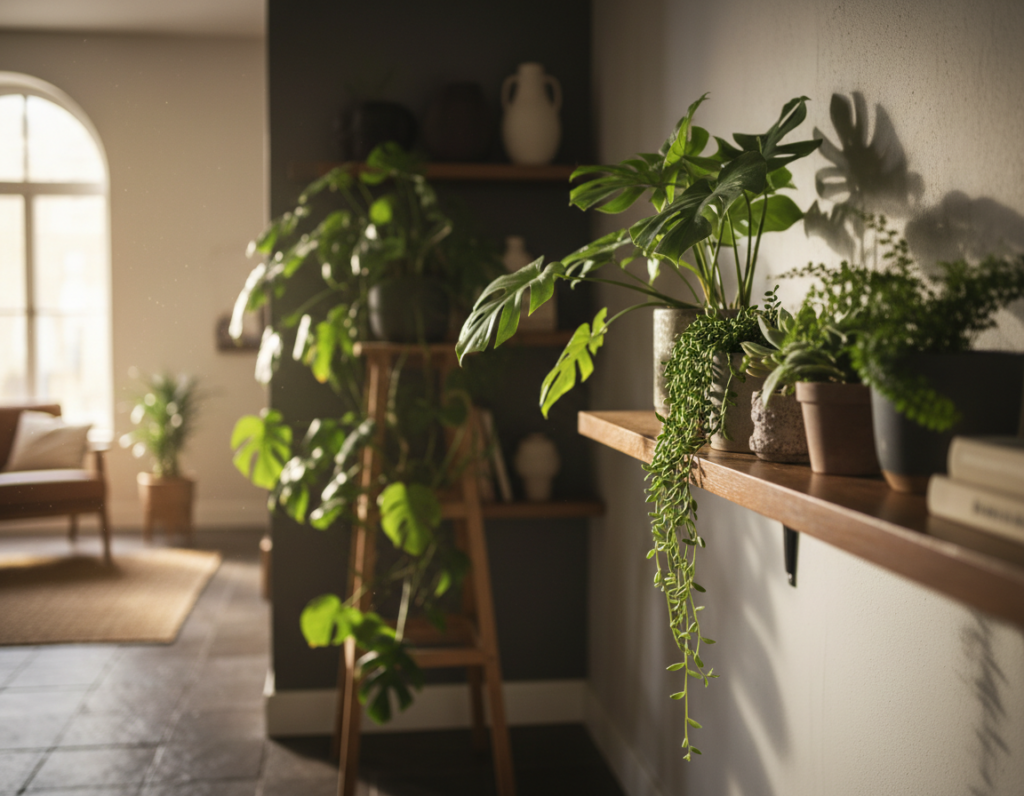
Long, trailing stems make shelves feel collected and intentional while using otherwise wasted height. These hanging growths soften hard lines and add a layered, lived-in look to a room.
The golden pothos, including the Marble Queen variety, tolerated a range of light conditions and became a top pick for high shelves. Ivy is another classic choice that quickly creates lush cascades from hanging pots.
These indoor plants are easy to propagate; a few cuttings rooted in water will expand a collection in weeks. Growth often slows in dimmer conditions, but glossy leaves stayed full with careful watering and steady humidity.
Placement matters: setting a trailing specimen atop a bookshelf draws the eye upward and gives depth to small living areas. Monitor soil moisture regularly since pots on high surfaces can dry a bit faster than those on the floor.
- Design benefit: layered, vertical interest from shelves to ceiling.
- Ease: simple propagation from stem cuttings.
- Care tip: maintain humidity and fresh air to keep foliage glossy.
Essential Care Tips for Dimly Lit Environments
Simple daily habits can keep foliage healthy even when most direct sun is blocked. A steady routine helps plants adjust to reduced light conditions and prevents common issues like yellowing or rot.
Watering Strategies
Watering: check soil before you add water
He or she should check the soil with a finger. If it feels damp an inch below the surface, wait before watering.
Overwatering causes more failures than drought. Let soil dry slightly between sessions and water sparingly to avoid waterlogged roots.
Rotation: encourage even growth
Rotate specimens every few weeks when light comes from one direction. This prevents leaning and promotes balanced growth across the canopy.
If growth slows or leaves yellow, reassess the light conditions and move the pot to a brighter spot if possible.
Cleaning Leaves for Photosynthesis
Wipe dust from leaves regularly. Clean foliage absorbs available light more efficiently, which boosts photosynthesis in dim rooms.
Maintain stable temperature and good air flow to keep the collection healthy and less prone to pests.
| Issue | Sign | Action |
|---|---|---|
| Overwatering | Yellowing leaves, soggy soil | Let soil dry; reduce watering frequency |
| Uneven growth | Plants lean toward window | Rotate every 2–3 weeks |
| Dust buildup | Dull, pale foliage | Wipe leaves with a damp cloth weekly |
| Slow growth | Small new leaves, stretched stems | Reassess light and spot; consider supplemental light |
Common Mistakes When Selecting Low Light Greenery
Choosing a specimen that merely survives in dim conditions often leads to slow decline rather than long-term success.
Many assume any item labeled “low light” will thrive in a dark room. That belief ignores each species’ true needs and growth habits.
Overwatering is the most frequent error. Soil in a shaded room stays moist much longer, so one must water sparingly and check the substrate before adding moisture.
A second mistake is ignoring drainage. Pots without holes or heavy, compacted soil cause root rot when moisture cannot escape.
Buying solely on appearance also backfires. Trendy choices can fail when they lack the right light, humidity, or airflow.
Some hardy types—like snake plant and cast iron plant—tolerate tougher conditions. Still, the buyer should research each species’ family and native habitat to match it to the room.
- Pick species that truly thrive rather than those that merely tolerate shade.
- Water sparingly and test soil depth moisture before watering.
- Ensure drainage and use well-draining mix to prevent rot.
| Mistake | How it shows | Fix |
|---|---|---|
| Choosing tolerant-only species | Slow decline; sparse new growth | Select species known to thrive in reduced light |
| Overwatering | Yellowing leaves; soggy soil | Let soil dry; water sparingly |
| Poor drainage | Root rot; foul smell | Use pots with holes and airy mix |
| Buying for looks | Plant fails after weeks | Match species to room conditions and humidity |
“Always prioritize plant health over immediate visual impact; a thriving specimen is the best accessory for any living room.”
Managing Humidity and Soil Health in Darker Rooms
When light is scarce, small gains in humidity and better soil structure yield outsized benefits for indoor greenery.
Humidity matters. In dry climates, recycled air dries leaves and stresses roots. Placing a shallow bowl of water nearby or misting leaves with lukewarm water raises local moisture and soothes tropical species.
Soil health is the foundation. Use a free-draining mix with added expanded clay or coarse sand to prevent waterlogging. That keeps roots healthy when light-driven growth is slow.
Check the soil dry depth before watering. Let the top inch dry and then water sparingly to avoid root rot. Snake plants tolerate dry air and make reliable choices when humidity is hard to control.
Keep specimens away from drafts and extreme temperature swings near windows. A consistent microclimate helps steady growth even with reduced sunlight.
- Tip: Use well-draining soil and monitor moisture.
- Tip: Raise humidity with bowls or gentle misting.
- Tip: Maintain steady temperature and air to support leaves and root health.
Conclusion
A modest selection of resilient species and steady care will reclaim even the darkest corners. Choose hardy indoor plants that match actual light and humidity. Simple routines—check soil, gentle rotation, and leaf cleaning—make a big difference.
Consistency matters. Once they find a few reliable specimens, readers will notice better growth and less worry. A healthy plant adds air benefits and calm to any home, often outvaluing decorative items.
Invest in one or two resilient indoor trees and a trailing specimen to add height and texture. With patience and small adjustments, shaded rooms become welcoming, green retreats rather than lost corners.