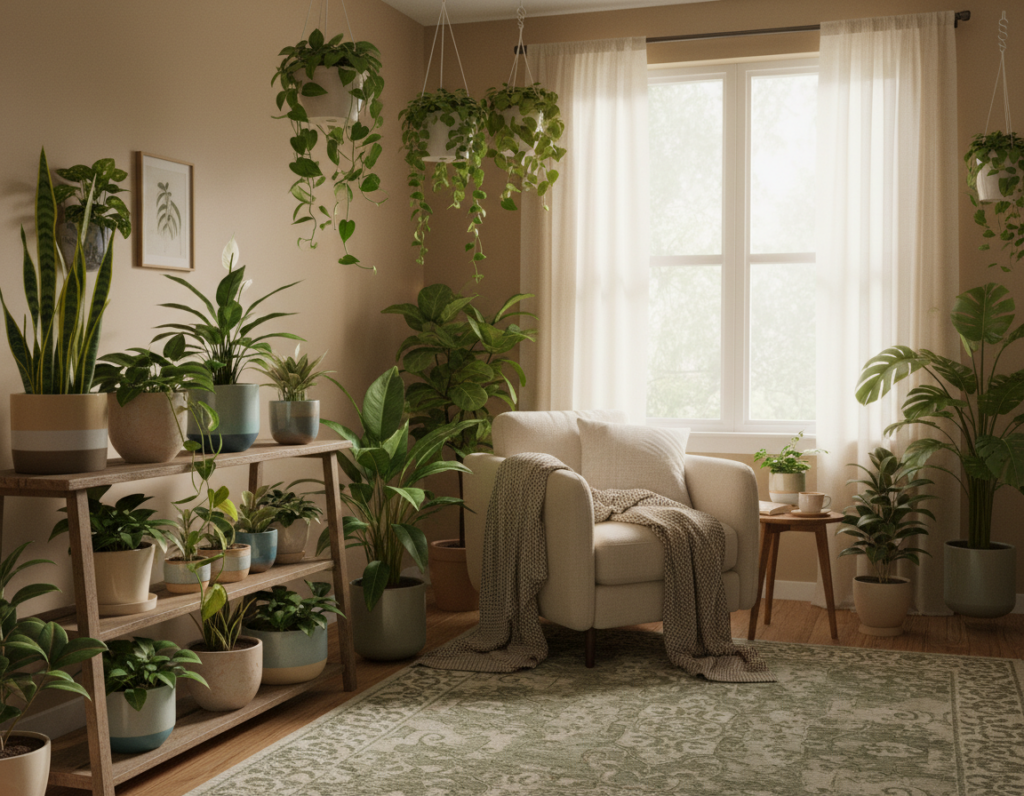
Transforming neglected corners into lively green areas can boost comfort and indoor air quality. Many houseplants thrive in low light because they evolved under forest canopies. That adaptability makes them ideal choices when natural sun is limited.
Even a single low-light houseplant can brighten a room and create a calm, refreshed atmosphere. In small homes, using tight corners wisely helps stretch limited space and bring nature inside. Choosing the right indoor plant reduces upkeep and fits into busy routines.
With a few thoughtful choices, gloomy rooms become inviting places to relax. The tips ahead will show how to pick hardy species, place them for visual impact, and care for them without constant sunlight.
Key Takeaways
- Low-light houseplants often come from shady natural habitats and suit indoor rooms.
- Strategic placement can turn a small corner into a focal green space.
- Simple care routines keep houseplant health steady in dim areas.
- Adding greenery improves air feel and creates a calmer home vibe.
- Selecting robust options reduces maintenance and fits busy lifestyles.
Understanding Light Conditions in Your Apartment
Light levels shape which greenery will thrive in each nook of a home. A quick check of daily exposure helps decide placement and care. This section explains common lighting zones and how to assess them before selecting a plant.
Assessing Natural Light
Sunny locations see at least four to six hours of direct sunlight, often near south-facing windows. Partial shade gets occasional sun, typical of east- or west-facing windows. Shady places receive daylight but no direct sunlight, like north-facing views or spots shaded by trees.
Defining Shady Areas
Dark corners are areas with very little or no daylight, such as windowless rooms or deep alcoves. Before making a choice, observe how many hours of direct sunlight reach each room area.
- A suitable list of indoor plants depends on whether a spot gets partial shade or is truly dark.
- Many houseplants began on the forest floor and prefer gentler lighting near north-facing windows.
- Species like the parlor palm (Chamaedorea elegans) tolerate low light and should avoid harsh direct sunlight.
| Lighting Zone | Hours of Sunlight | Typical Window | Suggested Use |
|---|---|---|---|
| Sunny | 4–6+ hrs | South-facing | Place sun-loving species near the glass |
| Partial shade | 1–4 hrs | East/West-facing | Good for many low light tolerant options |
| Shady | Daylight, no direct | North-facing / shaded | Choose tolerant foliage types |
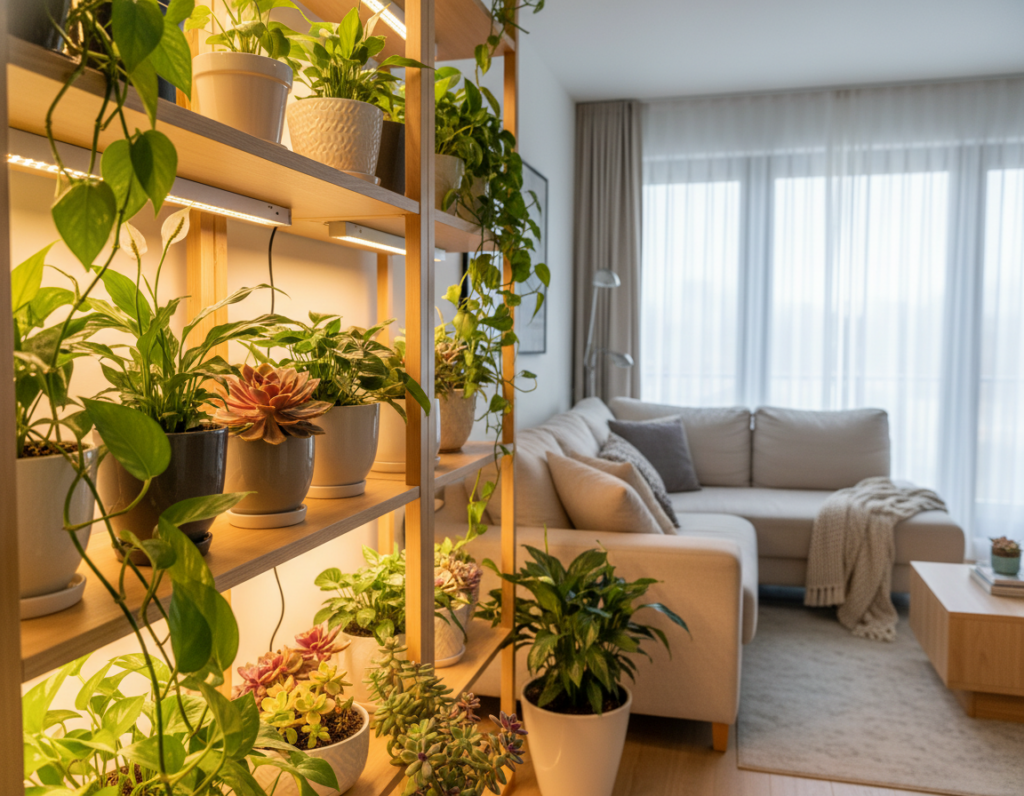
| Very low | Little to none | Windowless / deep alcove | Consider supplemental lighting or low-maintenance picks |
Tip: For a curated indoor plants guide, match the lighting zone to the plant’s needs before buying.
Top Selections for the Best Plants for Dark Apartment Corners
A well-chosen selection can fill shaded spaces with texture and life. Below are top choices that match low light conditions and modest care routines. Each entry notes how it prefers indirect light, watering, and spot placement.
Trailing Varieties for Shelves
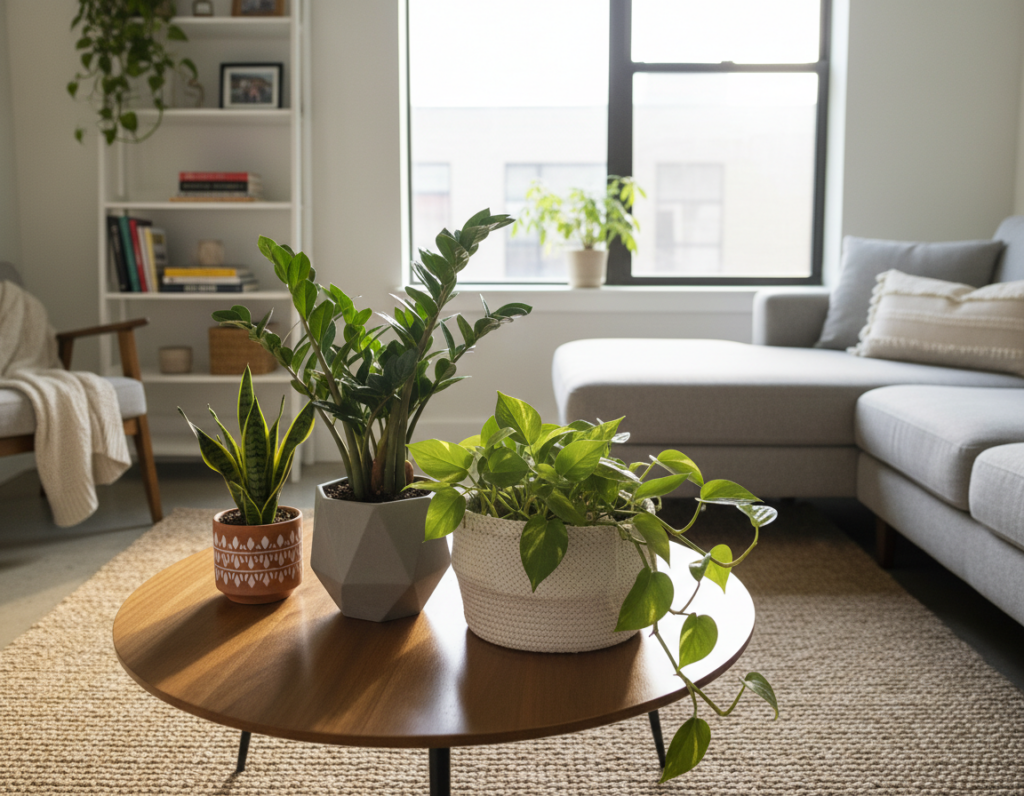
Golden pothos adapts to indirect light and can trail from baskets or climb a pole. Ivy (Hedera helix) is another hardy vine that works on high shelves. Rhipsalis offers a soft, hanging look inspired by rainforest stems.
Sturdy Foliage Choices
ZZ plant and cast-iron species tolerate minimal lighting and occasional neglect. The parlor palm adds vertical greenery without needing direct sunlight. Ponytail palm stores moisture in its base, reducing frequent water needs.
Unique Flowering Options
Slipper orchids deliver seasonal blooms but benefit from brighter windows in winter. Boston fern and peperomia add varied leaf texture; the fern needs steady moisture while peperomia suits humid nooks. These selections give color and structure to quiet rooms without heavy upkeep.
Essential Care Practices for Low Light Environments
Simple habits help a shady area support steady growth instead of stretched, fragile stems. Monitoring a plant’s posture is key; if it leans toward a window it may be seeking direct sunlight and should be repositioned.
Watch leaf color and shape. Pale leaves signal that the creature is struggling with current conditions and may need more indirect light. A move of a few feet often makes a big difference.
Clean foliage regularly. Dusting the leaves boosts photosynthesis when light is scarce. That small step can improve energy and visible growth.
- Keep watering steady; avoid overwatering in dim areas.
- Rotate the specimen periodically so growth stays even.
- Choose a variety that tolerates low light but still gets routine care.
With routine attention to watering, dusting, and placement, houseplants in low light will show steady growth and remain structurally sound. For further ideas on shade-tolerant selections, see this curated guide on low-light houseplants.
Managing Humidity and Soil Moisture
Humidity and soil moisture are twin controls that shape healthy indoor growth in dim rooms. Both must be balanced to avoid root rot and stunted growth. Gentle adjustments often solve problems faster than drastic changes.
Maintaining Proper Hydration
Maintaining proper soil moisture is vital for any plant. In low light conditions, over-watering leads to soggy mix and weak roots.
Check the soil before you water. If the top inch feels dry to the touch, it is usually safe to add water. In poorly ventilated rooms, the surface can seem damp long after the pot drains.
- Improve drainage: Use pots with holes and a free-draining mix so water does not pool at the bottom.
- Raise humidity: Many tropical plants respond well to misting or a nearby bowl of water to raise local humidity.
- Watch leaves: Pale or limp foliage often signals improper moisture or air dryness.
Consistent, measured care keeps soil and humidity steady and supports healthy growth without excess effort. Small, regular checks prevent most moisture-related issues.
Troubleshooting Common Growth Issues
A few diagnostic checks can reveal why a houseplant struggles in low lighting or near a cold window.
Brown spots or dry edges often mean too much direct sunlight or heat on the leaf surface. Move the specimen a short distance into indirect light and monitor recovery.
Pale leaves or thin stems usually show a lack of light. Try relocating the plant closer to windows that offer gentle sunlight or rotate it into brighter rooms briefly to boost growth.
- Adjust watering in summer — increased growth needs more water, but avoid waterlogged soil in dim areas.
- Monitor soil moisture: plants in low lighting use less water and need longer between drinks.
- Leaf drop signals stress; raise humidity and keep conditions steady so many species recover.
If pests appear, treat them quickly; healthy leaves resist disease better. Some varieties, like Monstera, lose complex leaf features when lighting is poor. In winter, prevent cold drafts by moving pots away from chilly windows.
Quick checks of light, soil, and air will solve most problems and keep growth steady over time.
Conclusion: Creating Your Indoor Green Retreat
A thoughtfully placed green accent can turn an overlooked nook into a calm indoor retreat.
Choosing the right plants and matching them to available light helps keep leaves healthy and growth steady. Simple selections that tolerate low exposure need less fuss and reward a home with texture and calm.
Consistent care—regular but modest watering, occasional dusting, and attention to humidity—keeps houseplants resilient. Small moves often yield big improvements.
Start by mapping a few corners in your home and placing a hardy option in each spot. With steady upkeep, those dark corners will become inviting green spaces that lift mood and air quality.