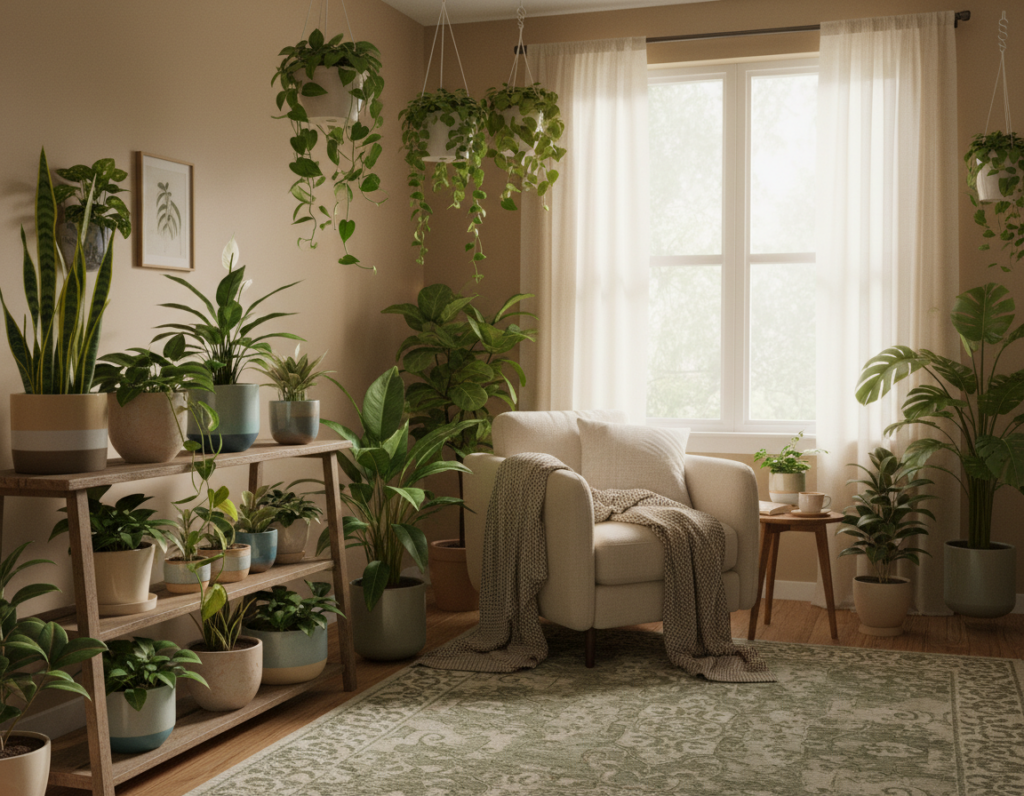
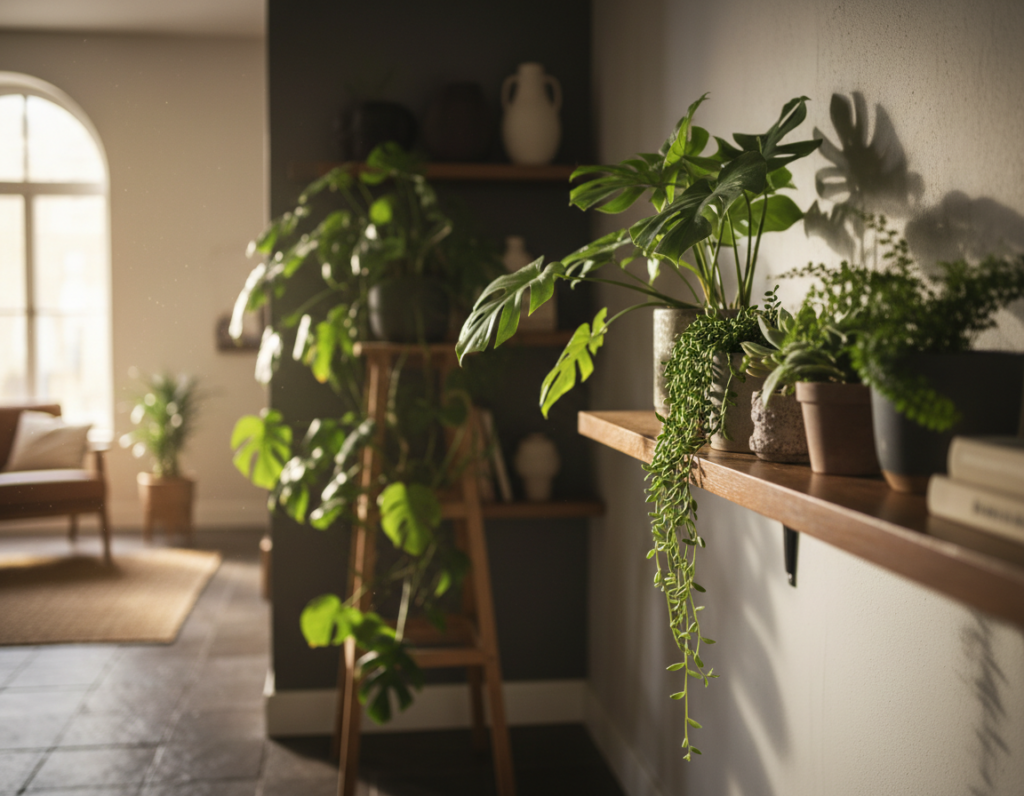
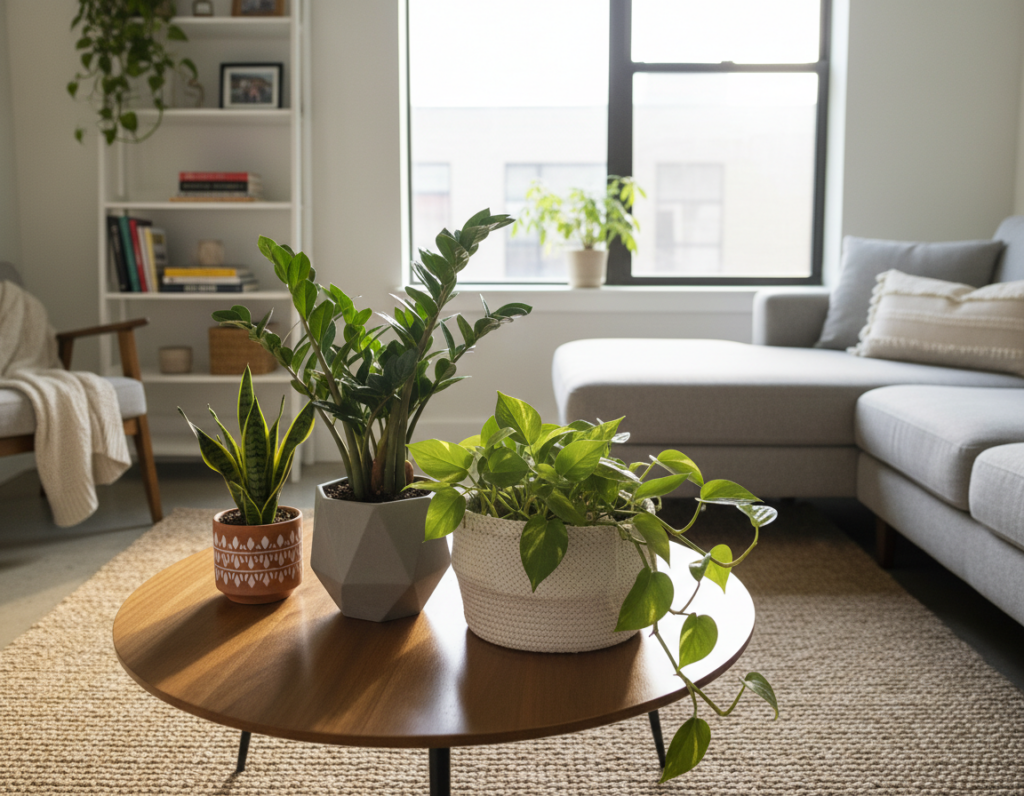
The golden pothos (Epipremnum aureum) stands out as an evergreen climber that thrives with little light. It forms aerial roots and becomes a classic houseplant in dim corners.
Choosing the right varieties lets anyone start an indoor garden even in low-light rooms. Many species mimic the pothos’ resilience and can purify air while adding oxygen during shorter, colder days.
Transforming a small room into a lush oasis is possible with shade-loving choices. Vertical options save space and bring vibrant greenery to compact living areas.
With simple care, these vining species offer dramatic visual impact and real health benefits. They help breathe life into a home without demanding bright sun or large floor space.
Key Takeaways
- Golden pothos is a resilient, low-light houseplant ideal for beginners.
- Choosing shade-tolerant varieties enables a successful indoor garden in dim rooms.
- Vertical greenery maximizes space and adds visual interest to compact rooms.
- Many indoor plants help purify air and increase oxygen during darker months.
- Simple care routines make it easy to transform a small home into a green oasis.
Why Hanging Plants for Dark Apartments Are the Perfect Choice
A well-chosen hanging display can turn dim corners into lively focal points without bright sun. Many rooms receive diffuse light rather than direct sunlight, and that suits several resilient species.
Mind-your-own-business (Soleirolia soleirolii) trails beautifully from pots and adds soft texture to shelves and beams. The spider plant (Chlorophytum comosum) grows to about 60 cm and thrives in light to partial shade, making it useful in kitchens and living areas.
Choosing vertical displays saves floor space and brings height without bulky trees. Fast growers like Fatsia japonica can reach 1.5 meters in a few years, while Kentia palms offer tree-like stature and tolerate shaded locations.
- Shade-friendly species often prefer semi-shaded spots rather than harsh direct sunlight.
- Spider plants are forgiving and ideal for beginners who want low-maintenance greenery.
- Right pots with good drainage are vital to prevent root rot and support healthy growth.
Essential Care Tips for Thriving in Low Light
Success in dim interiors starts with a plan: monitor moisture, supplement light, and rotate regularly. These three steps prevent common decline and promote steady growth.
Monitoring Soil Moisture
Check soil often. Dark rooms usually have lower humidity, so soil stays damp longer. A moisture meter removes guesswork and prevents overwatering. Use well-draining mixes like Soil Ninja to protect the root zone and reduce rot risk.
The Role of Artificial Grow Lights
LEDs make a big difference. Brands such as Soltech offer LED grow lights that mimic sunlight and support photosynthesis in dim rooms. Place lights on a timer to match natural day length and avoid stressing leaves.
Rotating for Balanced Growth
Turn pots every one to two weeks. Rotation ensures all sides receive equal light and avoids uneven growth. Adjust watering and light levels based on room conditions and watch new leaf development.
| Care Area | Action | Why it Helps |
|---|---|---|
| Soil | Use well-draining mix; check with moisture meter | Prevents root rot and overwatering |
| Light | Add Soltech LED on timer | Provides stable energy for photosynthesis |
| Maintenance | Rotate pots; adjust watering | Promotes even growth and healthy leaves |
Vining Varieties That Adapt to Dim Corners
Vining species bring motion and texture to corners that see little natural light. They work well in compact rooms and add vertical interest without large pots.
The Versatile Golden Pothos
Golden pothos (Epipremnum aureum) is an evergreen climber that forms long trailing vines and aerial roots. It tolerates low light and is forgiving of occasional missed watering.
Water when the top half of the soil dries to avoid root rot. In stable room temperature and moderate humidity it will keep producing new leaves for years.
Philodendron Brasil Characteristics
Philodendron Brasil is prized for thick stripes of contrasting green. Its bold leaves make it a spunky addition to a kitchen or bathroom where indirect light and higher humidity help it thrive.
Many vining types can reach several feet if given the right pots and support. Spider plant is another solid choice that removes toxins and does well in indirect light.
| Species | Best Spot | Watering Tip |
|---|---|---|
| Golden Pothos | Low to medium light; shelf or hanging pot | Water when top 50% of soil is dry |
| Philodendron Brasil | Indirect light; kitchen or bathroom | Keep soil slightly moist; avoid soggy roots |
| Spider Plant | Bright indirect to partial shade | Allow soil to dry between waterings |
Ferns and Foliage for High Humidity Spaces
High-humidity spots like kitchens and hallways reward moisture-loving species with fuller, healthier growth.
Boston ferns and Calathea Freddie thrive where humidity stays steady. These indoor plants will drop leaves if air is too dry. Use Plantura Organic All Purpose Compost — a peat-free soil that releases nutrients slowly and suits moisture-loving species.
Fatsia japonica (Japanese aralia) grows fast in humid corridors, while Schefflera arboricola likes ventilation and stable room temperature. Keep these plants out of direct sunlight and in gentle shade to preserve leaf color.
- Place hanging plants in bathrooms or kitchens where steam raises humidity.
- Water consistently but avoid waterlogged soil; aim for even moisture.
- Mist regularly to keep leaves healthy and to prevent drop.
- Use quality, peat-free compost for steady nutrient release.
- Provide good airflow to prevent fungal issues while maintaining high humidity.
Resilient Succulents for Compact Rooms
Succulents are ideal when space is tight and care time is short. They tolerate dry air and adapt to modest light, so they suit smaller rooms and countertops.
Snake Plant Adaptability
Snake plant (Sansevieria) uses CAM photosynthesis, which lets it open pores at night and release oxygen while reducing water loss. This makes it forgiving in low light and helpful in bedrooms and living areas.
Zebra cactus (Haworthia) tolerates dry air and thrives in partial shade, making it a fine choice near a bathroom or kitchen window. Bear’s paw (Cotyledon tomentosa) is drought resistant but will reward a sunny spot when possible.
Peperomia obtusifolia prefers indirect light and higher humidity; it performs well on shelves or in small pots where airflow is steady.
- Water sparingly and use well-draining soil to prevent root rot in pots.
- Keep room temperature stable; most succulents adjust slowly to available light.
- Many species are shade-tolerant enough to survive where other houseplant types fail.
Learn more about selecting succulents suited to lower light in this guide on succulents for low-light environments.
Troubleshooting Common Growth Issues
Common indoor growth problems often trace back to moisture imbalances or poor light levels. Quick checks of soil and pot drainage solve many issues before they spread.
Yellowing leaves or soft roots usually point to overwatering and low light. Dark rooms slow drying, so water only when the top soil feels dry.
Drooping or scorched foliage can mean too much direct sunlight or irregular watering. Move a plant to shade or adjust watering frequency.
Pests such as spider mites and thrips appear when air swings between dry and humid. Increase consistent humidity and inspect leaves weekly.
Quick tips and tricks:
- Use pots with drainage holes to prevent root rot.
- Check soil moisture with a meter or finger test before watering.
- Prune bare or leggy growth in spring to encourage new shoots.
- Keep light levels steady; supplement with an LED if sunlight is limited.
Regular inspections and timely action restore healthy growth and keep indoor greenery resilient.
Conclusion
A small, steady care routine can turn a shaded corner into a lively green nook.
In the living room, low light need not block the joy of a thriving houseplant. The golden pothos remains a top choice thanks to its resilience and easy upkeep.
Consistent watering, good soil and well-draining pots keep leaves healthy. Balance sunlight and shade, and watch humidity to avoid stress on the plant.
Whether a trailing vine or a compact succulent is chosen, simple habits create a lasting indoor garden. Embrace this approach and enjoy fresh greenery that lifts the home and living spaces.