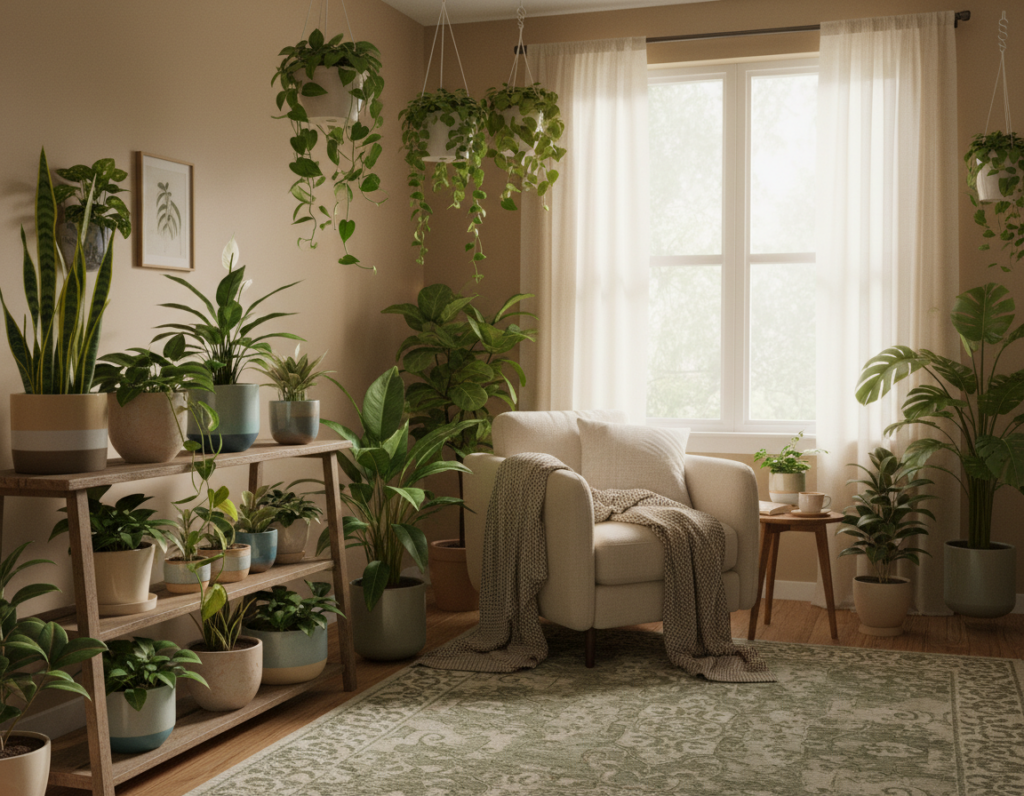
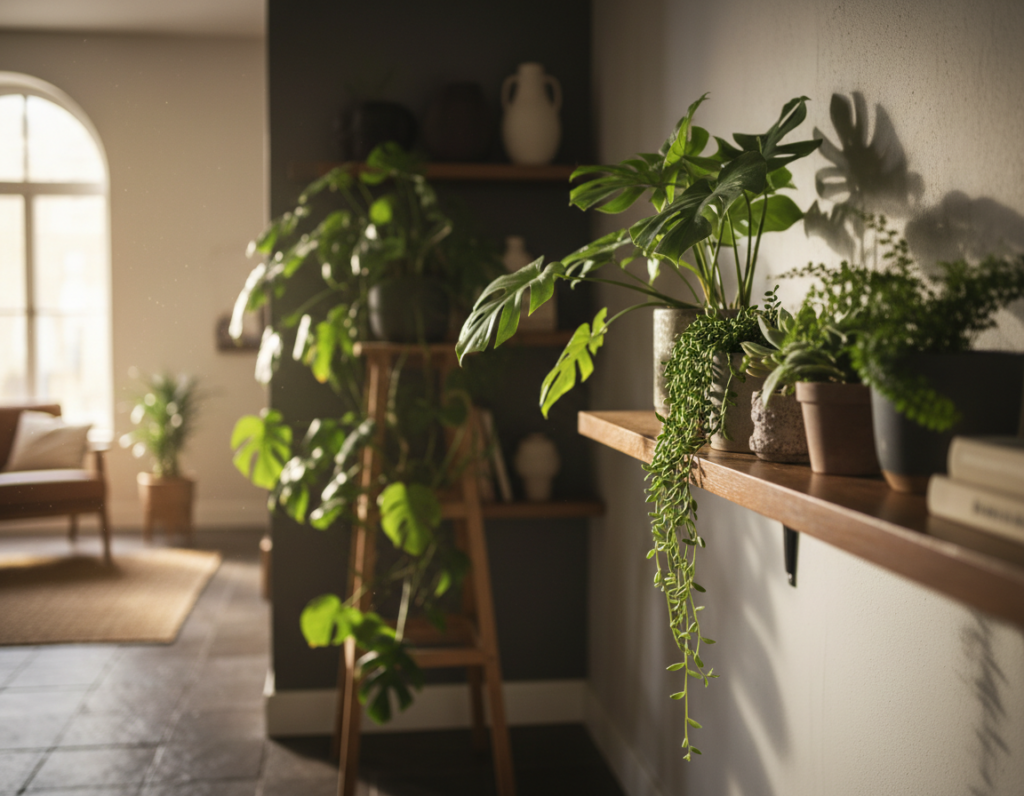
Many popular houseplants originate on shady forest floors, so they tolerate low light and minimal fuss. A north-facing room or a space with small windows can host a lush corner packed with ferns and foliage plants.
Choosing the right species helps transform a gloomy area into an inviting part of the home. They need little watering and suit varied indoor conditions.
Understanding light levels and airflow is key when selecting indoor plants. With smart choices, a person can improve air quality and add long-lasting green appeal, even where sunlight is limited.
Key Takeaways
- Shady-adapted species thrive with low light and modest care.
- Measure the room’s light before picking any plant.
- Many foliage plants need only occasional water to stay healthy.
- Small windows do not rule out a vibrant indoor display.
- Proper selection boosts air quality and visual interest.
Understanding Light Requirements for Indoor Plants
Low light does not mean no life—many indoor species adapt to soft, indirect illumination. Before choosing any specimen, it helps to define what “low light” means in practical terms.
Defining Low Light Conditions
Low light describes a spot far enough from windows that the sky is not visible, yet some natural light still filters through. According to experts, this placement is common in north-facing rooms and hallways.
The Role of Photosynthesis in Shady Spaces
Plants need a certain amount of light for photosynthesis. Many shade-adapted species perform photosynthesis efficiently under reduced light, though they cannot survive total darkness.
At night, a plant switches to respiration and uses oxygen to reset metabolism for the next day. Monitor seasonal shifts in sunlight and adjust placement or add LEDs if the amount falls short.
- Keep soil moisture modest—low light plants require less water than sun-loving ones.
- Blue spectrum favors foliage growth; red helps flowering.
- Fluorescent or LED options provide safe, effective supplemental light.
Top Houseplants That Grow in Dark Rooms
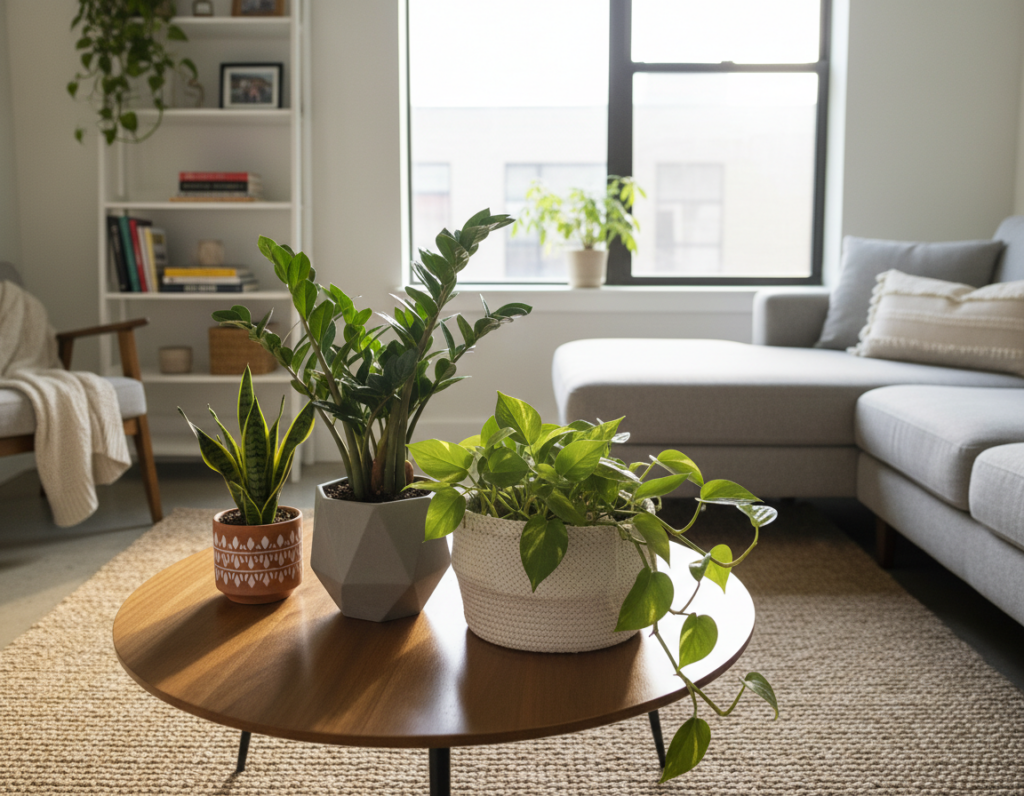
Even a small, shaded spot can host durable plants that tolerate limited light. Two reliable choices are the spider plant and the ZZ plant.
The spider plant (Chlorophytum comosum) is native to Africa and reaches about 60 cm tall. It adapts well to varied indoor settings and often helps purify air. Its arching leaves stay attractive with minimal fuss.
The Zamioculcas, or ZZ plant, arrived from East African forests and became popular about twenty years ago. It survives long periods with low nutrients and can sit in a dark corner of a home without daily care.
“Choose species that match the mature size of your space to avoid crowding and reduce repotting.”
Practical tips:
- Assess the final mature size before placing any plant in a small corner.
- Pick low light varieties to brighten a dim room without moving them often.
- These indoor plants are flexible and suit many rooms and spaces in a modern house.
Foliage and Trailing Varieties for Shady Corners
Combining tough, leathery leaves with delicate fronds creates contrast in shaded interiors. A thoughtful mix brings texture and vertical interest without demanding bright sunlight.
The Resilience of Cast Iron Plants
Aspidistra proved its value in Victorian homes by tolerating poor air and little light. Its leathery leaf makes a sturdy backdrop for softer foliage.
Golden Pothos for Vertical Interest
Golden pothos adapts as a trailing or climbing plant. It looks great from a hanging basket or trained up a moss pole, adding height and growth without fuss.
Begonias and Ferns for Texture
Boston fern offers lime-green fronds that contrast with aspidistra leaves. Begonias, including angel-wing types, bring patterned leaves and occasional flower color.
- Mind-your-own-business forms a dense mat and fits shady corners well.
- Keep soil well drained to prevent root rot where sunlight is limited.
- Regular watering suits ferns; other varieties need less frequent water.
Palms and Shrubs for Low Light Environments
Palms and shrubs can bring tall texture and calm greenery to low-light corners without needing full sun.
Choose species that match the room’s size and humidity. Many of these plants tolerate shade but prefer steady air circulation and modest watering.
Caring for Indoor Palms and Aralias
Japanese aralia (Fatsia japonica) grows quickly and can reach about 1.5 m within three years. It prefers nutrient-rich soil and light to shady spots for steady growth.
- Snake plant varieties use CAM photosynthesis and release oxygen at night. Keep soil drier rather than soggy to avoid root rot.
- Kentia palms are island natives with pinnate leaves; they like humidity and suit hanging pots or large floor containers.
- Schefflera (umbrella plant) can add fast vertical growth and prefers well-ventilated, humid rooms.
- The zebra cactus tolerates low light when planted in permeable soil mixed with pumice or lava rock.
Fertilize palms during the growing season to keep leaves vibrant and vigor high. For more low-light options and care tips, see low light indoor plants.
Conclusion
Selecting resilient species lets any dim spot add texture and cleaner air to a home. With a few hardy plants and correct soil and water habits, a quiet corner becomes a lasting display of foliage and leaf color.
Assess light levels from windows and match species to those conditions. Choose trailing or architectural forms—such as a golden pothos or a snake plant—for varied texture across indoor spaces.
Regular, simple care keeps the collection healthy and lets indoor plants thrive with minimal fuss. A small hanging or floor spot can repay a little attention with improved air and steady beauty for years.